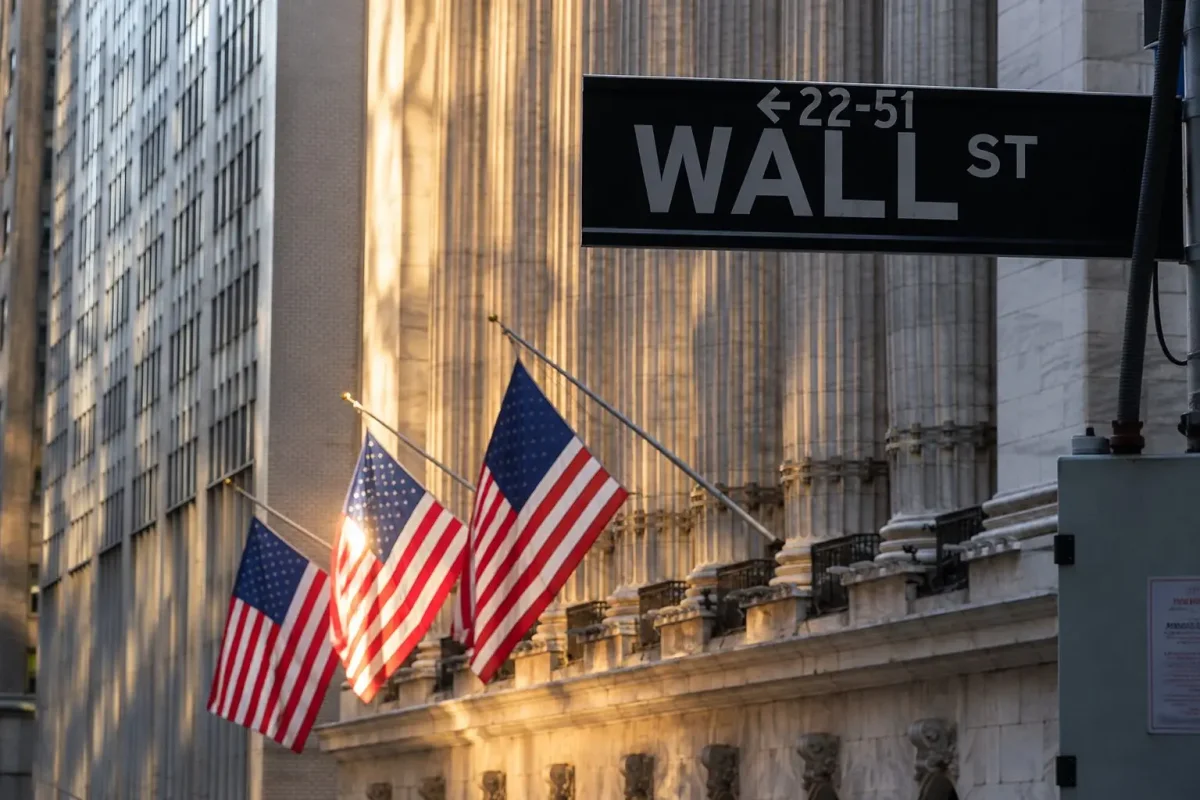
U.S. equities opened the trading week with a delicate balance, as a robust rally in energy shares helped counter persistent weakness in the semiconductor space, keeping major benchmarks pinned near their all-time highs. The S&P 500 added a marginal 0.02%, while the Dow Jones Industrial Average slipped 0.12% and the Nasdaq Composite retreated 0.17%, reflecting a market that is consolidating after a strong run.
The divergence between sectors was stark, with the energy sector surging 3.36% while the semiconductor gauge fell 1.26%. This 4.61 percentage point spread underscores a notable rotation in market leadership, as investors pivot toward value-oriented sectors that benefit from rising commodity prices, while growth-dependent tech names face valuation headwinds. The energy ETF (XLE) climbed to $59.43, while the semiconductor ETF (SMH) dropped to $575.39.
Oil prices were the primary catalyst for the energy rally. Brent crude jumped 3.06% to $86.11 per barrel, while U.S. West Texas Intermediate crude advanced 3.26% to $80.73. The surge in oil prices lifted energy producers and service companies, but it also added to inflation concerns, pushing the 10-year Treasury yield up about three basis points to 4.688%. Higher yields typically pressure high-valuation growth stocks, which explains the drag on technology and semiconductor shares.
Market breadth reflected the mixed sentiment. Six of the 11 S&P 500 sectors finished in negative territory. On the NYSE, declining issues outnumbered advancers by a 1.5-to-1 ratio, while on the Nasdaq the ratio was 1.26-to-1. Small-cap stocks underperformed, with the Russell 2000 proxy (IWM) falling 0.51%, while the equal-weight S&P 500 ETF (RSP) was unchanged, signaling that the market's gains are not broad-based.
In individual stock moves, Apple (AAPL) slid 2.13% after Jefferies downgraded the stock to Underperform, citing concerns about valuation and demand. Intel (INTC) tumbled 3.66% following announcement of a $15 billion share offering, which dilutes existing shareholders. Nvidia (NVDA) also retreated 2.16%, contributing to the semiconductor sector's decline. On the upside, Microsoft (MSFT) gained 1.97%, Amazon (AMZN) rose 1.70%, and Berkshire Hathaway (BRK.B) climbed 2.26% after strong earnings and new capital allocation moves by CEO Greg Abel.
Earnings season continues to impress, with 85.1% of the 436 S&P 500 companies that have reported so far beating analyst expectations, well above the historical average of 68%. This robust earnings backdrop prompted JPMorgan Chase (JPM) to raise its year-end S&P 500 target to 8,000, up from 7,800, implying about 3.1% upside from Friday's close. The bank also lifted its 2026 earnings forecast by 4.3%, while maintaining a forward valuation multiple of nearly 20 times earnings.
Investors are now turning their attention to Wednesday's release of the July Consumer Price Index (CPI), with consensus estimates pointing to a 3.4% year-over-year increase, a slight easing from June's 3.5%. A benign inflation reading could bolster expectations that the Federal Reserve will hold off on a September rate hike, which would be supportive for equities. Rate futures currently imply a 44% probability of a hike in September.
Looking ahead, key earnings reports from CoreWeave (CRWV) on Tuesday, Cisco Systems (CSCO) on Wednesday, and Applied Materials (AMAT) on Thursday will provide further clues about the sustainability of AI-related capital spending, which has been a major driver of the market's gains. However, risks remain: a renewed surge in oil prices or an unexpectedly hot CPI print could push yields higher and weigh on tech stocks, while a resolution in the Hormuz Strait or cooler inflation data could quickly shift momentum away from energy.