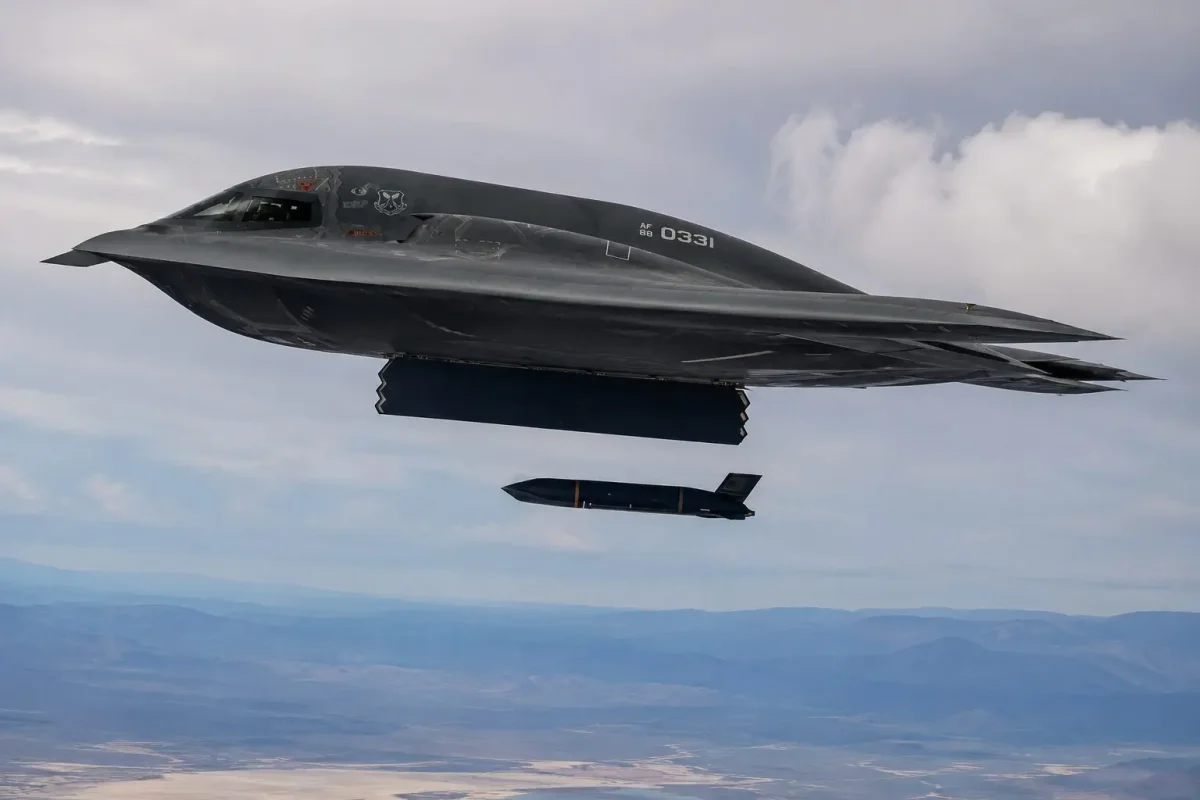
In a significant demonstration of expanding anti-ship missile capabilities, a U.S. Air Force B-2 Spirit stealth bomber launched an AGM-158C Long Range Anti-Ship Missile (LRASM) during a sinking exercise in the Pacific Ocean on June 27. The event marks the first time the B-2, built by Northrop Grumman (NYSE: NOC), has been publicly identified as a launch platform for the LRASM, a weapon developed by Lockheed Martin (NYSE: LMT).
The live-fire drill, known as a SINKEX, targeted the decommissioned Austin-class amphibious transport dock USS Juneau, positioned more than 200 nautical miles north of the Mariana Islands Range Complex. The exercise involved U.S. aircraft, a Japanese submarine, and other allied forces, underscoring the joint nature of modern maritime operations. Rear Adm. Eric Anduze, commander of Carrier Strike Group 5 and Task Force 70, highlighted the exercise's value in integrating capabilities across domains for high-end Pacific theater operations.
Investor Implications of B-2 LRASM Integration
For investors, the public disclosure of the B-2 as an LRASM platform provides a clearer window into the growing demand for the missile and its potential to drive contract volumes at Lockheed Martin and new bomber orders for Northrop Grumman. While the B-2's integration details remain classified, the test signals that the Pentagon is actively expanding the missile's deployment across a wider array of aircraft, boosting the addressable market for LRASM production.
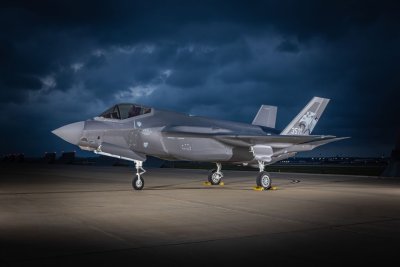
The B-2 joins a growing list of platforms cleared for LRASM, including the B-1B bomber, F/A-18E/F Super Hornet, and ongoing integration efforts for the F-15E, F-15EX, F-16, certain F-35 variants, P-8A Poseidon, and B-52 Stratofortress. This platform breadth is a key factor for investors, as each new platform potentially translates into larger multi-year procurement orders.
Budget Data Reveals Missile Demand Scale
The Navy's fiscal year 2026 budget request provides concrete figures: $531.4 million for 120 LRASM missiles, implying an average line-item cost of approximately $4.43 million per missile. This compares to 91 missiles for $599.6 million (average $6.59 million) in FY2024 actuals and 90 missiles for $326.4 million (average $3.63 million) under FY2025 enacted funding. The declining per-unit cost suggests production efficiencies as volumes increase.
Lockheed Martin has been actively promoting the missile's integration across platforms. On June 10, the company announced completion of the first phase of the U.S. Navy F-35C LRASM flight-science test program, conducted from September 2024 through April 2026. Jon Hill, vice president and general manager of Lockheed Martin Air Dominance and Strike Weapons, emphasized that integrating LRASM onto the F-35 enhances mission flexibility and operational options for warfighters.
Northrop Grumman's Bomber Pipeline
For Northrop Grumman, the B-2 test ties directly to its next-generation B-21 Raider program. In February, the Air Force announced a deal with Northrop to use $4.5 billion in existing funds to increase annual B-21 Raider production by 25%, with initial jets still scheduled for delivery to Ellsworth Air Force Base in 2027. Air Force Secretary Troy Meink described the B-21 as foundational to long-range strike capability and credible deterrence.
The LRASM's technical advantages are also noteworthy. According to NAVAIR, the missile reduces the need for intelligence, surveillance, and reconnaissance platforms, network links, and GPS in electronic warfare environments, thanks to semi-autonomous guidance that requires less precise targeting. This feature set makes it attractive for integration across multiple aircraft types.
Market Reaction and Industry Capacity Constraints
As of 15:51 EDT on the day of the announcement, Lockheed Martin shares traded at $508.70, up $6.63, while Northrop Grumman shares rose $11.73 to $507.75. The iShares U.S. Aerospace & Defense ETF (NYSEARCA: ITA) gained $2.72 to $241.85, reflecting broader sector optimism.
However, capacity constraints remain a key challenge. Reuters reported last week that the White House has pressed top munitions companies to boost arms output, but executives are seeking financial backing before committing to expansion. Lockheed's deals to increase production of Patriot and THAAD systems still require congressional funding approval. As demand for LRASM and other precision munitions rises, the industry's ability to scale production will be a critical factor for investors to monitor.