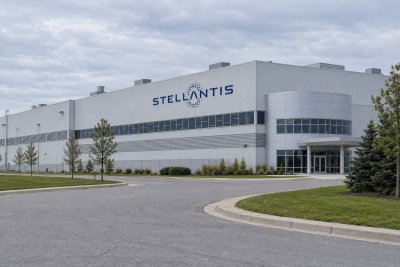
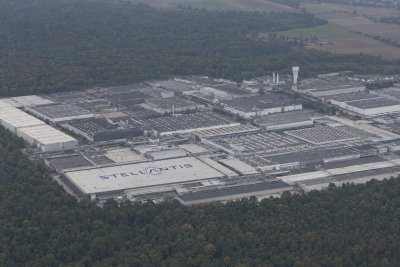
Stellantis has taken a significant step toward divesting its idle Brampton Assembly plant, signing a memorandum of understanding (MOU) with Roshel, a privately held armored-vehicle manufacturer. The MOU outlines a potential sale, but crucial details—including the purchase price, a definitive agreement, and a closing timeline—remain undisclosed. As a result, the immediate financial impact on Stellantis shareholders is still uncertain.
On Friday, Stellantis shares closed at $5.405 on the New York Stock Exchange, up 2.4% from Thursday's $5.28 close. The stock traded between $5.34 and $5.47 during the session. While the Brampton news may have contributed to the positive sentiment, it is not the sole driver. The more significant takeaway for investors is that a facility idle since late 2023 may soon return to production without requiring Stellantis to fund another vehicle launch there.
MOU: A First Step, Not a Final Sale
According to Reuters, the MOU marks the beginning of a complex process that both parties acknowledge. Financial terms are confidential. Roshel CEO Roman Shimonov stated that his company is the only serious buyer for the plant, while Stellantis expressed optimism that the arrangement could restore sustainable operations at Brampton.
The immediate challenge lies with labor. Unifor, the union representing about 2,200 Brampton workers on indefinite layoff, paused negotiations on Friday, stating that the surprise Roshel agreement obstructed bargaining over the plant's future. Any final transaction will be judged not only on the purchase price but also on job security, pension and benefit obligations, recall rights, and the buyer's production plans.
Roshel's Strategic Interest
Roshel's interest in Brampton is rooted in industrial logic. The company, based in Ontario, manufactures protected vehicles for government and security clients. In May, it unveiled a new Canadian-developed light utility vehicle platform and noted that more than 2,500 Roshel vehicles are already operating in Ukraine. Canada has also committed 383 Senator vehicles to Ukraine in March, following earlier deployments of over 2,200 units, according to the Department of National Defence.
Roshel has been actively seeking expanded capacity. The company indicated this summer that it would require approximately 2 million square feet if it secures Canada's next light-vehicle order, as reported by CityNews. The federal procurement blueprint for the Light Utility Vehicle project has an indicative budget of C$1 billion to C$4.99 billion, with deliveries planned to begin in 2029-30.
That potential order is the central upside—and the central uncertainty. Roshel has not yet won it. A government award, a financing plan, and a binding purchase contract would turn the MOU into something investors can model; today, it remains strategic optionality.
Potential Impact on Stellantis
For Stellantis, selling Brampton could eliminate carrying costs and avoid committing scarce capital to an uncertain restart. However, a sale could result in either a gain or a loss, depending on the price, the plant's book value, environmental or site obligations, and any labor settlement. The 2022 Ontario support package included up to C$287 million for Stellantis' Windsor and Brampton retooling, adding a government-negotiation layer. No authority has announced a clawback tied to this MOU.
This is not a liquidity rescue. Stellantis ended the second quarter with €44.1 billion in industrial available liquidity, while quarterly revenue rose 13% to €43.5 billion. North American revenue increased 32%, but the group's adjusted operating margin was only 1.8%. Management also expects a €1.0 billion to €1.2 billion tariff headwind in 2026. In this context, monetizing an unused site can support capital discipline, even if the proceeds are immaterial relative to group liquidity.
The counterargument is optionality. A large Canadian assembly footprint could become valuable if North American volumes recover further or trade policy shifts. Selling it would make a future Stellantis expansion more expensive. Management must therefore demonstrate that the proceeds and avoided costs justify surrendering that capacity.
Key Factors for Investors
Investors should monitor four critical developments: a definitive agreement with a disclosed price; Roshel's financing and Canadian procurement outcome; a labor settlement with enforceable employment commitments; and the treatment of past government support. Until these are resolved, the MOU is positive evidence that Brampton has a plausible second life—but not evidence of a booked gain for Stellantis.