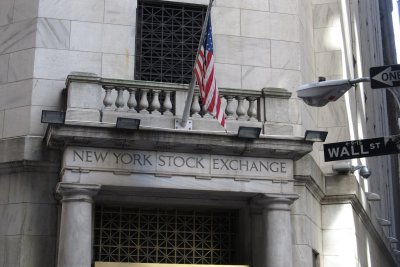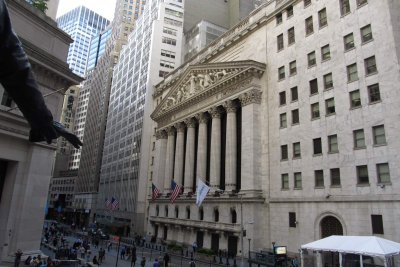
The Dow Jones Industrial Average rallied roughly 290 points, or 0.6%, during midday trading on Tuesday. The broader market found support from a significant pullback in crude oil futures and renewed diplomatic hopes between the United States and Iran, while a key inflation metric provided some relief to investors concerned about persistent price pressures.
Market Movers and Inflation Data
The S&P 500 index climbed 0.88%, and the technology-heavy Nasdaq Composite outperformed with a gain of 1.41%. The session's positive momentum built on a strong rebound that began Monday when the Dow surged over 300 points. For weeks, equity markets have been highly sensitive to developments in the Middle East conflict, with each spike in oil prices interpreted as a potential catalyst for renewed inflation and a more hawkish Federal Reserve stance.
Energy markets led the shift in sentiment. Brent crude futures fell 4.37% to settle at $95.02 per barrel, while U.S. West Texas Intermediate crude tumbled 6.54% to $92.60. Both benchmarks had surged above the $100 mark on Monday following U.S. actions to block Iranian ports, which raised immediate concerns over disruptions to supply routes through the critical Strait of Hormuz.
Diplomatic Developments and Analyst Views
Reports that U.S. and Iranian officials might resume negotiations in Pakistan helped soothe investor anxiety. "The shift from 'missiles to words' is giving investors hope," noted Bob Savage, head of markets macro strategy at BNY Mellon. However, some analysts urged caution. Saxo Bank's Charu Chanana observed that markets were currently "trading hope, not resolution," highlighting the fragile nature of the geopolitical landscape.
On the economic front, the Producer Price Index for March showed a 0.5% monthly increase, notably below the 1.1% rise economists had forecast. However, the annual rate accelerated to 4.0%, a level last seen in February 2023, largely driven by earlier surges in energy costs. Christopher Rupkey, chief economist at FWDBONDS, characterized the report as "not as bad as feared," while acknowledging that producer costs remain elevated. Despite the data, traders continued to price in roughly a one-in-three chance of a Federal Reserve interest rate cut this year.
Corporate Earnings in Focus
Corporate results provided another pillar of support for the market. BlackRock (BLK) shares jumped 4.2% after the asset manager reported first-quarter profit that exceeded year-ago levels. Citigroup (C) gained 1.5%, reaching its highest share price in nearly two decades. Johnson & Johnson (JNJ) advanced 1.4%. Conversely, Wells Fargo (WFC) slid 4.8% after its net interest income fell short of analyst expectations.
The Nasdaq's outperformance was fueled once again by strength in technology shares. Late Monday, Citigroup upgraded its view on U.S. equities to "overweight" from "neutral," citing a valuation reset and projecting that the technology sector could contribute about half of all global earnings growth in 2026. The BlackRock Investment Institute issued a similar upgrade, echoing the positive outlook for the sector.
Broader Economic Risks Persist
Despite the day's gains, underlying risks remain. The International Monetary Fund trimmed its 2026 global growth outlook to 3.1%, warning that the global economy may already be sliding toward a softer scenario if energy supplies continue to face disruptions. IMF Chief Economist Pierre-Olivier Gourinchas cautioned that should inflation expectations become unanchored, "stepping on the brakes will be painful" for central banks worldwide.
The immediate challenge for the market is whether robust corporate earnings and moderating inflation data can continue to offset oil prices that remain well above the IMF's reference-case assumptions and a geopolitical conflict with no clear resolution in sight. Analysts project S&P 500 companies will deliver 13.9% earnings growth for the first quarter, a figure that provides investors with a critical metric to assess the sustainability of Tuesday's rally.