Virgin Galactic Holdings Inc. (SPCE) experienced a dramatic rally on Friday, with shares surging 36.42% to close at $6.18, marking their sixth consecutive advance and a new 52-week high. The stock's performance outpaced major aerospace peers such as Boeing, RTX, and Lockheed Martin, as trading volume exploded to 175.9 million shares—far exceeding the 50-day average of 11.3 million. The broader market also posted gains, with the Nasdaq Composite rising 0.20% and the Dow Jones Industrial Average adding 0.72%.
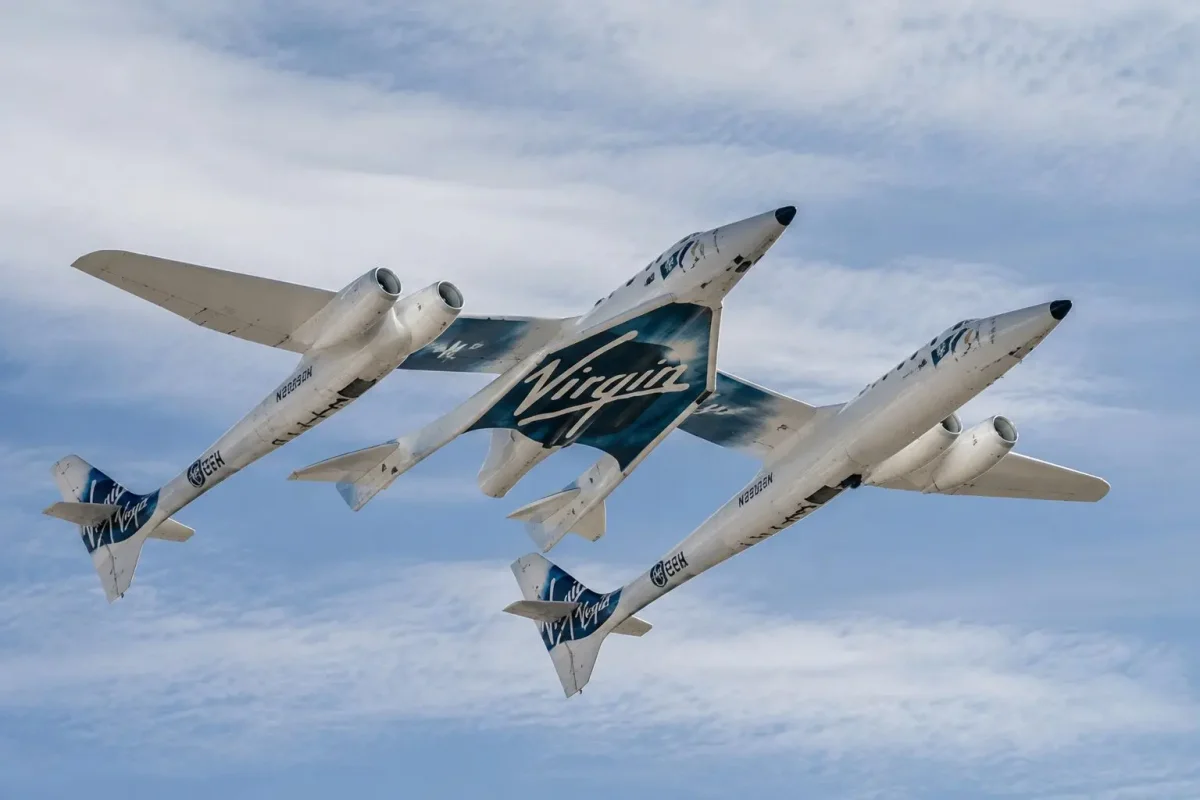
The sharp move higher came after Virgin Galactic announced that its VSS Unity spacecraft had resumed unpowered glide flights over Spaceport America in New Mexico. These flights are designed to test handling and landing procedures, serving as critical training for pilots and ground crews ahead of upcoming trials for the company's next-generation spaceship. Mike Moses, President of Virgin Galactic's spaceline, described Unity as a 'real-world proxy' for the new vehicle, stating that leveraging the proven spacecraft should instill greater confidence in the team as they advance flight testing.
Looking ahead, Virgin Galactic expects to begin glide tests for its new spaceship in the third quarter of this year, with rocket-powered tests and commercial flights targeted for the fourth quarter. The company's CEO, Michael Colglazier, reiterated during the May 14 first-quarter earnings call that the company remains 'on track' for these milestones, while also highlighting a decline in spending.
Despite the rally, Virgin Galactic's financial position remains under scrutiny. As of March 31, the company reported $251 million in cash, cash equivalents, and marketable securities, with revenue of just $0.2 million and a net loss of $65 million. Free cash flow was negative $93 million, underscoring the heavy capital requirements of developing suborbital spaceflight capabilities. The company has historically burned through cash as it works toward commercial operations.
To bolster its liquidity, Virgin Galactic raised $11 million this quarter by selling 4 million shares through its at-the-market (ATM) offering program. Such programs allow cash-burning firms to sell shares into the open market as needed, but they can also dilute existing shareholders. The company's latest quarterly filing warns that it remains in a pre-commercial phase with no spaceflight revenue, and it expects elevated costs until the new spaceships are completed and launched.
On the legal front, the U.S. District Court for the Eastern District of New York granted initial approval to settle shareholder derivative lawsuits. According to a Thursday filing, the proposed settlement involves a $2.75 million payment funded by insurers, along with three years of governance reforms. Virgin Galactic noted that the defendants deny any wrongdoing or the claims made in the derivative actions. A final settlement hearing is scheduled for July 28.
In a separate development, Virgin Galactic announced a new research flight mission: Operation Period's OP-01, slated for 2027. The nonprofit mission will study menstruation in microgravity conditions on a suborbital flight. Amber Favaregh, Virgin Galactic's director of system analysis and research, said the mission 'expands the scope' of possible research in space. This adds to the company's growing portfolio of scientific payloads.
With the stock now trading at elevated levels, the margin for error is thin. Any delays in testing, additional funding needs, or further share dilution could quickly reverse the gains. In after-hours trading Friday, Virgin Galactic shares eased 0.49% to $6.15. Investors are closely watching whether the Unity flights help the company adhere to its new vehicle testing schedule and eventually launch commercial service before its cash reserves and investor patience run out.