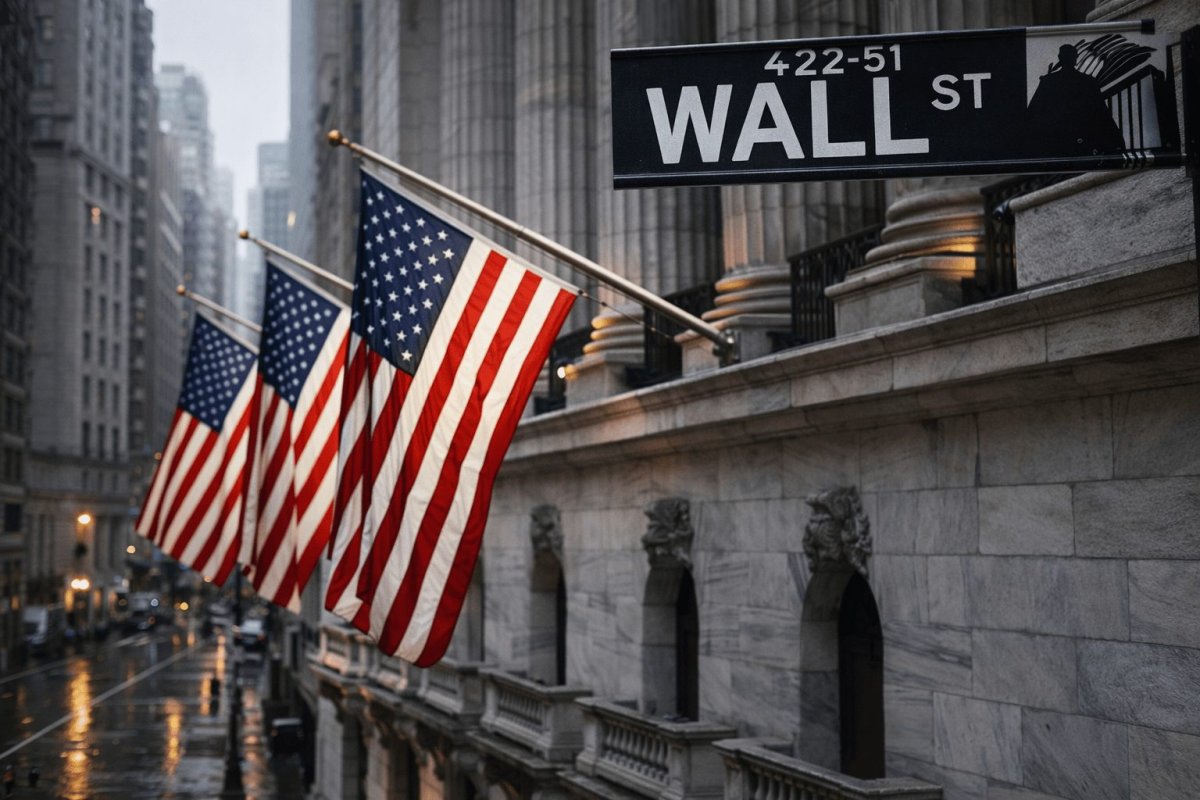
U.S. stock indices moved lower during Wednesday's trading session, pressured by an unexpectedly robust inflation reading from the producer side and a significant spike in crude oil prices. The market action unfolded just hours before the Federal Reserve's latest interest rate decision and policy guidance.
As of midday in New York, the Dow Jones Industrial Average had shed approximately 380 points, representing a decline of 0.8%. The S&P 500 and the Nasdaq Composite each retreated by about 0.6%. The sell-off was broad-based, with decliners outnumbering advancers by a significant margin on the Nasdaq.
Inflation Data Surprises to the Upside
The primary catalyst for the market's weakness was the February Producer Price Index (PPI) report, released by the Labor Department. The data, which tracks the prices received by domestic producers for their output, showed a monthly increase of 0.7%, surpassing economist forecasts. On an annual basis, the final-demand PPI climbed 3.4%. The monthly gain was driven largely by a 1.1% jump in goods prices, with services accounting for more than half of the overall increase.
"The PPI data revealed persistent inflationary pressures even before the recent surge in oil prices," noted Angelo Kourkafas, a senior global investment strategist at Edward Jones. The report prompted a swift recalibration of interest rate expectations. According to Reuters, rate futures now indicate the first Fed rate cut is anticipated in April 2027, a delay from prior expectations of December 2026.
Energy Markets on Edge
Simultaneously, energy markets experienced heightened volatility. Brent crude futures, the global benchmark, surged $5.26, or 5%, to reach $108.66 per barrel. The sharp move followed threats from Iran targeting energy infrastructure in the Middle East, stoking fears of potential supply disruptions near the critical Strait of Hormuz. This maritime chokepoint handles roughly one-fifth of global oil and liquefied natural gas shipments.
The combination of hot inflation data and soaring energy costs amplified investor anxiety. The CBOE Volatility Index (VIX), often referred to as Wall Street's "fear gauge," jumped to 23.42. Treasury yields moved higher as traders priced in a potentially more hawkish stance from the Federal Reserve. Sectors sensitive to interest rates, such as healthcare and consumer staples, each fell more than 1%.
Pockets of Strength in Tech
Despite the broader market decline, several major technology stocks managed to post gains, providing a measure of support. Chipmaker Advanced Micro Devices (AMD) advanced, as did memory specialist Micron Technology, which traded higher ahead of its upcoming earnings report. These moves offered a counterpoint to the prevailing negative sentiment, suggesting some investors were positioning for strength in specific segments of the market.
Market analysts observed that the reaction, while negative, was somewhat measured. "Investors were not reacting in as dire a manner as some might have thought," commented Steve Sosnick, chief market analyst at Interactive Brokers.
All Eyes on the Federal Reserve
The day's focal point remains the conclusion of the Federal Open Market Committee's two-day meeting. The central bank is widely expected to hold interest rates steady, but the accompanying statement and Chair Jerome Powell's press conference will be scrutinized for clues on the policy path forward.
Economists are parsing several risks. Analysts at BNP Paribas highlighted a "significant, underappreciated tail risk" that policymakers might adopt a more balanced tone between tightening and easing. Meanwhile, Diane Swonk of KPMG pointed out that the Fed's "dot plot," which charts individual members' rate projections, could show at least a few officials signaling a potential future rate hike, a scenario the market has largely dismissed.
Investors are keenly awaiting Chair Powell's commentary on how the Fed views the interplay between rising oil prices, potential tariff impacts, and recent signs of softening in the labor market. The central bank's updated economic projections will also provide critical insight into its inflation and growth outlook for the remainder of the year and beyond.