Taiwan's equity market concluded a tumultuous trading week with deep losses, driven by a potent mix of geopolitical anxiety and a sharp retreat by international investors. The benchmark TAIEX index closed Friday, March 7, 2026, at 33,599.54, marking a weekly decline of 1,814.95 points.
A Week of Extreme Volatility
The selloff intensified mid-week as fears of a broadening Middle East conflict sparked concerns over a potential oil price shock and its inflationary consequences. This triggered a region-wide risk-off move, with Taiwan's market, heavily leveraged to global tech demand, experiencing outsized pressure. On Wednesday, the TAIEX plummeted over 4%, its most severe single-day drop of the week.
Foreign institutional investors were at the forefront of the exodus. Exchange data revealed a net sell-off of NT$96.47 billion on Wednesday alone, ranking as the third-largest daily outflow on record. The selling pressure continued through the week, with net foreign outflows totaling NT$51.495 billion on Thursday and a further NT$35.24 billion on Friday.
Chip Giants and Currency Under Pressure
The technology sector, which dominates the Taiwanese market, bore the brunt of the selling. Taiwan Semiconductor Manufacturing Company (TSMC), which comprises over 40% of the TAIEX's weighting, fell 3.62% during Wednesday's rout. Other bellwethers like Hon Hai Precision Industry (Foxconn) saw even steeper declines. The flight of capital also weighed heavily on the local currency, with the New Taiwan dollar weakening to a ten-month low.
A brief, powerful rebound occurred on Thursday, with the index surging 844.06 points—its fifth-largest daily gain ever—on hopes of eased geopolitical tensions. However, the recovery proved fleeting as foreign selling persisted, highlighting underlying caution.
Sector Rotation and Broader Context
While tech faltered, some capital rotated into traditional "old-economy" sectors. Petrochemical and steel stocks, including Formosa Plastics and China Steel, found bids as traders bet that rising crude oil prices could improve pricing power for their products. This sectoral shift underscored the market's focus on commodity-driven inflation narratives.
Analysts note that Taiwan's market often acts as a high-beta play on global growth, U.S. interest rates, and risk sentiment. The current environment, where oil-driven inflation threatens to keep rates higher for longer, presents a significant headwind for tech valuations. Furthermore, soft global economic indicators threaten cyclical demand.
Regional Ripples and Forward Outlook
The volatility was not confined to Taipei. South Korea's KOSPI index slid over 11% on Wednesday, triggering a trading halt, though markets in Tokyo and Hong Kong showed more resilience later in the week. Dealers in Taipei are now closely monitoring U.S. equity movements, oil price trajectories, and whether the pace of foreign outflows abates into mid-March.
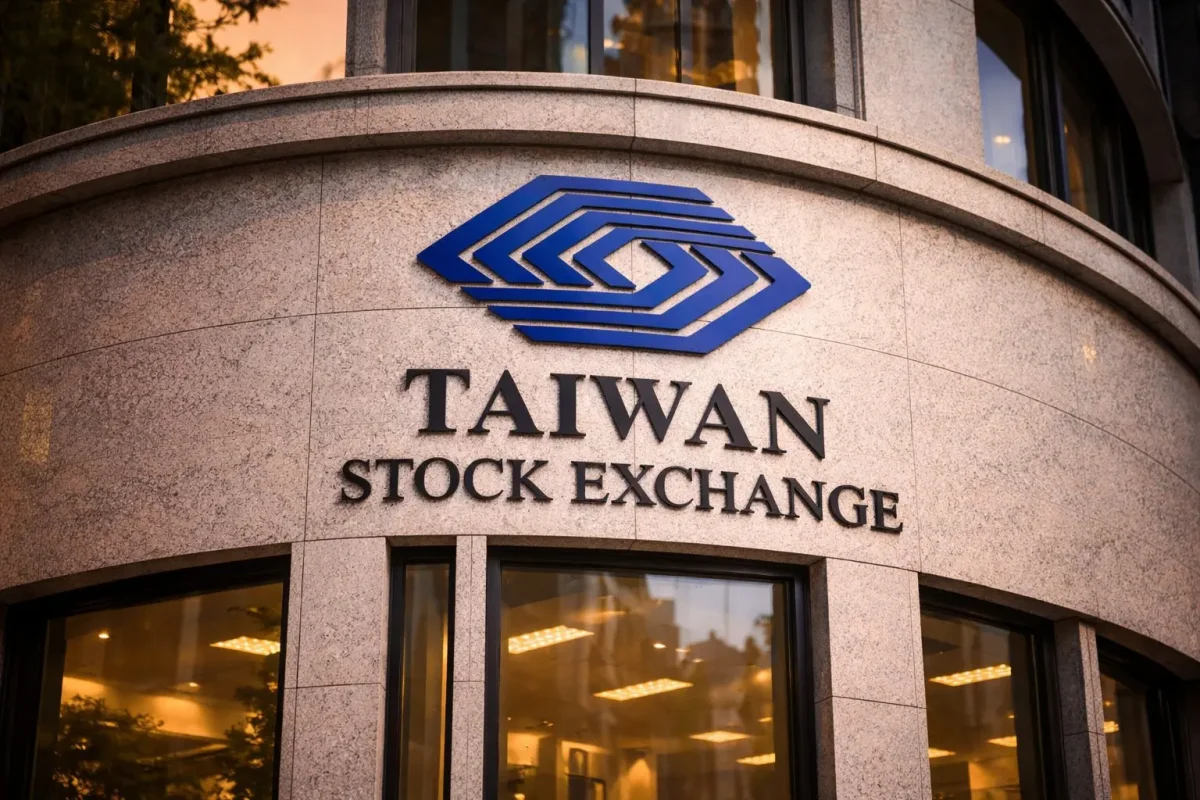
In a notable development, the Taiwan Stock Exchange confirmed its chairman, Sherman Lin, will lead a delegation to the United States for meetings with institutional investors and technology firms, likely aiming to shore up confidence. The market's next direction hinges on whether these geopolitical and macroeconomic drivers stabilize or intensify.