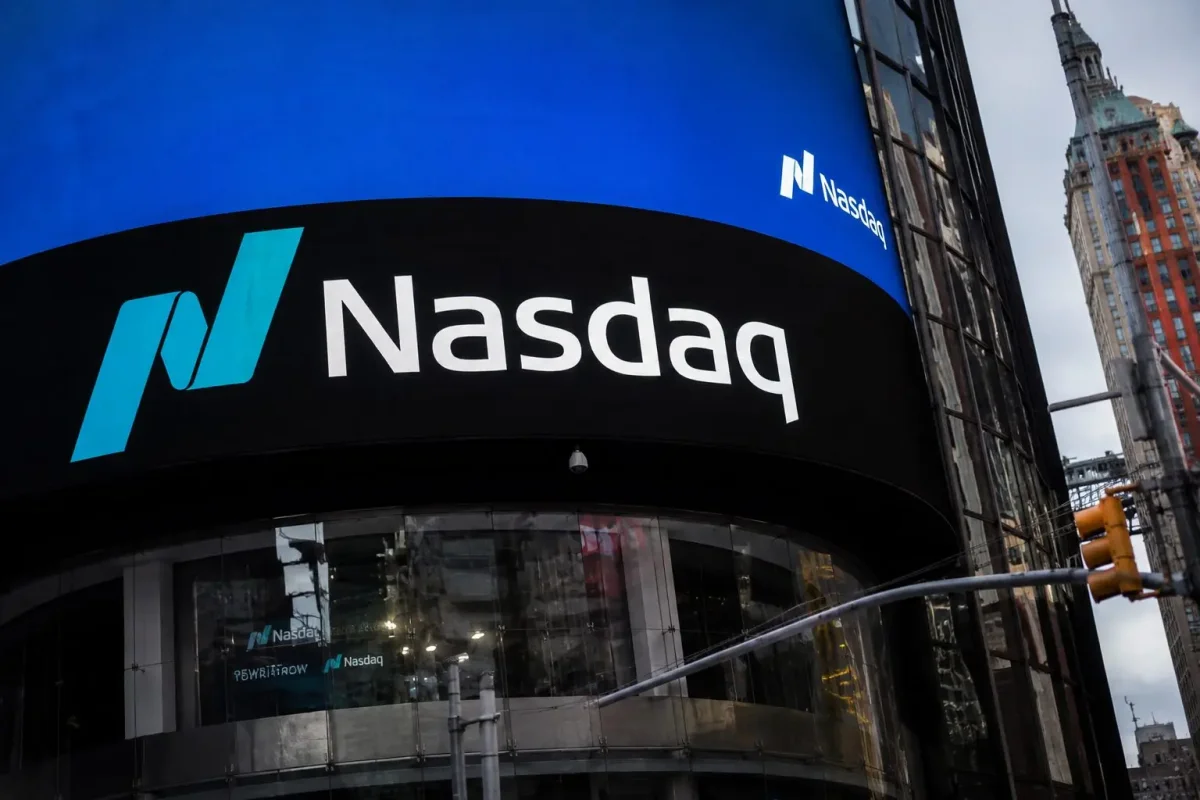
U.S. stocks ended on a mixed note Tuesday, with the Nasdaq Composite suffering a steep decline as a brief rebound in technology shares evaporated. The S&P 500 also lost ground, while the Dow Jones Industrial Average managed a marginal gain, as investors rotated out of high-flying AI and chip stocks ahead of key inflation data and a slate of major initial public offerings.
The Nasdaq plunged 314.38 points, or 1.21%, to close at 25,615.28. The S&P 500 dropped 39.47 points, or 0.53%, finishing at 7,366.26. In contrast, the Dow eked out a gain of 15.98 points, or 0.03%, ending at 50,801.99. The S&P 500 technology index was down more than 4% at its session low, while the Philadelphia Semiconductor Index fell 3.8%, according to Reuters.
The selloff marks a continuation of the recent pullback in technology and artificial intelligence stocks, which had recovered somewhat on Monday. The weakness was broad among chipmakers: Micron Technology gave up early gains to close lower, while Marvell Technology and Advanced Micro Devices also reversed course after opening higher, the Associated Press reported.
Market breadth told a different story, however. On the New York Stock Exchange, more stocks rose than fell, suggesting the decline was driven by sector rotation rather than a broad-based market retreat. Investors are moving capital from the year's top performers into areas that have lagged, a shift that some analysts view as healthy for the overall market.
“When the bounce ran its course this morning, the tape came for sale more broadly,” said Michael O’Rourke, chief market strategist at JonesTrading. He characterized part of the move as “a momentum unwind,” noting that shares which had rallied as investors chased winners began to reverse. Louis Navellier, a longtime Wall Street investor, told Business Insider there was “still seeing profit taking in tech,” while sectors that underperformed last month were among Tuesday's strongest movers. “Returns are broadening, which is a good thing,” he added.
Geopolitical tensions added to the cautious tone. President Donald Trump blamed Iran for shooting down a U.S. helicopter near the Strait of Hormuz and said the United States “must” respond, according to Reuters. While oil prices slipped during the session, investors remained wary of a potential spike in crude that could stoke inflation and push bond yields higher. The Cboe Volatility Index (VIX) rose to its highest level since April 7, reflecting increased anxiety.
The 10-year Treasury yield edged lower to 4.53% from 4.56% late Monday, as reported by the Associated Press, still above levels seen before the Iran conflict. Investors are now squarely focused on Wednesday's release of the May Consumer Price Index (CPI) at 8:30 a.m. ET. April's CPI-U showed a 3.8% year-over-year increase. The data will be closely scrutinized for any signs that inflation is moderating enough to influence the Federal Reserve's June 16-17 meeting.
Economists have been scaling back expectations for rate cuts. A Reuters poll conducted June 4-9 found that nearly 70% of economists now expect the Fed to keep its benchmark rate at 3.50%-3.75% through the remainder of 2026. “It’s going to be very hard for the Fed to justify any action at this point,” said Tom Porcelli, chief economist at Wells Fargo. Rabobank’s Philip Marey noted that risks are shifting toward “more persistent inflation and fewer cuts and possibly hikes.”
The IPO pipeline is also creating headwinds for AI stocks, as a wave of large offerings threatens to divert capital from existing names. Reuters reported that OpenAI has confidentially filed for a U.S. IPO, following Anthropic's move to go public. SpaceX is also preparing for an even larger listing. When big IPOs hit, funds often need to sell current holdings to make room for new shares, potentially adding to selling pressure in richly valued tech names.
Apple remained in the AI spotlight after launching its new Siri. Morgan Stanley estimated that over 850 million iPhones won't be able to run basic Apple Intelligence queries, and more than 1.3 billion won't get the advanced Siri features, leaving competitors like ChatGPT and Google's Gemini still setting the pace. Apple's challenge is to convince investors that a new upgrade cycle is on the horizon.
Oracle is scheduled to report earnings Wednesday after the bell, offering another look at AI infrastructure demand. The company is now viewed as a bellwether for cloud and data-center spending. Traders will be watching to see if growing AI revenue can offset concerns about capital expenditure and margins.
Looking ahead, a softer-than-expected CPI reading, a de-escalation in the Strait of Hormuz, or strong demand for new IPOs could draw buyers back into risk assets. Conversely, hot inflation, rising oil prices, or increased odds of a rate hike could trigger further selling in expensive AI names that have traded on lofty growth expectations for months.