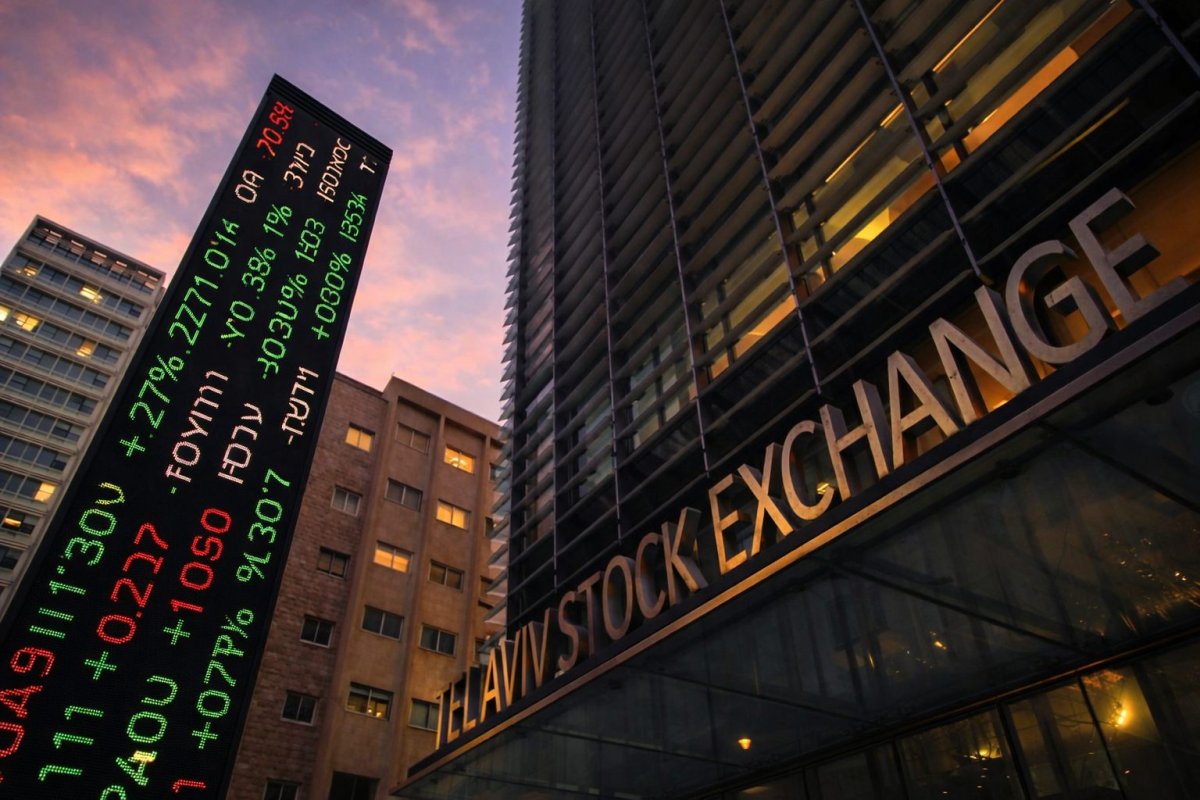
Shares of Tel Aviv Stock Exchange Ltd, the operator of Israel's primary securities market, posted a significant rally on Friday, climbing 6.4% to close at 15,800 agorot, equivalent to 158 Israeli shekels. This advance marked a robust recovery from a 4.4% decline in the preceding trading session, highlighting renewed investor interest in the exchange's stock.
Volume Momentum Builds After Schedule Shift
The resurgence coincides with a notable increase in trading activity since the bourse transitioned to a Monday-through-Friday operating week, abandoning its previous Sunday-to-Thursday schedule. This structural change appears to be attracting greater market participation. The exchange has increasingly become a proxy for investors betting on overall market liquidity flows within Israel. Data indicates a pronounced shift, with dual-listed Israeli companies seeing a 68% surge in trading volume on the Tel Aviv platform, outpacing the 55% increase recorded for the same stocks on Nasdaq. Economist Yuval Tsuk has attributed this trend to a "home factor" that is drawing investment activity back to the local market.
This context contributed to a positive session for the broader market, with the TA 35 blue-chip index edging up 0.52%. Gains were supported by companies like NICE and Elbit Systems, although Bank Leumi shares experienced a decline.
New Listings and Fundamental Drivers
Further bolstering the exchange's prospects is a pipeline of new and dual listings. Earlier this month, cybersecurity giant Palo Alto Networks confirmed its intention to list on the Tel Aviv Stock Exchange following the completion of its $25 billion acquisition of CyberArk. The company plans to trade under the ticker symbol "CYBR," though a specific commencement date for trading has not yet been provided.
The investment thesis for TASE Ltd is relatively straightforward: elevated trading volumes and a more diverse array of listed products typically translate into higher fee income for the exchange operator. Historically, the company's quarterly financial performance has closely correlated with overall market activity levels, rather than merely tracking the direction of equity prices.
Upcoming Catalysts and Risks
However, the current momentum is not without potential pitfalls. Should the initial spike in trading turnover prove temporary or if broader risk appetite diminishes, the exchange's shares could quickly relinquish their recent gains. The immediate focus for market participants is a packed schedule of imminent events.
The Bank of Israel is scheduled to announce its monetary policy decision on Monday at 4 p.m. local time. A Reuters survey of 13 economists found that seven anticipate a 25-basis-point reduction, which would lower the key rate to 3.75%. "A rate cut next week is more likely than not," commented Michel Nies, an analyst at Citi. Conversely, Georgi Deyanov of Morgan Stanley struck a note of caution, highlighting that persistent geopolitical risks remain a significant wildcard that could influence the central bank's deliberations.
Interest rate decisions have a direct impact beyond equity valuations; they are a key driver of trading activity itself. A rate-cutting cycle can support asset prices and potentially stimulate more market transactions. Conversely, a decision to hold rates steady or a shift in policy guidance could cause the surges in volume that exchanges depend on to evaporate.
Adding to the week's significance, TASE Ltd is set to report its fourth-quarter and full-year 2025 financial results after the market closes on March 5. Chief Executive Officer Ittai Ben-Zeev and Chief Financial Officer Yehuda Ben Ezra will host an English-language conference call for investors at 8:30 p.m. Israeli time that evening to discuss the performance.