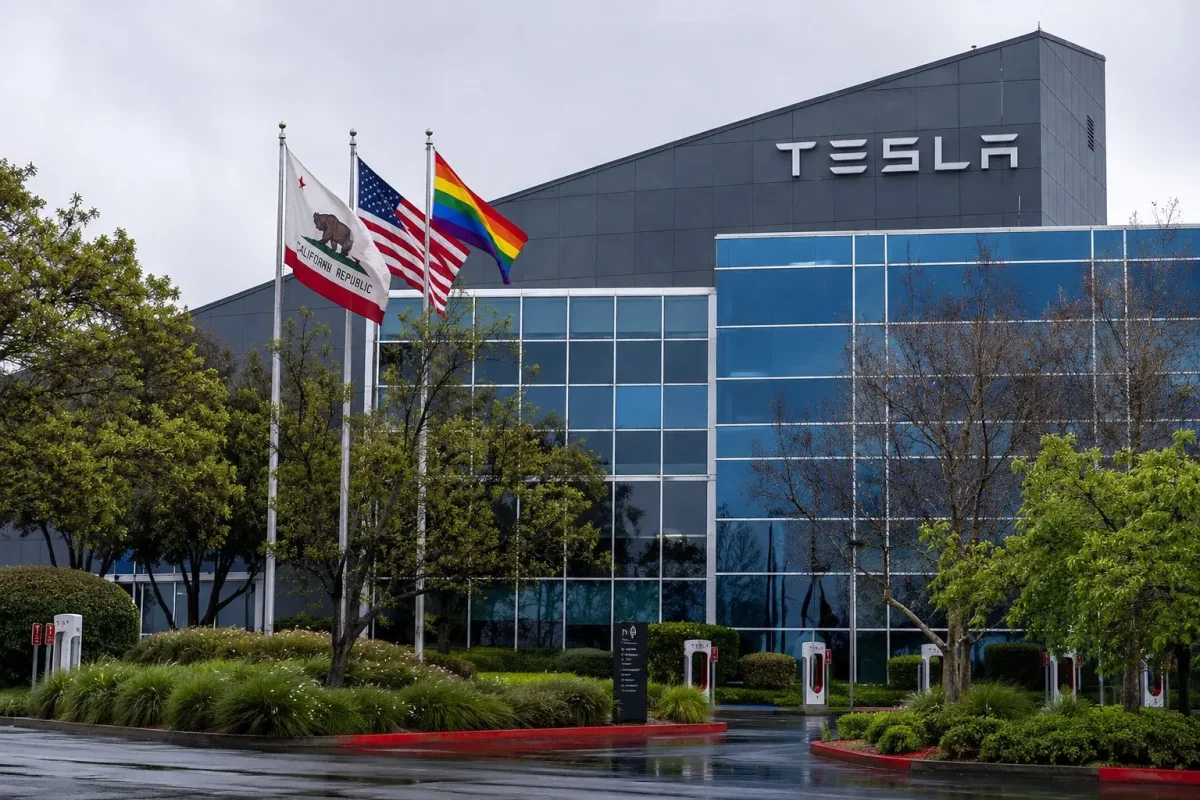
Tesla, Inc. (TSLA) shares edged lower in midday trading Tuesday, falling 1.7% to $404.09, as the stock struggled amid a rotation out of high-multiple names and fresh regulatory scrutiny of its Full Self-Driving (FSD) technology. The stock traded between $400.87 and $412.17 intraday, underperforming broader market benchmarks like the S&P 500 tracker SPY and the Nasdaq-100 tracker QQQ.
The decline came even as a rally in Elon Musk's other high-profile venture, SpaceX, captured investor attention. Reuters reported that SpaceX shares surged nearly 9.5%, pushing the rocket company's market value past Amazon, while Tesla's shares lagged. This divergence highlights the competing narratives around Musk's empire, with Tesla facing growing skepticism over its lofty valuation.
Goldman Sachs Raises Delivery Estimates
On the positive side, Goldman Sachs analyst Mark Delaney lifted his Q2 2026 delivery forecast for Tesla to 420,000 vehicles from 405,000, above the reported market consensus of 400,000. Despite the upgrade, Delaney maintained a Neutral rating on the stock with a $375 price target, suggesting limited upside from current levels. Delivery numbers are a critical near-term demand signal for Tesla, and a stronger-than-expected report would indicate the core electric vehicle business is stabilizing as the company invests heavily in artificial intelligence and autonomy.
FSD Under Regulatory Microscope
The bear case for Tesla, however, remains centered on its AI premium, which is becoming harder to defend amid regulatory headwinds. Reuters reported Tuesday that U.S. Senators Edward Markey and Richard Blumenthal urged the National Highway Traffic Safety Administration (NHTSA) to examine Tesla's self-published crash statistics for its Full Self-Driving system, a driver-assistance feature that requires constant human supervision. This follows a separate Reuters report that Tesla presented safety data to European regulators that independent researchers called misleading; the Netherlands' transport minister later clarified that Dutch approval was based on independent testing, not Tesla-submitted statistics.
These developments underscore the regulatory risk that could delay or limit the rollout of Tesla's autonomous driving technology, a key pillar of its bull case. Tesla's stock trades at a price-to-earnings ratio of approximately 371, meaning investors are paying a high premium for future growth from robotaxis, FSD software, and Optimus robots, rather than current earnings. Any setback in those areas could weigh heavily on the stock.
Robotaxi Rollout and Upcoming Catalysts
The next major catalyst for Tesla is its Q2 delivery report, expected in the coming weeks, followed by updates on robotaxi expansion and FSD oversight. Tesla has already launched unsupervised robotaxis in the Austin metro area and expanded to Dallas and Houston, but Reuters has reported long wait times and a rollout that some analysts view as slower than anticipated. These operational details are crucial for the share price, as much of Tesla's valuation hinges on investors believing the company can transition beyond traditional EV sales into higher-margin autonomous driving software and services.
For now, the stock appears caught between two narratives. Bulls can point to stronger delivery forecasts, a large cash-generating business, and a potentially valuable autonomy platform. Bears, however, highlight the extreme valuation, intensifying regulatory scrutiny, robotaxi execution risks, and competition for investor attention from SpaceX. Until Tesla delivers either a clean beat on deliveries or convincing evidence of scalable robotaxi economics, the risk-reward profile looks challenging.