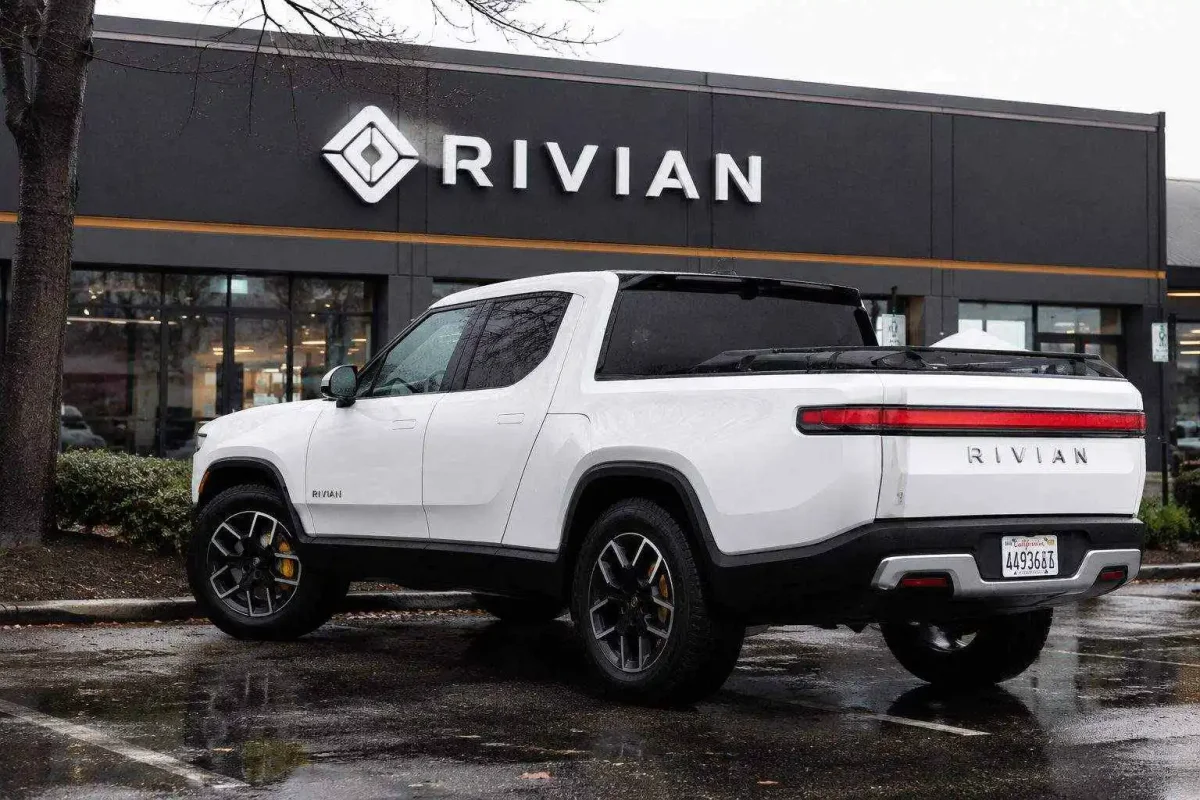
Rivian Automotive (NASDAQ:RIVN) saw its shares decline in early trading on Friday, even as the broader market moved higher. The electric vehicle maker's second-quarter results, released the previous day, beat analyst expectations but highlighted persistent challenges in its core vehicle business.
Shares were down 4.3% to $16.11 as of 9:58 a.m. EDT, while the Nasdaq Composite advanced 0.9% at the open. The pullback came despite Rivian exceeding earnings estimates, as investors focused on the fact that the company's automotive segment remained unprofitable before accounting for operating expenses.
Quarterly Performance
Rivian reported revenue of $1.658 billion for the second quarter, a 27% increase year-over-year and roughly 9.8% above LSEG consensus estimates. The adjusted loss per share came in at $0.46, narrower than the anticipated $0.63 loss. Consolidated gross profit turned positive at $179 million, compared to a loss of $206 million in the same period last year.
Deliveries rose 14% to 12,194 vehicles, but the improvement was not enough to make the vehicle business self-funding. The company's automotive segment posted a gross loss of $36 million, while its software and services division generated $215 million in gross profit, representing 120% of total consolidated gross profit.
Software and Credits Mask Automotive Losses
The software and services segment achieved a gross margin of 41.7%, while automotive gross margin was negative 3.1%. This stark contrast underscores the company's reliance on non-vehicle revenue streams.
Revenue from the Volkswagen joint venture totaled $308 million, and regulatory credits contributed an additional $106 million. Together, these sources accounted for 25% of total revenue. Excluding automotive credits, the automotive division's gross loss would have expanded to approximately $142 million, and after including the $100 million R2 ramp cost, the segment would be about $42 million in the red.
CEO Optimism and Delivery Targets
Chief Executive RJ Scaringe expressed confidence in the company's trajectory, noting that the reservation-to-order conversion rate was "meaningfully above our own internal projections." He anticipates that R2 gross margin will turn positive in the second half of the year.
However, the company faces a significant challenge to meet its full-year delivery goal of 65,000 to 70,000 vehicles. With 22,559 vehicles delivered in the first half, Rivian must deliver between 42,441 and 47,441 units in the second half, requiring a quarterly average of 21,221 to 23,721 vehicles—a 74% to 94.5% increase from Q2 levels.
Financial Position and Outlook
Rivian's cash position provides some cushion. As of June 30, cash and short-term investments stood at $5.31 billion, and a subsequent stock sale in July raised an additional $1.317 billion net. Operating cash outflows combined with capital expenditures totaled $1.924 billion in the first half.
The company lowered its 2026 capital expenditure forecast to $1.7 billion-$1.8 billion, down from the previous $1.95 billion-$2.05 billion range, a reduction of $250 million at the midpoint.
Risks Ahead
Key risks include a slower-than-expected R2 rollout, potential declines in regulatory credit contributions, and revenue concentration with Volkswagen. Rivian has also projected a drop in software gross profit from the VW joint venture in 2028. Additionally, any future equity raising would dilute existing shareholders.
As the market digests these results, the spotlight remains on automotive gross margins. While software and credits bolster overall performance, they do not resolve the ongoing debate over the profitability of Rivian's core vehicle business.