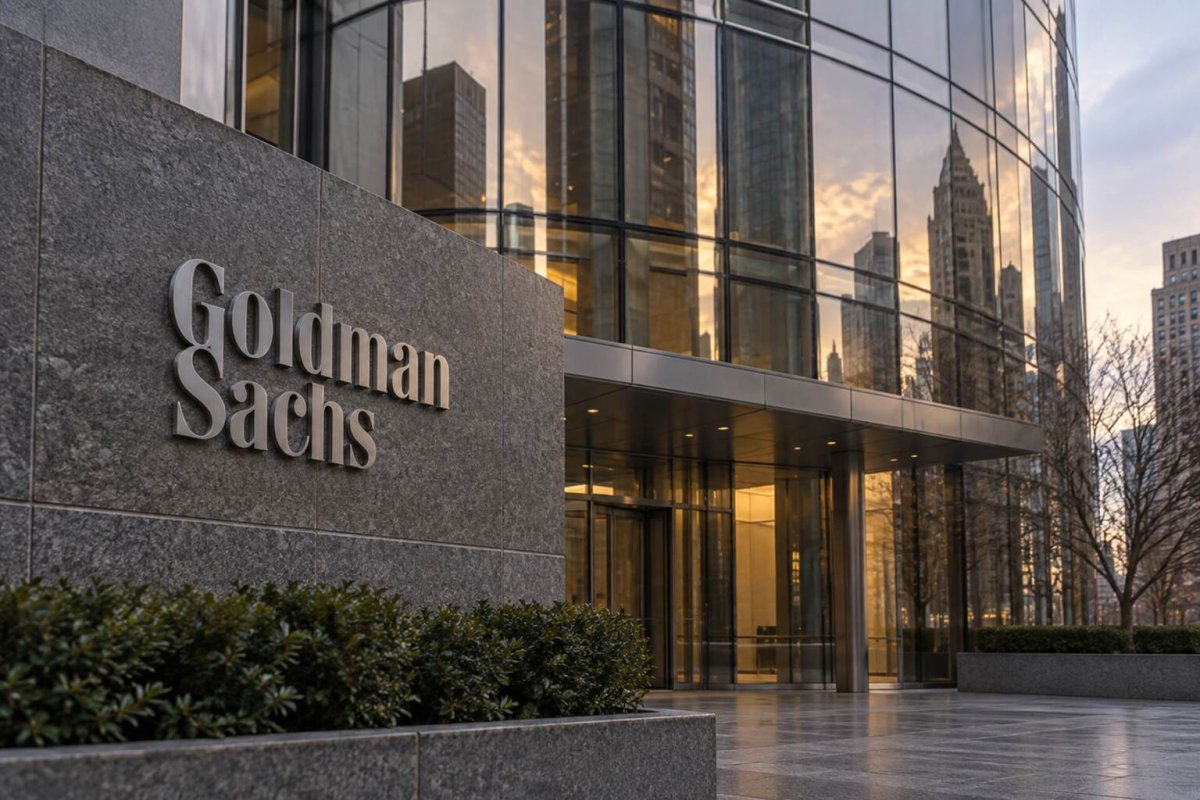
Goldman Sachs Group (NYSE: GS) experienced a sharp decline on Monday, with shares falling $40.94, or 4.0%, to close at $988.24. This drop comes just two days before CEO David Solomon is scheduled to speak at the Barclays Global Financial Services Conference, an event that investors will scrutinize for clues about whether the firm's exceptional second-quarter performance marks a new baseline or a cyclical high point.
The decline pushed Goldman's stock 14.4% below its 52-week high of $1,153.99. Notably, the firm did not release any new financial data on Monday, suggesting the selloff was driven by broader market pressures rather than company-specific news. The 10-year Treasury yield briefly touched 5%, while the S&P 500 slipped 0.5%, according to the Associated Press. Additionally, Bank of America (NYSE: BAC) saw its shares fall after CEO Brian Moynihan indicated that third-quarter trading revenue would likely be flat and investment banking fees would come in between $1.6 billion and $1.8 billion, below analyst expectations of around $2 billion, as reported by Bloomberg Law. This cautious outlook from a peer likely weighed on sentiment across the capital markets sector.
A High Bar for Wednesday's Presentation
Solomon is set to appear at the Barclays conference at 2 p.m. EDT on Wednesday, September 16. While the session is expected to be webcast and replayed on Goldman's investor relations site, the company has not promised a comprehensive business update. Nevertheless, investors will be listening for any commentary on deal closings, the underwriting backlog, client activity, or expense management.
The benchmarks are formidable. In the second quarter, Goldman reported net revenues of $20.34 billion, net earnings of $6.63 billion, and an annualized return on common equity of 23.5%. Global Banking & Markets revenue surged 53% year-over-year to $15.52 billion, with investment banking fees jumping 55% to $3.40 billion. Equities revenue soared 72% to $7.42 billion, including $3.26 billion from equities financing, while FICC revenue climbed 32% to $4.59 billion, driven by gains across rates, commodities, mortgages, and currencies.
Operating expenses also rose 26% to $11.67 billion, partly due to higher compensation and transaction-based costs. This mix of strong revenue growth and rising expenses creates a delicate balance for the firm. While a modest slowdown would still leave Goldman highly profitable, the 55% and 72% year-over-year growth rates in key segments set a difficult comparison for future quarters.
Buyback Price as a Reference Point
Monday's close sits remarkably close to Goldman's average buyback price. In the second quarter, the firm repurchased $4.00 billion of its common stock, buying 4.1 million shares at an average price of $984.57. Monday's closing price of $988.24 was just 0.4% above that average. The company also paid $1.36 billion in common dividends and raised its quarterly dividend to $5.00 per share, implying an annualized yield of about 2.0% at current prices.
The buyback program remains a key support for the stock. If management continues to see excess capital and attractive returns at these levels, another robust repurchase pace could help absorb shares after the decline. Conversely, if market uncertainty or regulatory capital needs slow the program, investors may lose a critical backstop that was prominent in the second quarter.
Valuation and Market Implications
At Monday's close, Goldman traded at approximately 2.69 times its June book value of $367.67 per share. This multiple is justifiable while returns remain near the 23.5% level seen in the second quarter, but it becomes harder to defend if underwriting activity normalizes, trading volumes decline, and compensation costs stay elevated.
Wednesday's presentation will provide critical signals on several fronts: whether the fee backlog is converting to revenues, whether equities financing balances remain productive, whether trading is holding up compared to last year, and whether expense growth is moderating. Firm answers to these questions could make Monday's drop appear like an overreaction to weaker peer guidance. However, any signs of deceleration or a lack of clarity could validate investor concerns about the sustainability of Goldman's June quarter performance.
As the market awaits Solomon's remarks, the pressure is on for the CEO to demonstrate that the firm's recent success is not merely a cyclical peak but a foundation for continued growth.