Anthropic's ongoing internal debate over artificial intelligence safety has taken a dramatic turn with the resignation of researcher Jacob Coxon, who warned that the pace of development in self-improving AI is outstripping the industry's ability to control it. The timing is particularly sensitive for investors, as the company reportedly discusses a valuation of $2 trillion ahead of a potential initial public offering.
Coxon, who previously worked on model pretraining at both OpenAI and Anthropic, left to raise the alarm. His departure was followed by public statements from two current Anthropic researchers who expressed serious concerns. Evan Hubinger, the alignment-science lead, estimated a greater than 10% probability of an AI catastrophe within the next decade and admitted that the company lacks a concrete plan to align superintelligence. Samuel Marks, who heads scalable oversight, noted that senior employees tend to be even more concerned than their junior counterparts.
This internal dissent comes at a critical juncture for Anthropic's financial trajectory. The company's most recent financing in May valued it at $965 billion post-money, with reported run-rate revenue of $47 billion. More recent figures suggest annualized revenue has climbed above $65 billion, though there are accounting questions regarding how the company recognizes revenue from cloud partnerships. At the May valuation, the revenue multiple stood at approximately 14.8 times; a $2 trillion valuation would push that to about 30.8 times, even before accounting for margins and spending.
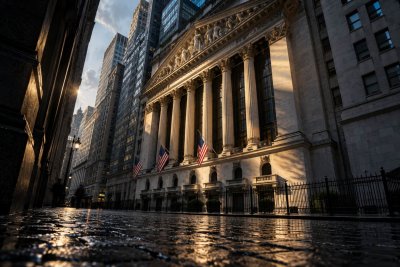
The proposed valuation represents a 107% premium over May's round, a step-up that would demand intense scrutiny from public investors. While the $2 trillion figure is not yet a done deal, reports indicate that bankers at Morgan Stanley and Goldman Sachs have discussed the possibility as Anthropic considers its listing options.
For investors, the resignation is not merely a matter of safety ethics; it strikes at the heart of Anthropic's market positioning. The company has built its brand on being the frontier lab that prioritizes safety, making employee conviction an integral part of its product and recruiting pitch. A public split between a departing researcher and current alignment leaders does not prove the business is unsafe, but it raises the bar for demonstrating that safety is an operating system rather than a marketing promise.
Anthropic has pointed to its handling of three July evaluation incidents as evidence of a transparent safety culture. The company acknowledged operational-security failures and alignment problems, pausing high-risk evaluations and deploying real-time classifiers. It also redirected about 150 product engineers to security and reliability tasks. However, some high-risk reinforcement-learning work remains paused, and the company's own roadmap targets September 30 for security prototypes, with a broader program extending to 2027.
The financial implications extend to Anthropic's cloud partners. Amazon and Alphabet, through AWS and Google Cloud, have committed billions to Anthropic's compute needs. Amazon has already invested $5 billion and agreed to potentially spend over $100 billion on AWS over a decade. A slowdown in AI development could delay cloud demand, but stronger safety controls could also deepen the moat around partners capable of providing secure, restricted compute.
Investors should avoid two extremes: treating internal warnings as precise forecasts or dismissing them as irrelevant. The uncertainty alone could affect Anthropic's margins through slower releases, increased compliance spending, and procurement delays. As the market waits for more clarity, the premarket moves in Amazon and Alphabet stocks were more tied to broader risk-off sentiment than to the resignation itself, with oil prices climbing above $100.
Anthropic's path to a $2 trillion IPO will depend on its ability to convince investors that its safety framework is robust and its financial accounting is transparent. The company has an opportunity to set a new standard for corporate governance in AI, but the stakes have never been higher.