Alphabet's Class A shares (GOOGL) traded nearly unchanged near $338 in late-morning Nasdaq action on Tuesday, but the calm price action conceals a heated debate among investors. On one hand, Google has just made Gemini 3.8 Flash generally available at an aggressively low introductory price, signaling a push to win developer mindshare. On the other, the parent company is pouring more into infrastructure than its operating cash flow generated in the last quarter, raising questions about the return on that massive investment.
At 11:48 a.m. ET, GOOGL was down about 0.1% to $338.22, from Friday's close of $338.46, according to delayed Yahoo Finance data. The stock traded in a range of $333.22 to $338.70, still about 17.2% below its 52-week high of $408.61. That gap represents a valuation reset rather than a collapse, shifting the narrative from momentum to proof of profitability.
Gemini 3.8: A sharp economic pitch
Google introduced Gemini 3.8 Flash on September 2, marking its third Flash release in just six weeks. The model is available via the Gemini API, Google AI Studio, Gemini Enterprise, and consumer products. The launch pricing is set at $0.75 per million input tokens and $3.75 per million output tokens through December 31. Those prices are slated to double on January 1, 2027.
That deadline is more significant to shareholders than another benchmark win. The low introductory rate lowers the barrier for developers to test and deploy agentic workloads now. The January price hike will reveal how sticky that usage is. If customers keep workloads after the rate doubles, Alphabet gains evidence of pricing power. If Google must extend promotions or loses workloads to rivals, the cheap launch will have bought volume without proving attractive returns.
Google's own benchmarks are impressive but should be treated as vendor-reported metrics, not audited revenue evidence. The Gemini 3.8 product page shows a 61.4% score on Vals Finance Agent v2 and 54.9% on HLE-Verified. The model handles a one-million-token input context and up to 64,000 output tokens. Google cautions that higher reasoning settings can consume more tokens, meaning the same per-token price does not guarantee the same cost per completed task.
Cloud profit is the strongest evidence
The most compelling support for Alphabet's AI investment case already sits in its income statement. In the second quarter, Google Cloud revenue surged 82% year-over-year to $24.77 billion, while Cloud operating income jumped to $8.81 billion from $2.83 billion. That implies a segment operating margin of roughly 35.6%, up from 20.7% a year earlier.
Search remains resilient rather than being visibly cannibalized. Google Search and other revenue increased 17% to $63.27 billion, while total Alphabet revenue rose 24% to $119.80 billion. Operating income advanced 30% to $40.77 billion, per the company's SEC filing. The Associated Press noted that revenue exceeded the $117.06 billion average estimate in a FactSet poll, indicating that demand—not just cost-cutting—drove the quarter.
Investors should approach the quarter's $9.11 diluted earnings per share with caution. Alphabet recorded a $98.0 billion net unrealized gain on equity securities, which inflated net income but does not reflect ordinary Search or Cloud profitability. Operating income and cash flow are cleaner measures of whether Gemini-related demand is paying its way.
The .9 billion cash-flow test
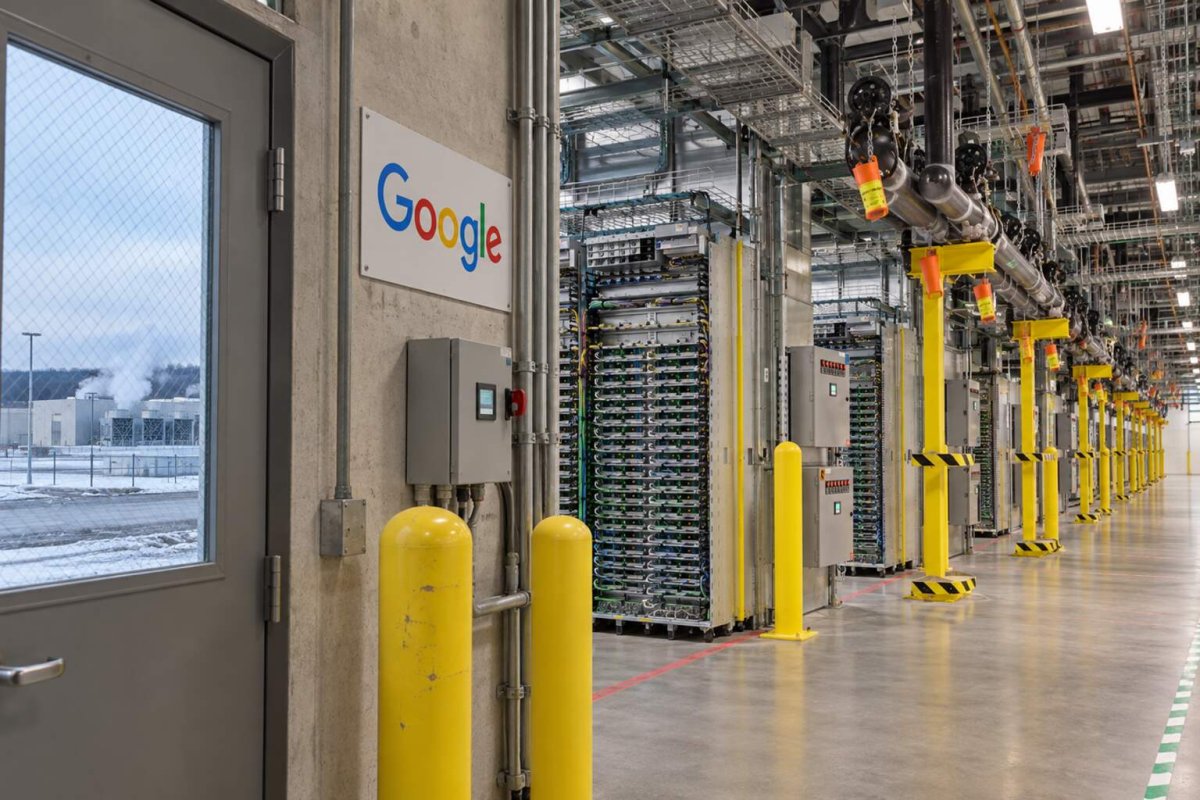
Capital expenditure reached $44.92 billion in the second quarter, almost exactly double the $22.45 billion spent a year earlier. Operating cash flow was $39.07 billion, leaving roughly negative $5.86 billion of quarterly free cash flow. On a six-month basis, the picture is less severe but still tight: $84.86 billion of operating cash flow minus $80.60 billion of capex leaves about $4.26 billion.
Alphabet has ample liquidity, and its balance sheet is not the central risk. The real issue is opportunity cost. Cash used for data centers and servers is cash that cannot simultaneously fund share repurchases, larger dividends, or another acquisition. Gemini 3.8 therefore matters as an operating test, not a product-launch spectacle. Rapid model releases can keep Alphabet competitive and fill new capacity faster, but they can also shorten the useful commercial life of each model and make customers expect continual price-performance improvements. Three Flash generations in six weeks demonstrate velocity; they also show how quickly today's advantage can become tomorrow's baseline.
What would change the Alphabet stock thesis
Three numbers now deserve more weight than a single benchmark leaderboard: Cloud revenue growth, Cloud operating margin, and free cash flow after capex. A durable Cloud margin near the latest level, combined with continued Search growth and a return to clearly positive free cash flow, would show that the infrastructure is being absorbed productively.
The counterargument is straightforward. The current Cloud growth rate may be exceptional, promotional model pricing may compress unit economics, and depreciation from the newest facilities has not yet fully flowed through the income statement. If Cloud growth slows before those costs peak, the apparent operating leverage can reverse.
At roughly $338, Alphabet stock already sits well below its 52-week high. Gemini 3.8 gives investors a concrete reason to believe the product side of the AI bet is advancing. The next proof point is harder: showing that better models can turn extraordinary physical investment into recurring cash returns.