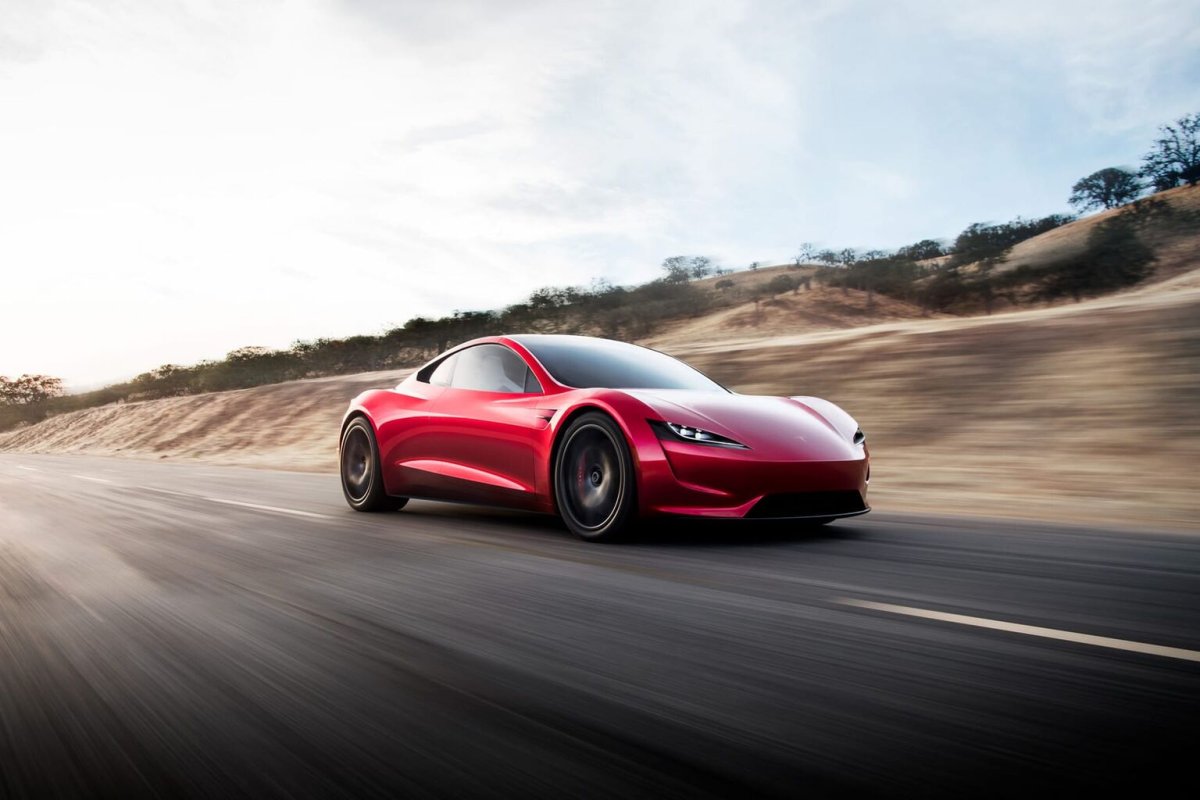
Tesla, Inc. (NASDAQ:TSLA) has scheduled another Roadster reveal for October 1, but the market's attention is squarely on production capabilities rather than the spectacle of the launch event. The company's shares closed Friday at $364.27, down 0.53%, despite unusually heavy trading volume.
The Roadster's current product page features a countdown timer and the teaser "Go for launch," but notably omits any production dates or capacity details. This ambiguity has left investors questioning whether the vehicle will become a meaningful revenue contributor or remain a halo product that enhances brand perception without significantly impacting financials.
Scale and Revenue Impact
Even a modest production run of 10,000 vehicles at an assumed average price of $250,000 would generate $2.5 billion in revenue. This figure represents approximately 2.4% of Tesla's $105.2 billion company-compiled 2026 revenue consensus. The Roadster could serve as a powerful brand enhancer without becoming a major revenue line, but the lack of concrete production commitments leaves room for speculation.
Tesla's history with the Roadster has been marked by delays. The second-generation concept was unveiled in November 2017 with production targeted for 2020, a timeline that was missed. As of January 2025, the Roadster was still listed as "in development," with factory location and capacity marked as "TBD." The September 12, 2026 teaser finally provided a date, but it remains a reveal date, not a delivery commitment.
Market Reaction and Investor Sentiment
Friday's trading session saw Tesla shares decline 0.53% to $364.27, despite volume of 51.8 million shares, which was 31% above the 20-session average. The muted price action suggests that investors have not priced the Roadster as a fresh earnings engine. The stock has remained within a recent trading range, and the date alone has not broken it out.
The stock's close on Friday was near several recent analyst targets. Analyst recommendations span a wide range, from Barclays' $370 price target to RBC Capital's $480, reflecting broader debates about Tesla's autonomy, robotics, and margin prospects. None of these calls incorporate specific Roadster volume or profit assumptions.
Production and Financial Context
Tesla reported $20.5 billion in automotive revenue for the second quarter, with automotive gross margin at 16.9%, according to its latest 10-Q filing. The company expects to spend more than $25 billion on capital expenditures in 2026, primarily for AI and production infrastructure. The Roadster will compete with larger programs for engineering and factory resources, making its production timeline and resource allocation critical.
The strategic counterargument is that a low-volume flagship can enhance brand interest and demonstrate battery performance, potentially carrying richer margins than Tesla's broader vehicle mix. However, no current cost or margin disclosures support this case.
What to Watch on October 1
Investors will be looking for four key pieces of information at the reveal: a final price, production site, homologation path, and delivery window. Without these, the Roadster remains a brand event rather than a forecast input. The scale table illustrates the core tension: a rare halo car can command attention at 5,000 units, but it requires much higher volume, price, or margin to materially alter group earnings.
As the countdown continues, the market's focus remains on production scale and execution, not just the excitement of the reveal. October 1 will provide the next hard evidence, and the outcome will determine whether the Roadster becomes a meaningful part of Tesla's financial narrative or remains a symbolic showcase.