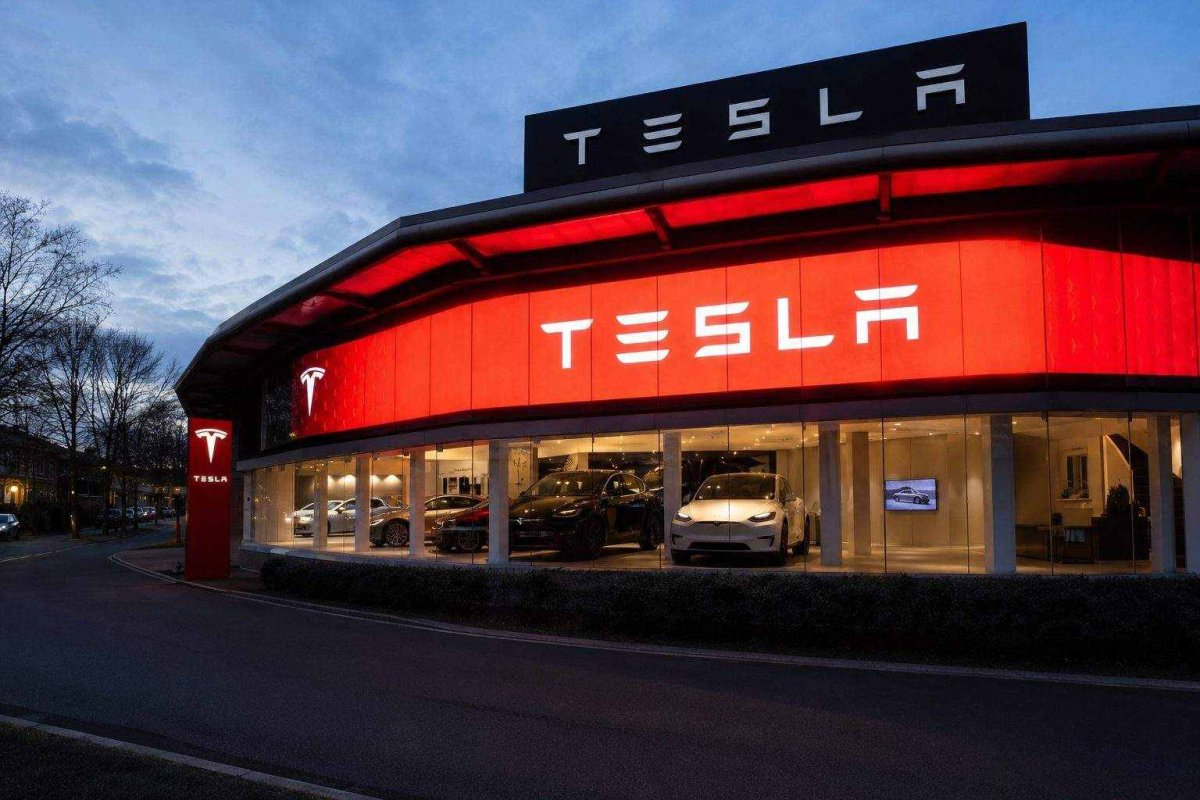
Tesla Inc. (NASDAQ: TSLA) shares declined sharply on Friday, closing at $422.24—a loss of 4.75%—as investors concluded that the recent high-level U.S.-China summit in Beijing yielded no tangible progress for the company's driver-assistance software in the critical Chinese market. The stock ended the week roughly 1.4% lower, erasing earlier gains and underperforming major rivals General Motors Co. (NYSE: GM) and NIO Inc. (NYSE: NIO).
The broader equity market also retreated amid renewed inflation worries and rising oil prices. The S&P 500 fell 1.2%, the Dow Jones Industrial Average shed 1.1%, and the Nasdaq Composite slid 1.5%, pulling back from record highs set earlier in the week.
China remains the primary focus for Tesla bulls, with Full Self-Driving (FSD) approval seen as a catalyst that could unlock significant revenue from software sales and subscriptions. However, the lack of any concrete announcement from the Trump-Xi meeting has dampened sentiment. Tesla's FSD, a paid driver-assist add-on, still requires active driver supervision and does not make the vehicle fully autonomous.
The selloff was not isolated to Tesla. General Motors fell 3.72%, Ford Motor Co. (NYSE: F) dropped 7.46%, and U.S.-listed shares of NIO declined 2.40% in Friday's session, according to MarketWatch data. The broader weakness in auto stocks reflects ongoing concerns about the competitive landscape in China, where local EV makers continue to close the gap.
Tesla's first-quarter results underscore the premium the stock commands based on artificial intelligence (AI) expectations. The company reported $22.4 billion in revenue, with $16.2 billion from automotive sales. Free cash flow—cash left after capital spending—reached $1.4 billion. Tesla noted that increased FSD sales and subscriptions boosted automotive ancillary revenue.
Capital expenditure remains a key focus. Reuters reported last month that Tesla raised its 2026 capex plan to over $25 billion as CEO Elon Musk invests heavily in AI, robotics, and custom chips. This aggressive spending contrasts with the cautious stance of some analysts. UBS analyst Joseph Spak reiterated a Hold rating with a $364 price target, calling Tesla a leader in "physical AI" but warning that the stock "may continue to exhibit high volatility" and is trading more on sentiment and momentum than fundamentals.
Robotaxi ambitions also face headwinds. Musk had previously targeted launching driverless vehicles in "a dozen or so states" by year-end, but recent cautious comments from the CEO have led analysts to expect a slower rollout than initially anticipated, as reported by Reuters.
Looking ahead, the weekend could prove pivotal. If Chinese regulators signal approval for FSD or any positive development emerges, Friday's selloff could reverse sharply. Conversely, no news may keep Nasdaq futures subdued, prompting further trimming of a stock that remains priced for high hopes in software and robotics. Barron's noted that the average analyst target for Tesla is around $400, below the current share price, suggesting limited upside in the near term.