Shares of Tesla Inc. (TSLA) closed at $433.45 on Tuesday, down 2.7%, as a hotter-than-expected inflation reading and fresh doubts about its robotaxi rollout weighed on the stock. The session saw a wide trading range, with the stock hitting an intraday high of $447.56 before sliding to a low of $422.39.
Inflation Pressures Resurface
The selloff began after the Bureau of Labor Statistics reported that the Consumer Price Index (CPI) rose 3.8% year-over-year in April, while core CPI—excluding food and energy—climbed 2.8%. The data sent Treasury yields higher, a move that typically compresses valuations for stocks reliant on distant future profits. Tesla, with its lofty price-to-earnings ratio near 398 and market capitalization around $1.53 trillion, is particularly sensitive to such shifts. Higher yields reduce the present value of far-off cash flows, and Tesla's bull case hinges heavily on autonomous driving and AI-driven revenue streams.
Robotaxi Execution in the Spotlight
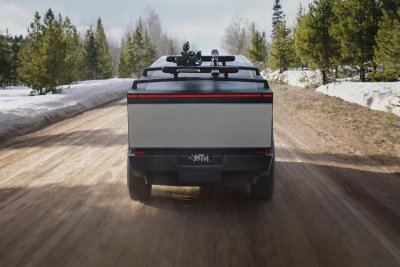
Compounding the macro headwind was a report from Reuters detailing real-world tests of Tesla's robotaxi service in Dallas, Houston, and Austin. Reporters experienced lengthy wait times, canceled rides, inconsistent coverage, and drop-offs that missed their marks. The service, which is central to Tesla's long-term narrative of transitioning from vehicle sales to high-margin software and ride-hailing revenue, showed signs of being far from ready for prime time. In Austin, Reuters counted only about 50 Tesla robotaxis on the road, compared to more than 250 Waymo vehicles operated by Alphabet Inc. (GOOGL). In 27% of ride checks, no Tesla vehicle arrived at all.
Management's Cautious Tone
Tesla management did little to allay these concerns. CEO Elon Musk told investors the company is taking a deliberate approach to robotaxi deployment, emphasizing the need to prevent injuries or fatalities and describing "rigorous validation" as the main bottleneck. CFO Vaibhav Taneja added that capital spending for 2026 is now expected to exceed $25 billion, characterizing this as a "very big capital-investment phase." He also flagged that free cash flow will remain negative through the remainder of 2026, underscoring the heavy spending required to scale autonomy and battery production.
Bulls Find Some Support
Despite the headwinds, there were bright spots for the bull case. Tesla reported 1.28 million active Full Self-Driving (FSD) subscriptions in the first quarter, and the company is pushing ahead on AI compute, battery materials, and new production lines. On Tuesday, Tesla announced plans to invest nearly $250 million in additional battery-cell production capacity at its plant near Berlin, boosting the facility's target capacity from 8 GWh to 18 GWh. Meanwhile, reports that Musk is slated to join President Donald Trump on a trip to China kept attention on the potential for FSD approval in that market, though no imminent green light has been confirmed. China's crowded EV landscape means any software approval would not immediately translate into significant revenue.
Macro and Competitive Context
The broader market backdrop offered little relief. Lazard's chief market strategist, Ronald Temple, noted that "Fed easing appears to be off the table," though he does not expect rate hikes either. Prediction markets reflected this view, with Kalshi's June Fed contract pricing a 97% chance of no rate change, and Polymarket showing 98% odds of no move in June and 62% odds of zero cuts through 2026. Among automakers, Tesla's decline stood out: General Motors (GM) rose about 1.5%, Ford (F) edged down 0.6%, and Rivian (RIVN) lost just under 1%. This divergence suggests the market is focusing on Tesla's unique exposure to interest rates, software-driven valuations, and self-driving timelines.
Conclusion
Tesla's stock move on Tuesday sent a clear signal: investors are still pricing in a large AI and autonomy payoff, but expectations are shifting. The market now wants to see shorter robotaxi wait times, broader FSD regulatory approvals, and evidence that heavy capital spending will translate into real cash generation. While Berlin's battery expansion and China's potential are positive, the day's price action showed that proof of execution is struggling to keep pace with the stock's valuation.