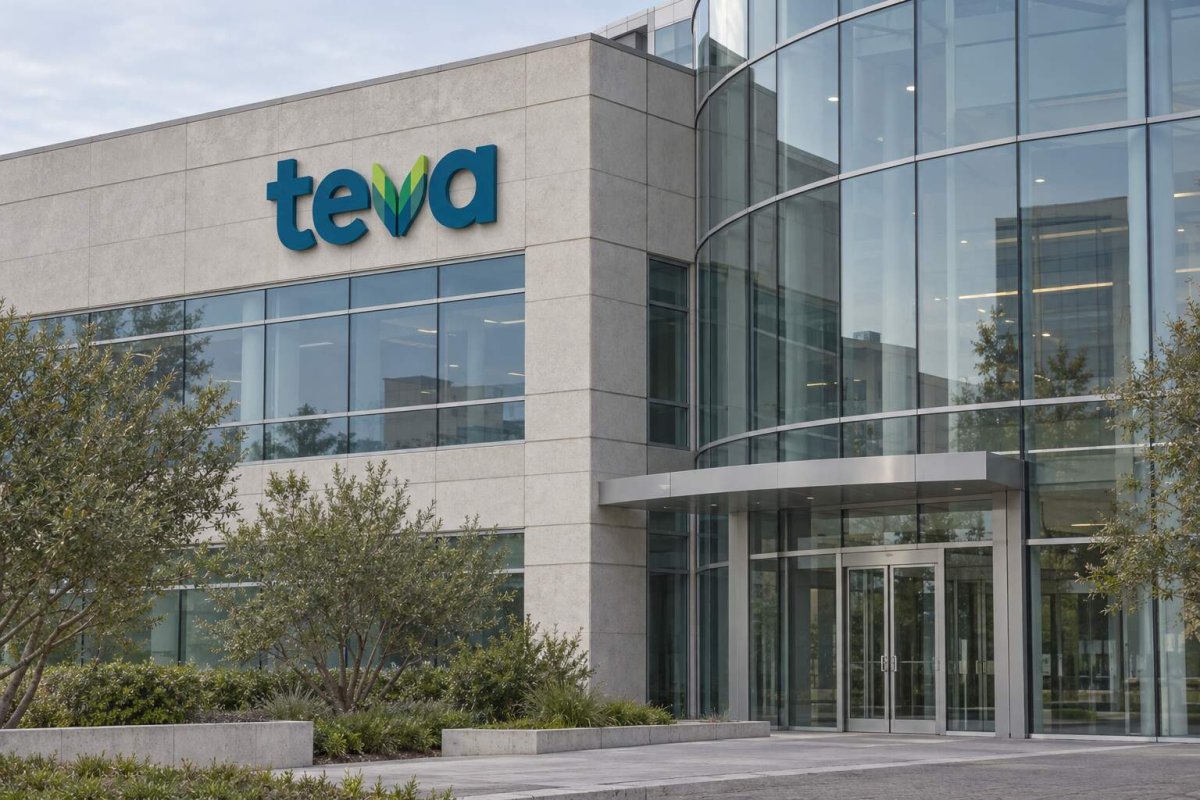
Teva Pharmaceutical Industries (NYSE: TEVA) marked a significant corporate milestone on Monday as its ordinary shares began trading directly on the New York Stock Exchange, replacing the company's American depositary shares (ADSs) on a one-for-one basis. The transition, which had been anticipated since the company's announcement on September 14, was executed without any new equity issuance, meaning existing shareholders' proportional ownership remains unchanged.
By early afternoon trading, Teva's shares were up 4.3% to $38.67, compared with Friday's closing price of $37.09, according to delayed market data. The uptick reflects investor optimism about the potential benefits of the direct listing, including the possibility of index inclusion and a broader shareholder base.
Key Changes for Shareholders
For U.S. investors, the shift from ADSs to ordinary shares represents a change in the mechanics of how they hold Teva. Previously, ADS holders owned receipts issued through a depositary bank, which typically handle dividend payments and corporate actions. Now, direct holders of ordinary shares will exercise voting, dividend, and notice rights directly under Teva's governing documents. Equiniti Trust Company has been appointed as the U.S. transfer agent, as disclosed in Teva's second-quarter SEC filing.
The ordinary shares are fully fungible between the New York and Tel Aviv stock exchanges, meaning the same security can move seamlessly between the two markets through standard custody and settlement channels. This interoperability is expected to reduce capital-market friction and make it easier for international investors to trade Teva shares.
Index Inclusion and Investor Appeal
Teva has stated that direct trading could broaden its shareholder base and improve access to U.S. equity indexes. However, index inclusion is not automatic; it will depend on the rules and review schedules of each index provider. The possibility of being added to major indices like the S&P 500 could attract passive investment funds, potentially driving demand for the stock.
The 4.3% price increase on Monday should be viewed with caution, as the conversion itself does not alter Teva's fundamentals. The company's revenue, cash flow, and earnings remain unchanged. The market's reaction likely reflects expectations about future accessibility and investor base expansion rather than an immediate improvement in valuation.
Financial Outlook Remains Key
Despite the structural change, Teva's business performance continues to be the primary driver of its stock price. In the second quarter, the company reported revenue of $4.1 billion, operating cash flow of $411 million, and free cash flow of $622 million. For 2026, management has guided revenue in the range of $16.5 billion to $16.85 billion and free cash flow of $2.0 billion to $2.4 billion.
The guidance includes the anticipated costs from the acquisition of Emalex, a biotech firm Teva agreed to acquire earlier this year. Management expects approximately $770 million in related adjusted EBITDA expense and a 66-cent reduction to non-GAAP earnings per share in 2026. This leaves projected non-GAAP EPS at $1.91 to $2.11, highlighting the importance of executing on the acquired pipeline and existing growth products.
Potential Upside and Risks
The direct listing offers tangible benefits: a single security trading on two exchanges, fewer depositary mechanics, and the potential to attract index-linked investors. However, the counterargument is equally clear. If Teva fails to meet its cash-flow targets or if Emalex's contributions underperform, a simpler share structure will not mitigate the financial shortfall.
Investors should therefore view Monday's price movement as a positive sentiment indicator but remain focused on the company's operational execution and financial discipline. The direct listing is a strategic move that could enhance liquidity and shareholder engagement, but it does not change the fundamental investment thesis for Teva.
