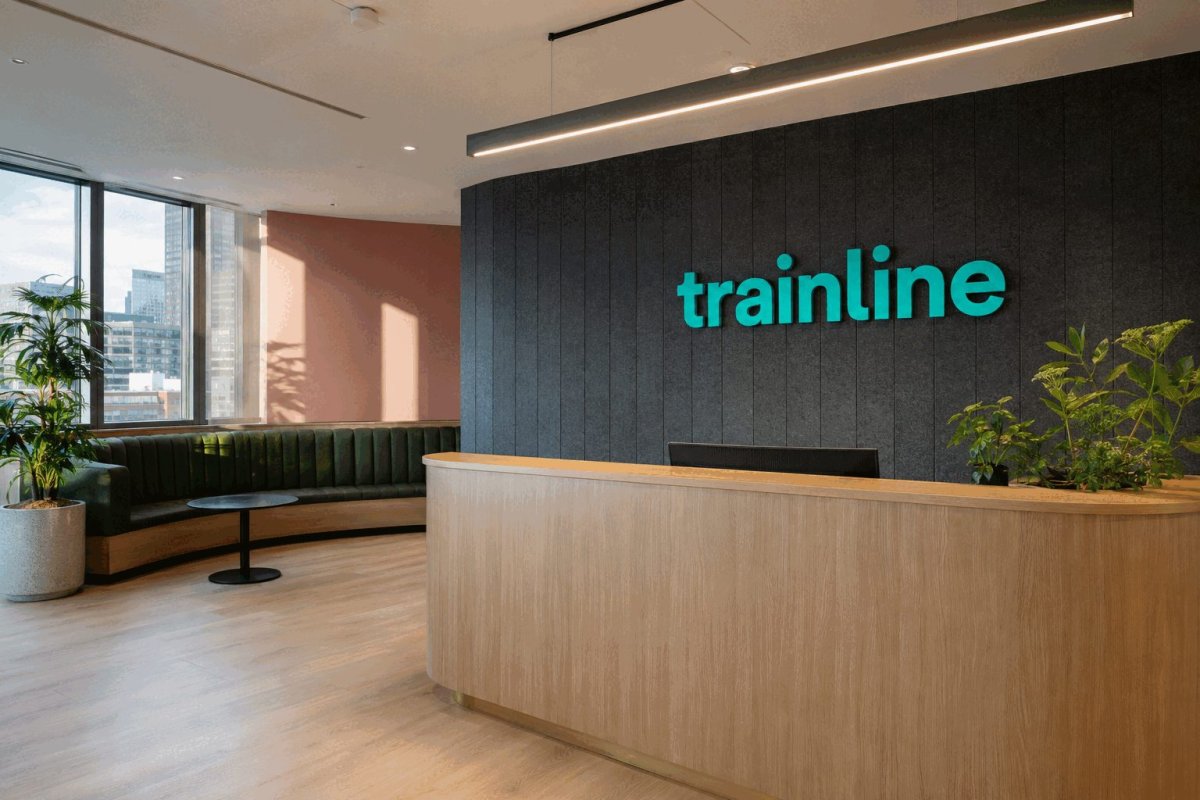
London markets closed Thursday with Trainline plc (LON: TRN) suffering another sharp decline, as the fallout from a regulatory probe into its pricing practices continued to weigh heavily on investor sentiment. The stock ended the session near 190 pence, down 9.0% on the day, after touching an intraday low of 181 pence. This follows Wednesday's steep 17% plunge, triggered by the Competition and Markets Authority's (CMA) announcement of an investigation into whether the company presented customers with full prices upfront.
The cumulative loss in market capitalization over the two sessions is estimated at approximately £188 million, based on Reuters data and the current share count of 349.69 million shares. This figure is roughly 4.2 times the maximum theoretical fine Trainline could face under the relevant legislation, which caps penalties at 10% of worldwide turnover. For the fiscal year 2026, Trainline reported revenue of £452.7 million, implying a theoretical maximum fine of about £45.3 million. The stark disparity between the market's reaction and the potential regulatory penalty underscores that investors are pricing in broader concerns beyond a simple fine.
The CMA's investigation is in its early stages, and the authority has not yet determined that consumer law has been violated. Trainline has stated it has been cooperating proactively for months and is already modifying how certain fees are displayed to enhance transparency. Emma Cochrane, CMA's director of consumer protection, emphasized the importance of clear pricing, noting that unexpected mandatory fees complicate consumer comparisons. The regulator has the power to seek compensation for affected customers and impose penalties of up to 10% of global turnover if a breach is found.
Market analysts point out that the stock's decline reflects worries about the potential impact on Trainline's earnings. More transparent upfront pricing could reduce conversion rates or ancillary income, while compensation costs could rise. Additionally, the regulatory scrutiny comes at a time when the company faces the impending entry of a government-backed Great British Railways (GBR) retailer into the sector, which could intensify competition.
Financial metrics from the fiscal year 2026 show that UK Consumer remains the most vulnerable segment. This division generated £204 million in revenue, accounting for 45% of the group's total, but its adjusted EBITDA fell to £87 million. International Consumer posted a loss of £11 million, while Trainline Solutions contributed £101 million in earnings. Despite these challenges, group adjusted EBITDA rose 11% last year, and operating profit increased by 43%. However, consensus forecasts for fiscal 2027 indicate a slight decline in UK Consumer revenue to £198 million and a 3.5% drop in profit after tax to £77 million.
Analyst recommendations published before the CMA announcement appear outdated. Jefferies initiated coverage with a Buy rating and a 350p target, suggesting the market had assigned no value to Trainline's international operations. Barclays holds a Hold with a 225p target, while Canaccord Genuity and Deutsche Bank have Buy ratings with targets of 311p and 580p, respectively. J.P. Morgan is the most bearish with a Sell rating and a 220p target, which still sits above Thursday's closing price. The CMA probe challenges the premise of the Jefferies revaluation, as regulatory risks could undermine the growth narrative.
Trainline has also been returning capital to shareholders, having allocated £94 million of its £150 million buyback program by April. Since 2023, total capital returned has reached nearly £300 million, including recent acquisitions. However, these efforts have not been sufficient to stem the decline this week.
Looking ahead, there are several potential scenarios. If the CMA concludes without finding a violation, the share price could partially recover. Conversely, a breach could trigger refunds, penalties, and ongoing scrutiny of fee disclosure practices. Separately, competitive pressures from GBR and subdued travel demand remain unrelated risks.
Investors are now demanding evidence that improved price transparency can maintain conversion rates and UK take rates. Without such proof, the £188 million loss in market value appears to reflect deep-seated concerns about Trainline's fee structure and its ability to navigate an increasingly regulated environment.