Despite viral social media posts suggesting a nationwide U.S. trucker strike on Oct. 1, 2026, no credible evidence supports such an action. Fact-checking organization Snopes investigated the claims and found no named organizer, union authorization, or documented carrier participation. The Owner-Operator Independent Drivers Association dismissed the rumors as “social media chatter,” and the International Brotherhood of Teamsters confirmed no national strike is planned. The man featured in a circulating video also provided no evidence of a coordinated stoppage.
While the strike threat appears unfounded, the underlying economic pressure is very real. The U.S. Energy Information Administration (EIA) reported that the average on-highway diesel price hit a record $6.285 per gallon for the week of Sept. 14, a 31.8-cent increase from the previous week and a staggering 68.1% year-over-year jump. Regional prices are even more extreme: the West Coast average reached $7.250, and California drivers paid $8.039 per gallon. These numbers underscore the severe cost pressures facing the trucking industry.
In response to these supply disruptions and anticipated fuel demand, the Federal Motor Carrier Safety Administration (FMCSA) issued a waiver effective Sept. 16 through Dec. 16. This waiver allows qualifying drivers transporting gasoline and diesel to operate up to 16 hours in a 24-hour period, subject to strict safety conditions, including mandatory rest periods and licensing requirements. The agency explicitly excluded carriers with conditional safety ratings, and drivers must receive at least 10 consecutive hours off if they request immediate rest. This is a targeted measure to keep fuel moving, not a blanket relaxation of safety rules.
For investors, the distinction between an organized strike and an operating-cost shock is crucial. An actual strike would remove capacity through deliberate stoppage, potentially disrupting supply chains and boosting freight rates. The current evidence, however, points to a cost-driven squeeze that could force small carriers to park their trucks, increase fuel surcharges, and prompt shippers to shift freight from highway to rail. These dynamics affect transportation companies differently, making it essential to analyze specific exposures.
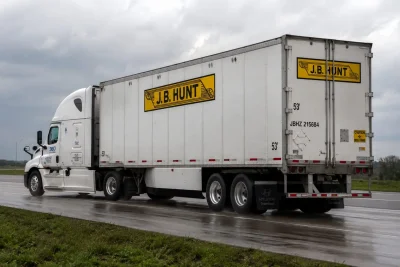
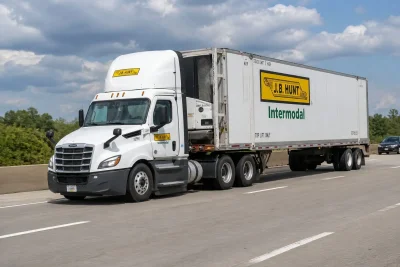
J.B. Hunt Transport Services (JBHT) provides a useful case study. Its shares closed at $236.80 on Sept. 17, essentially flat from the prior day, with volume of 1.79 million shares. This muted trading suggests that equity investors are not pricing in an imminent nationwide shutdown. The company’s second-quarter filing shows fuel-surcharge revenue of $1.05 billion in the first half of 2026, up from $713.5 million a year earlier, helping to offset higher fuel costs. However, fuel and fuel-tax expenses also rose 30.8% to $410.3 million, indicating that surcharges only partially mitigate the impact.
J.B. Hunt’s diversified business model offers a hedge against high diesel prices. In its July results, the company reported that higher fuel prices and constrained highway capacity helped lift second-quarter intermodal volume by 10% and intermodal operating income by 58%. Conversely, its truckload segment swung to a $1.3 million operating loss as purchased-transportation costs increased. If independent carriers begin to idle equipment because loads become uneconomical, that pressure could materialize without any organized labor action.
While a formal strike appears unlikely, the possibility of a decentralized, spontaneous stoppage cannot be entirely dismissed. Owner-operators, who are not unionized, could individually decide to halt operations if margins become unsustainable. The lack of confirmation as of Sept. 18 does not guarantee that every truck will be on the road come Oct. 1. Investors should watch for verifiable signals such as a named coordinating body, specific carrier or local-union participation, strike authorization, and concrete demands.
The next key data point is the EIA’s diesel price release scheduled for Sept. 22, which will indicate whether the upward pressure is accelerating. Additionally, earnings calls from major carriers will provide insights into surcharge recovery, purchased capacity, and intermodal conversion trends. Until then, treating an unsupported strike date as fact would obscure the measurable freight risks already evident in the market.