WASHINGTON, July 3, 2026 – President Donald Trump’s disclosed crypto income for 2025 has reached over $1.4 billion, a figure that closely aligns with the initial federal seed funding for 1.4 million eligible Trump Accounts. The Treasury Department is set to launch the program on Saturday, with default investments directed into the State Street SPDR Portfolio S&P 500 ETF (NYSEARCA:SPYM). This development has sparked debate over potential conflicts of interest and the legitimacy of the crypto sector.
Disclosure Details and Market Context
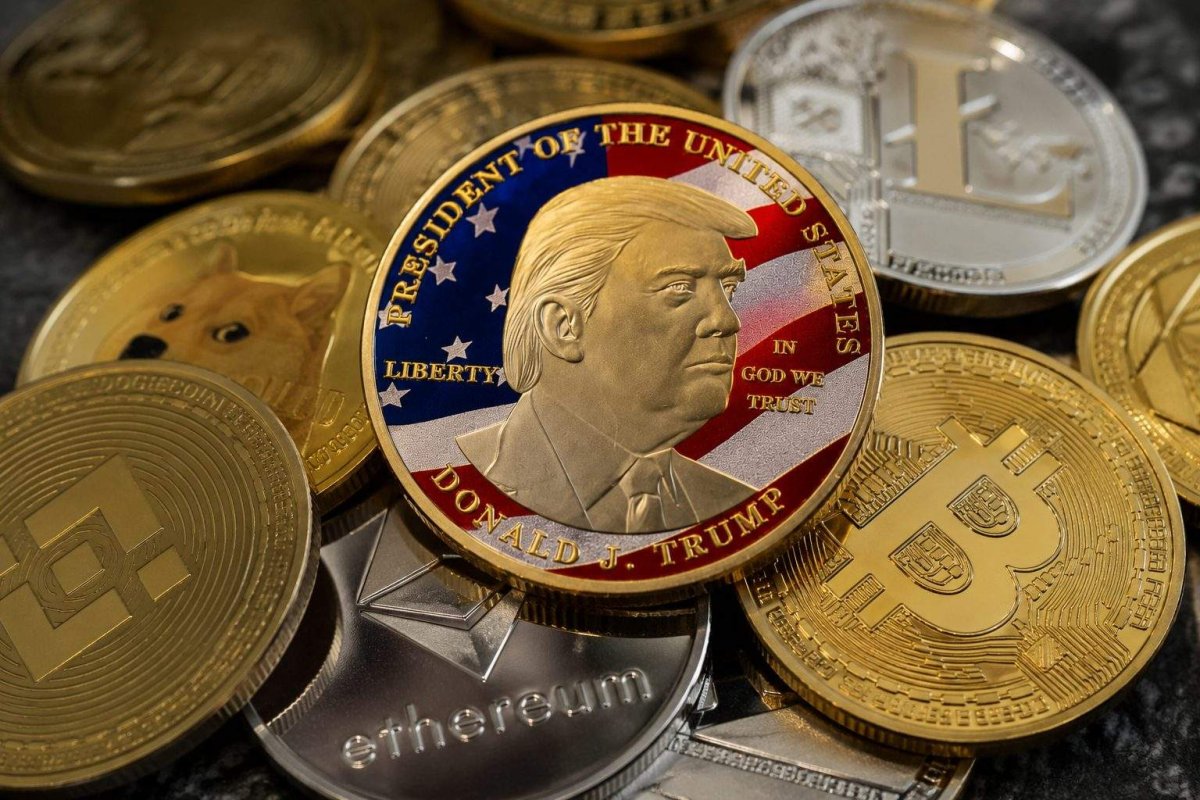
The Office of Government Ethics released Trump’s certified annual financial disclosure on June 30, revealing that his crypto earnings exceeded $1.4 billion. Of this, nearly $800 million came from World Liberty Financial, while approximately $635 million originated from sales of Trump-branded meme coins. The disclosure comes as the Treasury prepares to deposit $1,000 into each of the 1.4 million eligible accounts, totaling about $1.4 billion—a sum that matches Trump’s reported crypto gains.
According to Reuters, more than 6 million families have enrolled in the Trump Account program, but only 1.4 million qualify for the federal seed deposit. The remaining accounts will rely on private or family contributions. Treasury Secretary Scott Bessent dismissed any appearance of conflict, stating in a CBS interview, “I don’t think there’s an appearance problem,” and describing the administration as “an innovation presidency.”
Investment Allocation and Donations
The Treasury will initially allocate all Trump Account contributions into the SPDR Portfolio S&P 500 ETF (SPYM). Subsequently, account holders can transfer assets into other ETFs, including the iShares Core S&P 500 ETF (NYSEARCA:IVV), Vanguard Total Stock Market ETF (NYSEARCA:VTI), SPDR Portfolio S&P 1500 Composite Stock Market ETF (NYSEARCA:SPTM), or iShares Core S&P Total U.S. Stock Market ETF (NYSEARCA:ITOT). Additionally, the Treasury will accept donations of publicly traded stocks from companies and individuals. Notable contributions include $6.25 billion from Michael and Susan Dell and $250 million from Micron Technology Inc (NASDAQ:MU). Companies such as Uber Technologies Inc (NYSE:UBER), Intel Corp (NASDAQ:INTC), International Business Machines Corp (NYSE:IBM), and Nvidia Corp (NASDAQ:NVDA) have also pledged contributions through employee benefit plans.
Market Skepticism and Ethics Concerns
Market analysts and industry experts have expressed skepticism. Dan Weiskopf, portfolio manager at Tidal Financial Group, told Business Insider that the news provides “fuel for the skeptics.” Daniel Newman, CEO of The Futurum Group, noted that the gains stemmed from token issuance rather than actual price appreciation. Gordon Johnson of GLJ Research remarked that an auditor “wouldn’t sign the 10-K” if a public company CEO booked such income from a hard-to-track counterparty. Ross Gerber of Gerber Kawasaki characterized the meme coin activity as “a straight up grift.”
The retail trade has suffered significant losses. World Liberty tokens have declined over 80% to below six cents, while the $TRUMP memecoin has fallen from nearly $75 before Trump’s inauguration to roughly $1.70. This highlights the risk that Trump profits from issuance and licensing, while buyers bear the losses from price declines.
Political and Regulatory Implications
The White House has positioned the policy as pro-innovation, but the disclosure could complicate crypto regulation. If ethics concerns arise around market-structure or stablecoin proposals, progress on digital-asset rules may stall. Trump’s political support has remained largely intact, with far-right supporters not criticizing his dual role as a crypto operator and policymaker, according to The Boston Globe.
On the international front, Pakistan signed a memorandum in January with a World Liberty Financial affiliate to explore the USD1 stablecoin, but officials report no pilot, licenses, or use cases six months later, according to Al Jazeera. Economist Khurram Husain described the initiative as an “instrument of access.”
For investors, the key question is not whether Trump Accounts represent sound savings policy, but where political risk ends up. The equity-account program could drive stable, indexed demand and encourage corporate giving. However, the crypto disclosure may bog down Washington’s efforts to set digital-asset rules if lawmakers or compliance teams perceive the president’s personal gains as complicating the sector’s legitimacy.