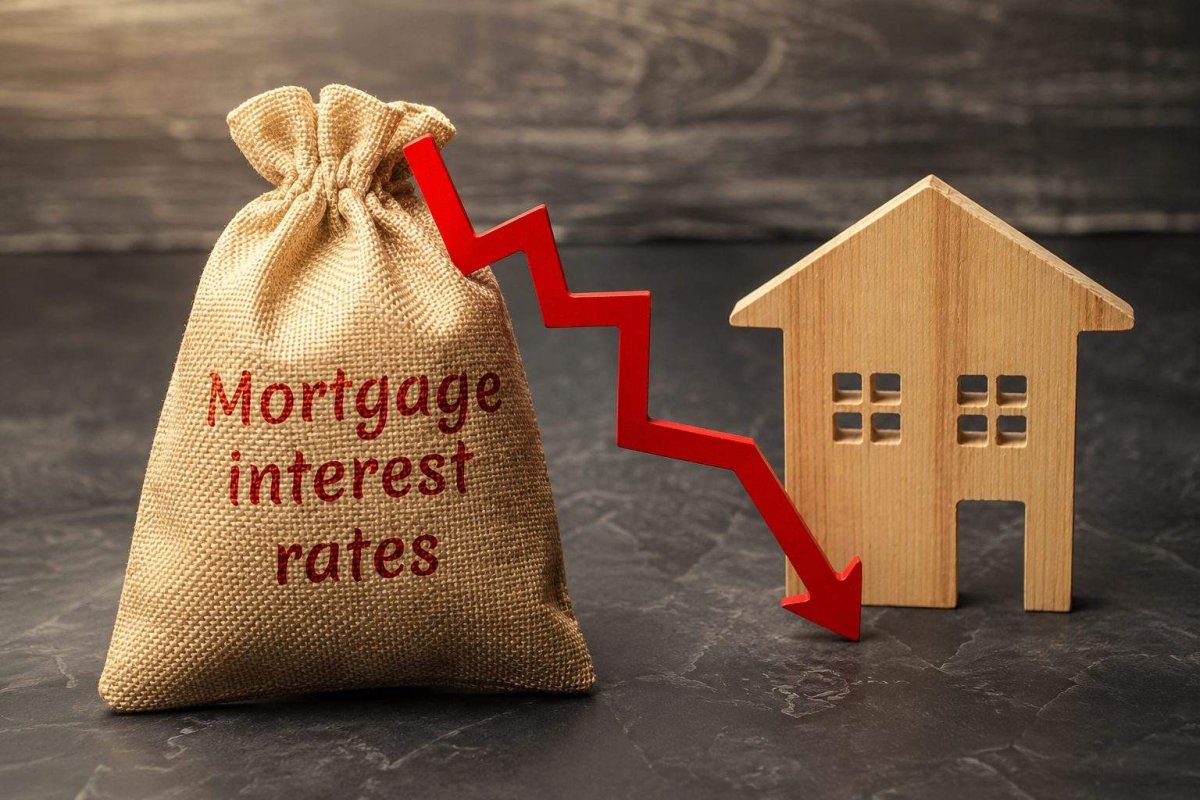
U.S. 30-year fixed mortgage rates declined to 6.47% in the week ending June 18, marking the lowest level in more than a month, according to Freddie Mac. The modest drop, from 6.52% the prior week, came as a tentative U.S.-Iran accord helped ease energy-driven inflation fears, pulling Treasury yields lower. However, the Federal Reserve's continued focus on price stability and renewed tensions in the Strait of Hormuz could quickly reverse the decline, keeping housing affordability strained and market movements volatile.
Rate Move Provides Marginal Relief
The decline, though small, offers a slight reprieve for homebuyers navigating the spring selling season. Existing home sales have been stuck near a 4 million annualized pace, well below the long-term norm of roughly 5.2 million. Buyers remain highly sensitive to even modest changes in monthly payments. Freddie Mac's survey showed the 15-year fixed rate also eased to 5.81% from 5.84% a week earlier. Sam Khater, Freddie Mac's chief economist, noted that incoming data points to a resilient consumer and that purchase demand is continuing to improve modestly.
Geopolitical Factors Drive Bond Yields Lower
Mortgage rates are not set directly by the Fed but tend to track the 10-year Treasury yield. That yield slipped to 4.44% on Thursday from 4.53% a week earlier, following news of a tentative framework to end the Iran conflict and reopen energy flows. The agreement, brokered by U.S. Vice President JD Vance in talks with Iranian officials in Switzerland, foresees 60 days of negotiations on curbing Iran's nuclear program in exchange for sanctions relief. Vance expressed hope for progress on both the nuclear issue and the Lebanon ceasefire.
Yet the relief could prove short-lived. Iran announced it had shut the Strait of Hormuz, a critical oil transit chokepoint, though U.S. officials disputed that claim, noting 55 merchant ships crossed on Saturday. Tracking data cited by Reuters suggested no crossings by ships reporting positions other than Iranian ports after the announcement. Any renewed oil shock would stoke inflation fears, lift long-term yields, and push mortgage rates back up.
Fed Keeps Rates Steady, Inflation Still Above Target
The Federal Reserve's policy committee held the federal funds rate at 3.5% to 3.75% on June 17, reiterating that inflation remains above its 2% goal, partly due to supply shocks in the energy sector. The committee pledged to deliver price stability, language that leaves little room for a rapid mortgage rate rally if oil prices turn higher again. This stance acts as a counterweight to any downward pressure on rates from geopolitical developments.
Affordability Remains Tight Despite Dip
The five-basis-point drop in the 30-year fixed rate trims payment pressure at the margin but does not solve the broader affordability gap created by years of higher home prices and elevated borrowing costs. Consumer-facing rate trackers painted a less clean picture: Bankrate reported the national average 30-year fixed APR at 6.59%, while Money.com's June 18 daily survey put the 30-year fixed rate at 6.61% with a 6.76% APR. Refinancing remains even harder, with the average 30-year fixed refinance rate rising to 6.68% according to Money.com. Kara Ng, senior economist at Zillow Home Loans, noted that some affordability gains from lower asking prices and wage growth are being offset by higher costs elsewhere.
Demand Shows Signs of Stabilization
Despite tight conditions, demand has not vanished. The National Association of Realtors reported that pending home sales rose 3.8% in May from April and 4.8% from a year earlier. Lawrence Yun, NAR's chief economist, called it a sign of pent-up demand and buyers' acceptance of above-6% mortgage rates as the new normal. However, Chen Zhao, head of economic research at Redfin, warned that the Fed's focus on inflation means rates are unlikely to retreat much soon.
Outlook Hinges on Oil and Bonds
For lenders, builders, and real estate agents, the next signal may come from oil and bond markets before it comes from open-house traffic. If the Iran talks hold and energy prices remain contained, mortgage rates could grind lower. If the Fed sees another inflation threat, this week's dip may look more like a pause than a turn. The read-through for borrowers is narrow but real: a five-basis-point drop provides some relief, but it does not herald a return to sub-6% rates. Buyers may move faster on listings, but they are not being handed a low-rate market.