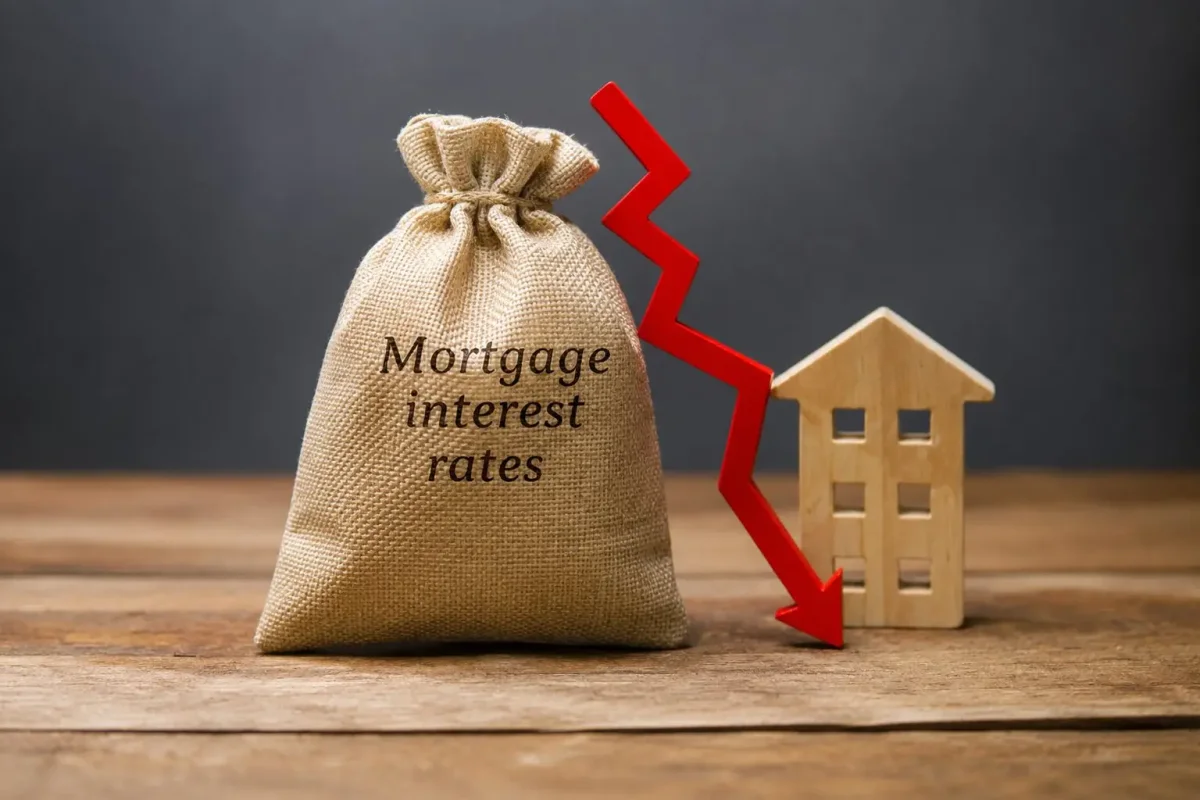
The average 30-year fixed mortgage rate in the United States declined to 6.47% for the week ending June 18, marking the lowest level in more than a month, according to data from Freddie Mac. This represents a decrease of five basis points from the prior week's 6.52% and a significant drop from 6.81% a year earlier. The 15-year fixed mortgage also edged lower, settling at 5.81% from 5.84% the previous week.
The decline in mortgage rates was driven by a dip in bond yields following news of a preliminary framework agreement between the United States and Iran. The 10-year Treasury yield, a key benchmark for mortgage pricing, fell to 4.44% on Thursday from 4.53% a week earlier, as reported by the Associated Press. Mortgage News Daily noted the 10-year yield was around 4.456% early Saturday. The agreement, which includes a 14-point memorandum and a 60-day ceasefire extension, also aims to restore toll-free shipping in the Strait of Hormuz and resume all oil shipments within 30 days. The strait previously handled about 20% of global oil before the conflict, according to Reuters.
While the rate drop offers a modest reprieve for prospective homebuyers, borrowing costs remain elevated compared to the pandemic-era lows. The housing market continues to grapple with high prices and limited supply, though demand has shown resilience. The National Association of Realtors reported that pending home sales—contracts signed but not yet closed—rose 3.8% in May from April and were up 4.8% year-over-year, signaling steady buyer interest.
Freddie Mac chief economist Sam Khater described the consumer as "resilient," pointing to stronger retail sales and the uptick in pending home sales as evidence that purchase demand is rising, albeit modestly. Lawrence Yun, NAR chief economist, attributed the late-spring surge in buyers to pent-up demand, noting that consumers are increasingly viewing mortgage rates above 6% as "the new normal."
However, the Federal Reserve remains a significant headwind. The central bank held the federal funds rate at 3.50% to 3.75% at its June 17 meeting and reiterated that inflation remains high, partly due to energy supply disruptions from the Middle East conflict. Without clear forward guidance from Fed Chair Kevin Warsh, markets lack a definitive signal on the future path of rates. Chen Zhao, head of economic research at Redfin, told CNN that the market has entered "a new era," with mortgage rates unlikely to drop significantly in the near term.
The geopolitical relief may prove fragile. Oil prices edged higher after U.S. Vice President JD Vance expressed skepticism about the durability of the agreement. John Kilduff of Again Capital warned that only a full resumption of flows through the Strait of Hormuz would resolve the supply issue. The risk remains that the geopolitical easing could be short-lived, limiting the downward pressure on yields and mortgage rates.
Retail mortgage rates vary; Rocket Mortgage offered a 30-year fixed purchase rate of 6.75% with a 7.039% APR and 1.875 points as of June 20, while Mortgage News Daily's 30-year fixed index stood at 6.58%. Anthony Smith, economist at Realtor.com, suggested that a lasting resolution to the conflict could push mortgage rates lower and boost buyer confidence, but cautioned that "the path will likely be rocky."
For now, the housing market remains stuck in a narrow range. Mortgage rates have eased slightly on lower yields, but a meaningful acceleration in activity would likely require either sustained inflation stability, cheaper financing, or a decline in home prices. Without one of these catalysts, the market is expected to continue its slow pace through the summer.