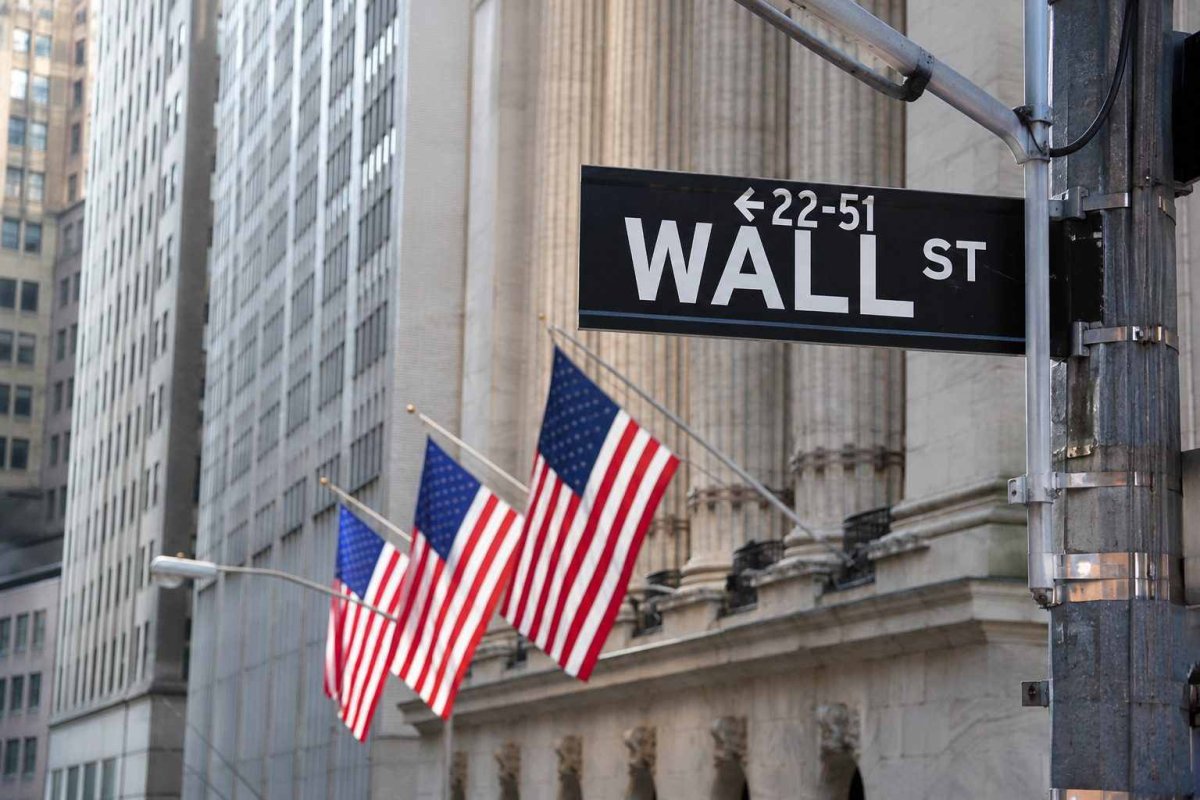
Wall Street enters a shortened trading week with a cautious tone, as investors shift their attention from artificial intelligence stocks to the upcoming June employment report. The S&P 500 closed Friday at 7,353.95, down 0.05%, capping a weekly decline of 2.05%. The tech-heavy Nasdaq Composite fell 0.24% to 25,297.62, while the Dow Jones Industrial Average slipped 0.09% to 51,876.11. U.S. markets will be closed Friday for Independence Day, compressing the trading week to just four sessions.
Tech Selloff Deepens
Semiconductor stocks suffered their worst week since early April, with the PHLX chip index tumbling 7.9%. The selloff accelerated on Friday, when the index fell 5.3%, despite a strong earnings report from Micron Technology Inc (NASDAQ:MU). The broader technology sector dragged down cap-weighted indexes, even as underlying market breadth improved. The equal-weight S&P 500 gained 1.5% last week, and the S&P 600 small-cap index jumped over 3%, with seven of the 11 S&P sectors posting gains.
According to strategists at the New York Stock Exchange, the divergence between cap-weighted and equal-weight indexes signals a rotation away from mega-cap tech into smaller stocks. However, they warn that if the rotation persists, strength in small caps and cyclical sectors may not fully offset the drag from large technology names in cap-weighted benchmarks.
Jobs Data in Focus
The Bureau of Labor Statistics will release the June employment report at 8:30 a.m. ET on Thursday, July 2. Economists polled by Reuters forecast a payroll gain of 110,000, down from May’s increase of 172,000. A stronger-than-expected jobs print could weigh on stocks, as it would reduce the likelihood of near-term Federal Reserve rate cuts. Doug Huber, deputy chief investment officer at Wealth Enhancement, told Reuters the market is “not going to treat that as good news” if hiring remains robust. Brad Conger of Hirtle & Co described the Fed as “very finely balanced,” while Julia Hermann of New York Life Investment Management called it a “live question” whether higher rates will knock tech from the lead.
Massive Fund Outflows
Investors pulled $3.53 billion from U.S. equity funds in the week ending June 24, according to LSEG Lipper, reversing a portion of the $37.63 billion inflows seen the prior week. Technology funds experienced particularly heavy redemptions, with nearly $20 billion exiting the sector after $21.46 billion in inflows the previous week. The rotation out of tech underscores growing concerns about stretched valuations and the sustainability of AI-driven gains.
Corporate and Index Moves
SpaceX (NASDAQ:SPCX) will join the Nasdaq 100 index on July 7, a move expected to trigger approximately $4.3 billion in passive fund inflows, according to JPMorgan Chase & Co (NYSE:JPM). However, Morningstar strategist Michael Field called the stock “overvalued.”
NIKE Inc (NYSE:NKE) is set to report fiscal fourth-quarter results after the bell Tuesday. The sneaker giant’s shares are seen as a barometer of consumer health, as investors look for signs of strength outside the AI sector.
Apple Inc (NASDAQ:AAPL) rebounded 3.1% on Friday, recovering some losses after a selloff triggered by price increases for iPads and MacBooks. Apple attributed the hikes to rising memory and storage chip costs. B. Riley Wealth’s Art Hogan described the move as “renewed inflationary pressure.”
Semiconductors Under Pressure
Despite Micron’s solid results, semiconductor stocks remain under pressure. David Stubbs, chief investment strategist at AlphaCore Wealth Advisory, noted that the “profitability and capex story” with AI is still intact, but the sector faces headwinds from rising costs and shifting investor sentiment. The PHLX chip index’s 7.9% weekly drop was its steepest since April.
Moderna Inc (NASDAQ:MRNA) jumped nearly 13% on Friday, helping healthcare names support market breadth even as major indexes struggled.
Global Risks and Outlook
The Bank for International Settlements issued a warning on Sunday about rising global debt, persistent inflation, and the financing of artificial intelligence. BIS General Manager Pablo Hernandez de Cos said “policy actions must reinforce each other,” noting that AI investment funding increasingly relies on debt and complex deal structures throughout the supply chain.
With the jobs report looming and corporate earnings on deck, traders are bracing for potential volatility in the holiday-shortened week. The Russell index reconstitution on June 26 has also added an element of uncertainty, as new members begin trading.