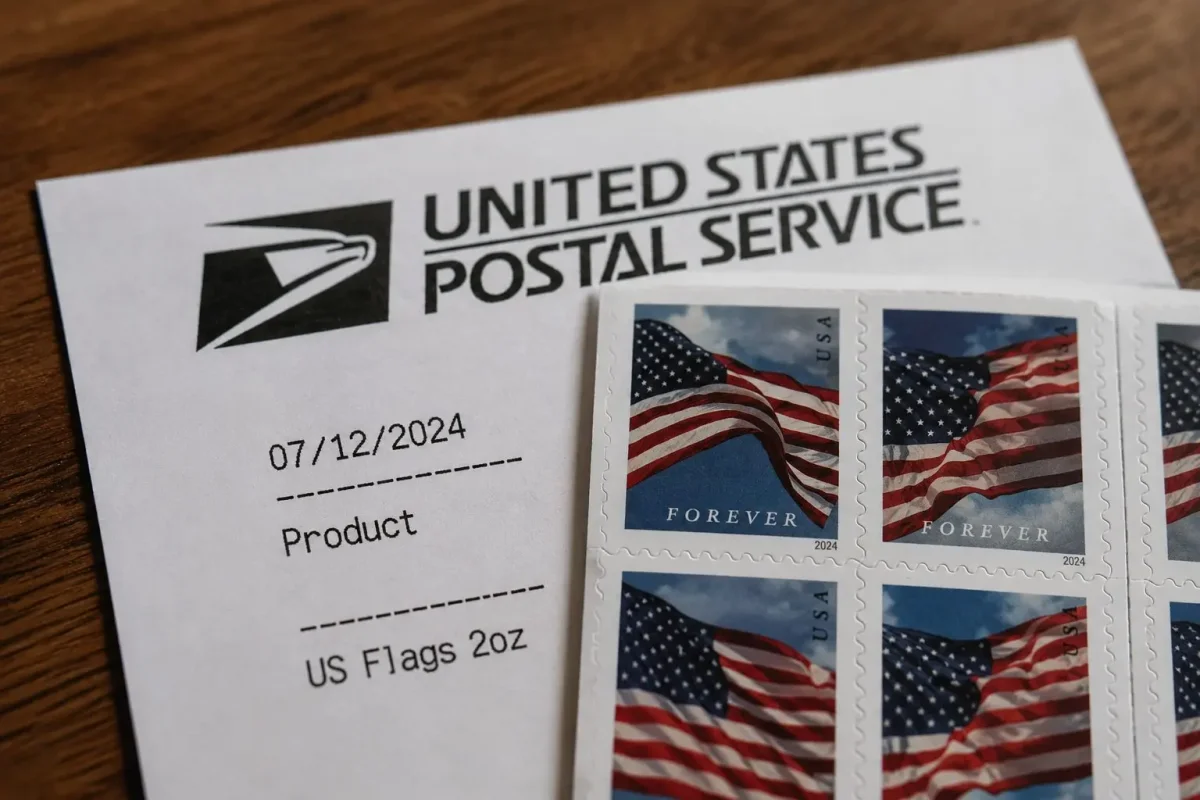
The United States Postal Service (USPS) announced a price increase for its First-Class Forever stamp, raising the cost to 82 cents from 78 cents, effective Sunday, July 12. This adjustment is the centerpiece of a broader slate of rate changes designed to generate additional revenue as mail volumes continue their long-term decline. The final price files, released on Thursday, confirmed the effective date.
For investors, the direct impact is not on USPS equity—since the agency has no publicly traded stock—but rather on companies with significant exposure to mail and parcel services. Key names to watch include Pitney Bowes Inc. (NYSE: PBI), along with parcel carriers United Parcel Service Inc. (NYSE: UPS) and FedEx Corp. (NYSE: FDX). USPS plans to implement its monopoly mail rate increases and package rule changes during regular U.S. market hours, which run from 9:30 a.m. to 4:00 p.m. Eastern Time.
According to USPS, mailing-service prices will rise by an average of 4.8%. The changes are concentrated in "market-dominant" products—categories such as letters and postcards where USPS sets rates but requires regulatory approval. The following table outlines the key price adjustments:
- First-Class Forever Stamp (1 oz): $0.78 to $0.82 (+5.1%)
- Metered Letter (1 oz): $0.74 to $0.78 (+5.4%)
- Domestic Postcard: $0.61 to $0.65 (+6.6%)
- International Postcard: $1.70 to $1.75 (+2.9%)
- International 1 oz Letter: $1.70 to $1.75 (+2.9%)
- Single-Piece Letter, Extra Ounce: $0.29 (no change)
USPS's fiscal 2026 plan projects total mail and package volume of 101.5 billion pieces, a decline of 7.2 billion pieces (6.6%) from 2025. Despite lower volumes, revenue is expected to rise by $2.4 billion to $83.8 billion. This implies a roughly 10% increase in revenue per piece, a steep climb that underscores the agency's reliance on pricing power to offset structural volume erosion. In fiscal 2025, USPS reported a net loss of $9.0 billion, which is projected to narrow to $8.1 billion in 2026, though the controllable loss—excluding non-cash items—improves from $2.7 billion to $1.8 billion.
The stamp hike is more consequential than it might appear. USPS continues to deliver to nearly 167 million homes, businesses, and PO boxes, but the Postal Regulatory Commission (PRC) has noted that mail volume is still dropping, making it increasingly difficult for the agency to cover its costs. In its latest quarter, USPS posted operating revenue of $20.2 billion, up 2.3%, but recorded a GAAP net loss of $2.0 billion. First-Class Mail revenue edged down 0.5% despite higher prices, as volume fell 6.3%. Postmaster General David Steiner described the situation as "a cash crisis," while CFO Luke Grossmann stated that "management actions alone are not enough" to solve the financial challenges.
Consumers can still use older Forever stamps after the price increase, allowing some buyers to stock up ahead of the change. This provides a short-term boost to USPS revenue but does not alter the fundamental dynamic: a 78-cent stamp purchased now will still cover a first-class letter after the rate climbs to 82 cents. The parcel unit, while less prominent, also faces changes. USPS has filed for July 12 adjustments to its competitive products, including the elimination of ounce-based pricing differences for some Commercial Ground Advantage rates and updates to dimensional weight pricing to align with industry standards. New hazardous-materials fees for Priority Mail Express and Priority Mail will also be introduced.
Higher rates, however, are not necessarily a panacea. The PRC reported that USPS delivered 109 billion mail pieces in fiscal 2025, roughly half the peak volume of 2006. The agency has not covered its costs since that year. If billers, nonprofits, insurers, and direct marketers accelerate their shift to digital channels, USPS could see further volume declines even as per-piece revenue rises. Steiner highlighted the core policy dilemma in a recent interview: "If you want us to deliver everywhere, every day, we’ll do it. That’s not a problem. But who is going to pay for it?"
The rate changes are now in place. The Federal Register notice confirms that the PRC approved the adjustments on May 27, with the rule taking effect July 12. The key question for investors is whether the higher prices will slow USPS's cash burn without accelerating volume declines—and who will ultimately bridge the gap: Congress, regulators, or USPS customers.