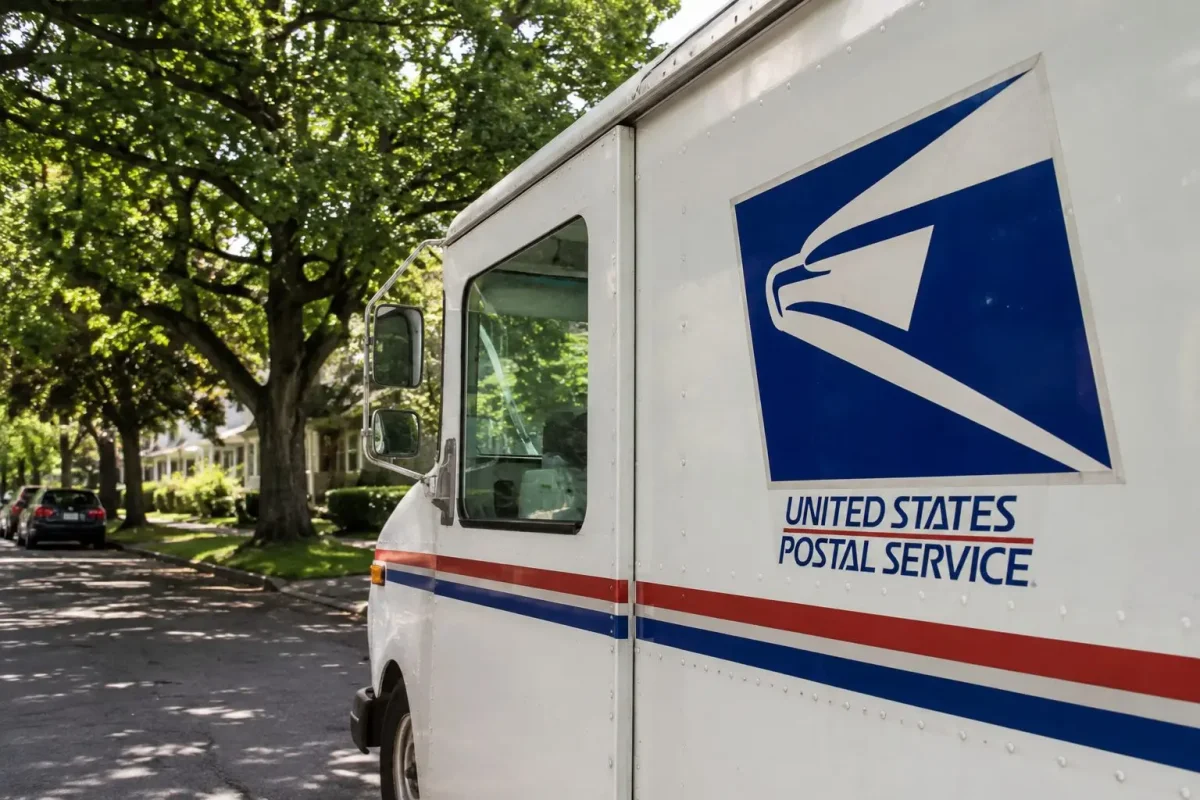
The United States Postal Service (USPS) has finalized a price increase for Forever stamps, raising the cost to 82 cents from 78 cents, effective July 12, 2026. This 5.1% hike comes as the agency reports a significant drop in First-Class Mail volume, which fell by 691 million pieces in its fiscal second quarter, leading to a 0.5% decline in revenue despite higher prices. Investors are closely monitoring the impact on companies that rely on postal services for direct mail, billing, and parcel delivery.
According to USPS data, the overall volume of mail and packages slipped 3.4% in the quarter, even as average revenue per piece rose 6.0%. The First-Class Mail segment saw implied revenue per piece increase to approximately 64.5 cents from 60.7 cents, but the volume drop was steep enough to reduce total revenue by $31 million. Other categories showed mixed results: Marketing Mail revenue climbed 5.7% despite a slight volume dip, while Shipping and Packages revenue grew 4.5% even as package numbers declined.
For investors, the stamp price hike is a key factor for companies like Pitney Bowes (NYSE:PBI), Quad/Graphics (NYSE:QUAD), Broadridge Financial Solutions (NYSE:BR), and Deluxe (NYSE:DLX), which depend on mail volumes for financial statements, insurance mailings, catalogs, and retail campaigns. As clients shift to digital alternatives or reduce mailing frequency, these firms face demand risks. The USPS price increase could accelerate this trend, squeezing margins for mail-dependent businesses.
USPS Chief Financial Officer Luke Grossmann described the quarter as a "slight improvement" but cautioned that "management actions alone are not enough." The agency reported a net loss of $1.95 billion for the quarter and a controllable loss of $642 million. Postmaster General David Steiner warned lawmakers that USPS could run out of cash within 12 months if it continues meeting its current obligations. He noted that 71% of delivery routes are unprofitable and 58% of post offices do not cover operating costs.
To address its financial challenges, USPS has paused bi-weekly FERS payments, saving approximately $200 million per pay period, or about $2.5 billion through the rest of fiscal 2026. However, Reuters reported that Steiner told Congress the agency is tapping retirement funds to stay operational. The Postal Regulatory Commission (PRC) has limited rate authority after the July filing, with remaining maximum authority of 0.935% for First-Class Mail and 1.024% for USPS Marketing Mail.
On the parcel side, USPS implemented an 8% temporary increase on Priority Mail Express, Priority Mail, USPS Ground Advantage, and Parcel Select in March 2026, though First-Class stamps are excluded. This puts pressure on parcel carriers like United Parcel Service (NYSE:UPS), FedEx (NYSE:FDX), and Amazon.com (NASDAQ:AMZN), which rely on USPS for last-mile delivery. Higher USPS parcel rates could boost demand for these competitors but also increase their costs if they use USPS services.
Selected USPS price changes include: First-Class letter (1 oz) from $0.78 to $0.82 (+5.1%), metered mail from $0.74 to $0.78 (+5.4%), and domestic postcard from $0.61 to $0.65 (+6.6%). International letter rates rise to $1.75 from $1.70 (+2.9%). The price hike is the latest in a series of increases aimed at stabilizing USPS finances, but volume declines suggest the strategy may have limits.
Investors should watch for further volume erosion in First-Class Mail, which remains the softest segment. The USPS data for the quarter showed First-Class Mail volume down 6.3%, while Marketing Mail slipped just 0.9% and Shipping and Packages fell 1.4%. Revenue per piece improvements were seen across all categories, but the volume declines offset gains in First-Class Mail and Periodicals. As the July 12 price change takes effect, market participants will assess whether higher prices can sustain revenue or if they will accelerate the shift to digital communication.