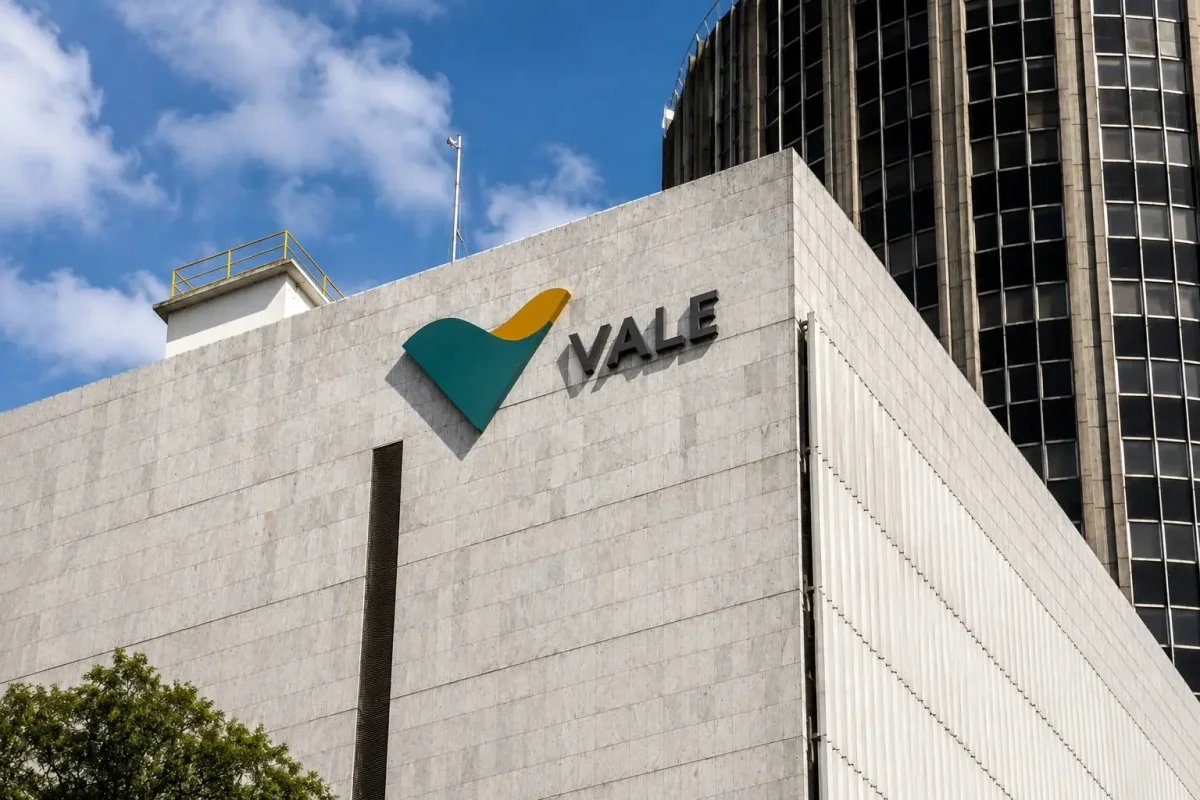
São Paulo, August 5, 2026 – Vale S.A. (NYSE: VALE, BVMF: VALE3) saw its American Depositary Receipts (ADRs) rise 0.4% to $14.89 in late afternoon trading on Wednesday, even as BofA Securities downgraded the miner's stock to Neutral from Buy. The brokerage also trimmed its price target to $16 from $18, reflecting a more cautious outlook on iron ore prices and rising costs.
Despite the uptick, Vale's shares underperformed its major peers. Rio Tinto plc (NYSE: RIO) climbed 2.4% to $101.43, while BHP Group Ltd. (NYSE: BHP) added 2.2% to $89.34. Vale lagged these gains by roughly 1.7 to 2.0 percentage points, highlighting investor caution around the Brazilian miner's near-term prospects.
The downgrade from BofA, issued by analyst Caio Ribeiro, cited lower iron ore prices, elevated freight rates, and 2027 unit costs expected to exceed consensus estimates. Additionally, Vale's shareholder free-cash-flow premium over rivals has narrowed, reducing the stock's appeal relative to its peers.
Vale's capital return program remains a key focus. The company has committed to a distribution of R$2.0307 per share, which at the current São Paulo price of R$76.36 translates to a gross yield of 2.66%. However, if Vale fully utilizes its newly approved buyback authorization of up to 100 million shares over 18 months, the combined present-value yield could reach 5.01%. This assumes all authorized shares are repurchased at the current price, adding 2.35% to the equity value.
The buyback authorization is conditional and extends over 18 months, not a single-period yield. The company's committed distribution of R$8.64 billion represents 73% of its recurring free cash flow for the first half of 2026, which totaled $2.318 billion (Q1: $813 million; Q2: $1.505 billion). Vale also repurchased $140 million worth of shares during the second quarter.
Operationally, Vale reported strong second-quarter results. Iron ore production reached 84.3 million tonnes, the highest second-quarter output since 2018, with sales rising 3% year-over-year to 79.7 million tonnes. However, cash costs are climbing: C1 cash costs increased 9% to $24.10 per tonne, while all-in costs jumped 18% to $61.60 per tonne, driven by a stronger Brazilian real and higher oil and freight expenses.
Despite cost pressures, Vale's pro forma EBITDA grew 19% year-over-year to $4.1 billion, and expanded net debt fell by $1.1 billion to $16.7 billion. CEO Gustavo Pimenta highlighted the company's “strong EBITDA and cash flow generation,” underscoring its resilience amid a challenging commodity environment.
Iron ore prices have weakened recently, with the China-delivered benchmark down 4.5% over the past month and 7.4% year-over-year to $93.91 per tonne. This softness, coupled with rising costs, has prompted several analysts to lower their price targets. BofA now joins Goldman Sachs and Morgan Stanley in adopting a more cautious stance, with targets ranging from $15 to $16.50, implying an upside of just 0.7% to 10.8% from Wednesday's close.
Investors in São Paulo must hold shares by August 11 to be eligible for the upcoming cash payment, with the ADR record date set for August 13. A broader rerating of Vale's stock may require a sustained rally in iron ore prices or clearer evidence of easing cost pressures.
Risks to the outlook include further declines in iron ore prices, a stronger real, and increased freight costs, all of which could pressure margins. Additionally, Vale may choose not to utilize the full buyback authorization, limiting the potential upside to capital returns.