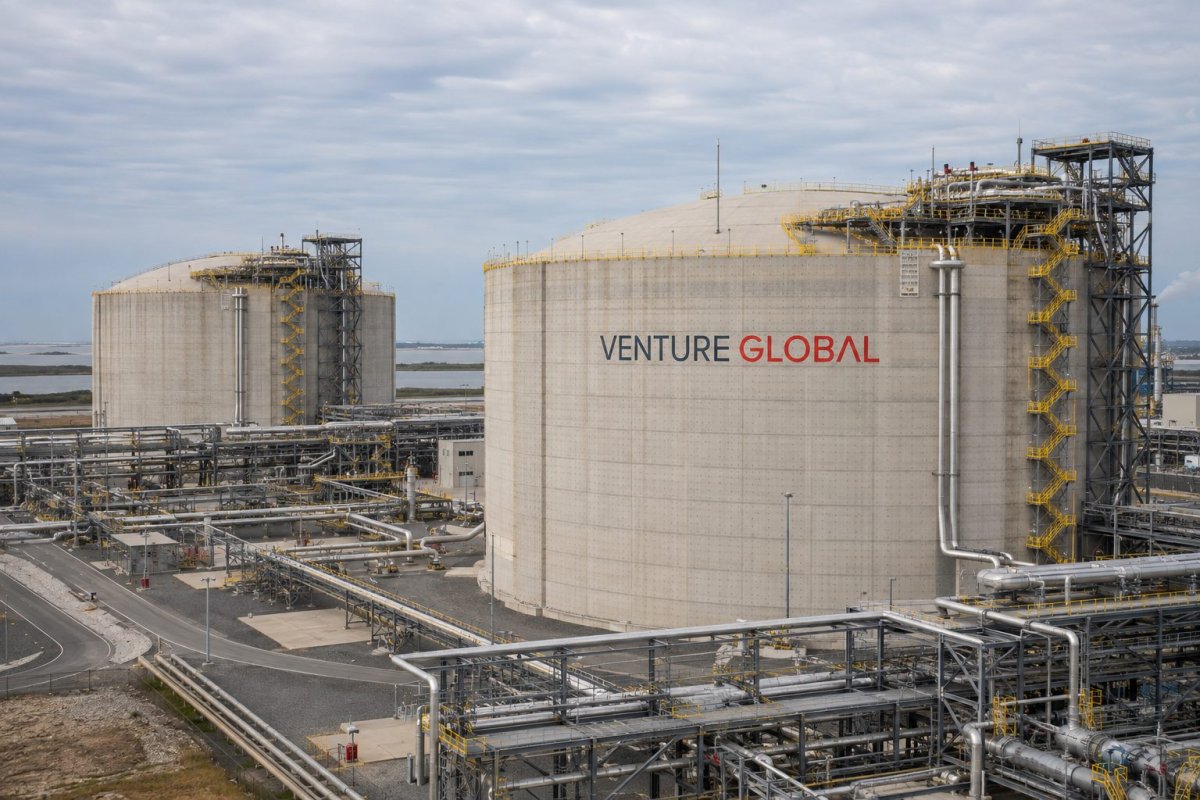
Venture Global, Inc. (NYSE: VG) experienced a sharp decline in trading on Tuesday, with shares falling 7.3% to $13.23, despite the company raising its full-year 2026 profit guidance. The drop came after the LNG exporter reported second-quarter revenue that missed analyst expectations, highlighting investor concerns about cost pressures and the pace of volume growth.
According to the company's unaudited Q2 report, revenue surged 48% year-over-year to $4.578 billion, but fell short of the $4.66 billion consensus estimate by 1.8%. Consolidated adjusted EBITDA rose 79% to $2.491 billion, also coming in slightly below the $2.50 billion projection. Despite the miss, the stock remains up approximately 94% year-to-date.
Strong Operational Growth
Operationally, Venture Global continued to expand rapidly. The company exported 127 LNG cargoes during the quarter, selling 466.4 trillion British thermal units (TBtu) of LNG, a 42% increase in sales volume compared to the prior-year period. Net income attributable to common shareholders surged 266% to $1.347 billion, while diluted earnings per share jumped to $0.51 from $0.14, exceeding the Street estimate of $0.48.
CEO Mike Sabel emphasized the company's progress, noting that recent refinancing moves are expected to generate "more than $100 million of annual cost savings." He also signaled a strategic shift toward a greater emphasis on shorter LNG contracts, which could offer flexibility but also expose the company to future market price volatility.
Cost Pressures and Rising Expenses
The revenue shortfall can be attributed to rising costs that outpaced top-line growth. Operating and maintenance expenses jumped 54% to $335 million, while net interest expenses climbed 58% to $489 million. Cost of sales increased 17% to $1.660 billion. These increases were partly offset by higher LNG volumes, but the reduced liquefaction fees at the Calcasieu Pass facility weighed on margins.
Investors are closely watching whether cost reductions can balance the rising interest burden. The company's increased debt levels and interest expenses have become a focal point, especially as the market digests the Q2 results.
Guidance Raised for Second Consecutive Quarter
For the second consecutive quarter, management raised its full-year adjusted EBITDA forecast. The updated 2026 guidance now stands between $8.7 billion and $9.1 billion, with the midpoint reflecting a 6.6% increase over the prior midpoint, or a $550 million boost. The company also narrowed its total cargo range to 500-518, from 494-523, while the midpoint remains nearly unchanged.
Contracted cargoes represent 91% of available cargoes at a weighted fee of $5.05 per MMBtu. The commercial operations date (COD) for Plaquemines Phase 1 remains targeted for Q4 2026, as previously stated.
Wall Street Remains Cautiously Optimistic
Despite the stock drop, Wall Street analysts have maintained a generally positive outlook. The most recent analyst targets, set before Tuesday's report, all price the stock higher than its current intraday level. BofA Securities has a Buy rating with a $16 target (21% upside), Morgan Stanley rates it Overweight with a $22 target (66% upside), and JPMorgan has an Overweight rating with a $17 target (28.5% upside). Mizuho is Neutral with a $15 target, and RBC Capital has an Outperform rating with a $16 target.
Across the broader analyst community, there are nine Buy ratings and five Hold ratings, with no Sell ratings. The consensus price target is $16.43, implying an approximately 24% premium over the current share price.
Key Risks Ahead
Several risks could impact Venture Global's future performance. Construction delays at Plaquemines, budget overruns, and fluctuating LNG fees are all potential headwinds. Additionally, arbitration claims, elevated debt levels, and increasing interest expenses add uncertainty. The company's guidance assumes an unsold 2026 cargo price range of $12.50 to $13.50 per MMBtu.
The market's reaction on Tuesday suggests that volume growth alone is no longer sufficient to reassure investors. The next critical step is execution, particularly the timely achievement of Plaquemines Phase 1 commercial operations and the composition of contracted cargoes. Whether cost savings can offset rising interest costs will be a key determinant of the stock's trajectory in the coming quarters.