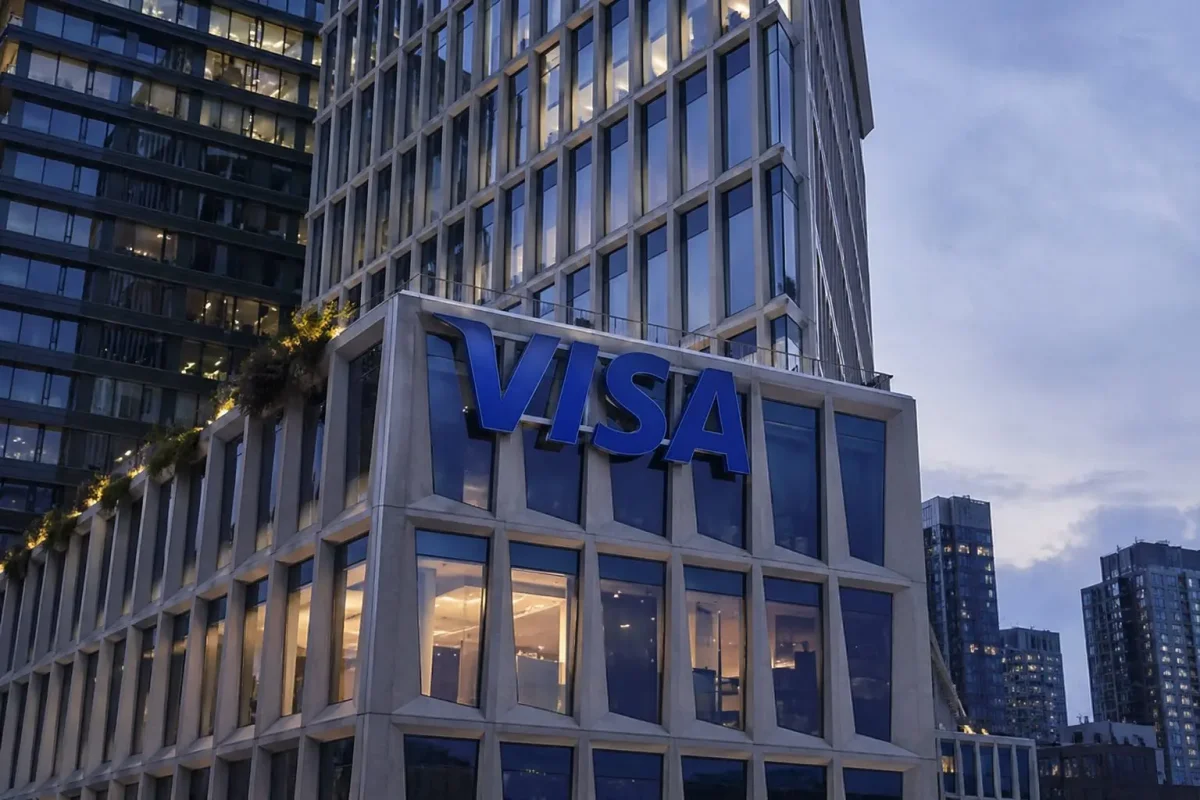
Visa Inc. (V) saw its shares climb approximately 5% in premarket trading on Wednesday, following the release of fiscal second-quarter results that exceeded Wall Street expectations. The payments giant also raised its full-year earnings guidance and unveiled a new $20 billion share repurchase program, allaying some investor concerns about consumer spending and travel demand amid global uncertainties.
Key Financial Highlights
For the quarter ended March 31, Visa reported adjusted net income of $6.3 billion, or $3.31 per share, surpassing the analyst consensus estimate of $3.10 per share, according to LSEG data. On a GAAP basis, net income came in at $6.0 billion, or $3.14 per share. Net revenue rose 17% year-over-year to $11.2 billion, driven by robust growth across payment volumes and cross-border transactions.
Payments volume, a key metric tracking the dollar value of transactions processed on Visa's network, increased 9% on a constant-dollar basis. Processed transactions reached 66.1 billion, also up 9%. Cross-border volume, which measures spending across countries and is closely watched as a barometer of global travel and commerce, grew 12% in constant-dollar terms.
Segment Performance and Guidance
Data processing revenue jumped 18% to $5.5 billion, while international transaction revenue rose 10% to $3.6 billion. Client incentives, including payments and rebates to banks and partners, increased 14% to $4.2 billion. The company raised its full-year outlook, now forecasting net revenue growth in the low teens and EPS growth in the low double digits, up from previous expectations of low double-digit EPS growth.
Visa CEO Ryan McInerney highlighted that "consumer spending remained resilient" across consumer payments, commercial payments, money movement, and value-added services. He also noted ongoing development of agentic and stablecoin features within the company's "Visa as a Service" suite.
Market Context and Peer Performance
The results come amid heightened investor scrutiny of consumer spending patterns, as higher fuel prices, persistent inflation, and geopolitical tensions—particularly the conflict in the Middle East—threaten to curb card usage and travel. Visa's data carries significant weight because the company earns fees from transaction processing rather than holding credit risk on loans.
American Express posted better-than-expected earnings last week, lifted by increased card spending in travel and entertainment. Mastercard, Visa's main competitor, is scheduled to report its quarterly results later this week. Shares of Mastercard also rose in premarket trading, according to Reuters.
Risks and Outlook
Despite the positive results, Visa acknowledged ongoing risks. On the post-earnings call, McInerney said the company is "watching the impacts from the conflict in the Middle East closely," which could dampen travel flows. However, he also cited an uptick in U.S.-bound demand linked to the FIFA World Cup and stronger commercial travel as offsetting factors.
CFO Chris Suh pointed to the Olympics and FIFA World Cup as "exciting opportunities" this year and noted that the buyback demonstrates Visa's ability to return excess cash to shareholders while still investing in growth and acquisitions.
Stablecoin and Innovation
Visa's push into alternative payment rails is gaining traction. McInerney disclosed that stablecoin settlement volumes have reached a $7 billion annual run rate, increasing more than 50% quarter-over-quarter. Stablecoins are digital tokens pegged to traditional currencies like the dollar, designed for price stability.
Analyst Reactions
Analysts responded positively to the results. J.P. Morgan flagged "a lot to be impressed by," noting that concerns about a potential cross-border slowdown in April had not materialized. TD Cowen called it one of Visa's strongest growth showings in years. Despite the premarket rally, Visa shares were still down roughly 12% year-to-date before Wednesday's session.