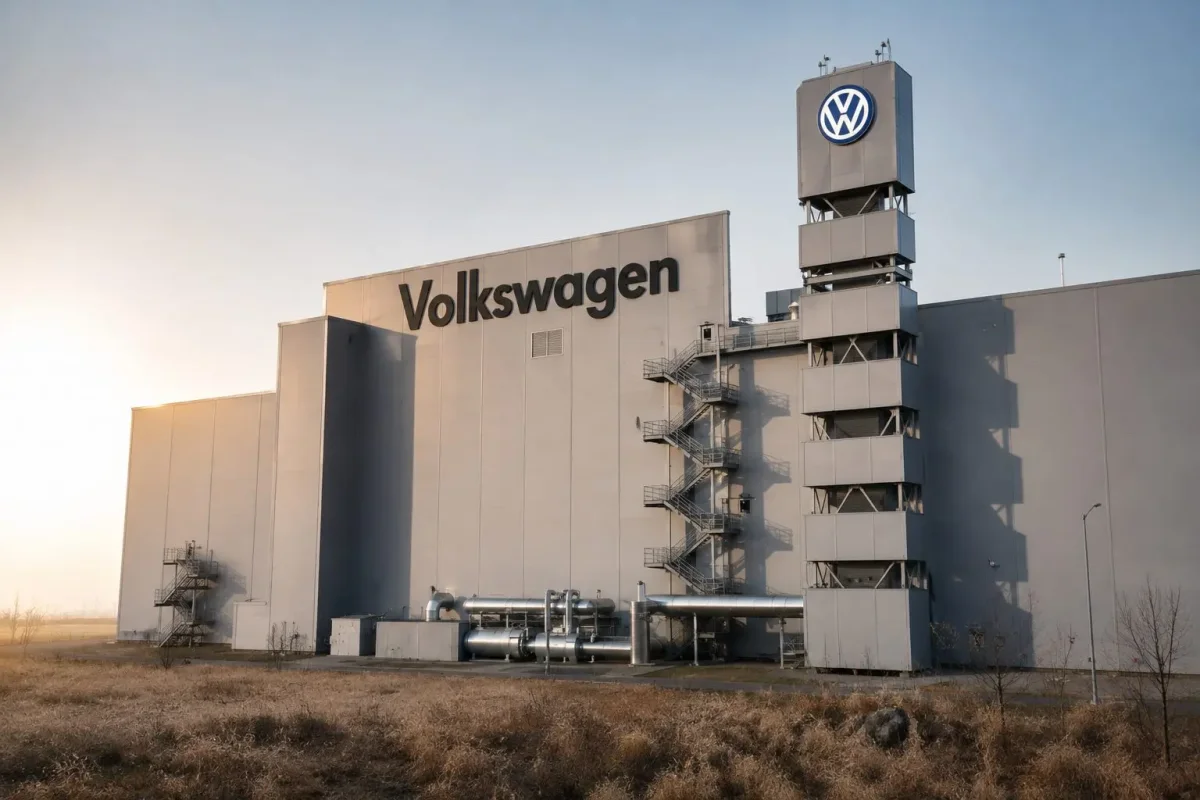
Volkswagen AG's preferred shares declined sharply on Friday, trading at €80.53 on Tradegate, representing a 4.24% drop from the previous close of €84.10. The move came as the stock began trading ex-dividend, meaning new buyers are no longer entitled to the €5.26 payout for preferred shares approved at the annual meeting.
At the meeting held on Thursday, shareholders endorsed all resolutions put forward by the Board of Management and Supervisory Board, including a €5.20 dividend for ordinary shares and €5.26 for preferred shares. The company noted that this represents a payout ratio above 30% and a 5.1% yield on preferred shares based on the year-end closing price.
CEO Oliver Blume delivered a stark message during the annual meeting, stating, "The next few years are critical – and it is up to us." He outlined that Volkswagen is intensifying efforts to reduce costs, lower capacity, and improve returns, emphasizing the need to become leaner in costs, structure, and technology to bolster financial resilience.
Volkswagen's strategy revolves around eight levers, including reducing complexity, cutting overcapacity, tightening technology focus, and simplifying group steering. The company is targeting an operating return on sales of 8% to 10% by 2030, a margin that measures operating profit as a share of revenue before interest and taxes.
The automaker has set ambitious cost-saving goals, aiming for sustainable cost savings of approximately €1 billion in 2025 through ongoing performance and workforce actions. By 2030, the company plans to achieve over €6 billion in annual net savings, driven by agreed capacity reductions and a significant workforce restructuring. Volkswagen intends to cut 50,000 jobs across Volkswagen, Audi, Porsche, and its Cariad software unit, with 35,000 of those reductions at Volkswagen AG alone.
The broader European market showed slight gains, with the STOXX 600 rising 0.2% and Germany's DAX adding 0.3% by 0841 GMT, though a cautious mood prevailed after U.S.-Iran talks broke down. Against this backdrop, Volkswagen's weaker performance appeared tied more to dividend mechanics and restructuring concerns than to overall market sentiment.
Investors are closely watching whether Volkswagen can execute its cost-cutting plans, trim management layers, and maintain its competitive position in key markets like China and Europe. The timing of the ex-dividend date has reduced the immediate cash return compared to last year, but the focus remains on the company's ability to deliver on its restructuring promises and recover its valuation.
However, risks remain. If demand in China weakens further, trade barriers increase, or job cuts in Germany face delays or prove more costly than expected, Volkswagen may struggle to meet its savings targets. Rivals are already slashing prices and improving margins, and BMW's recent profit warning, tied to China demand and higher costs from the Middle East, serves as a reminder of how quickly investor sentiment can shift when profit margins are thin.
