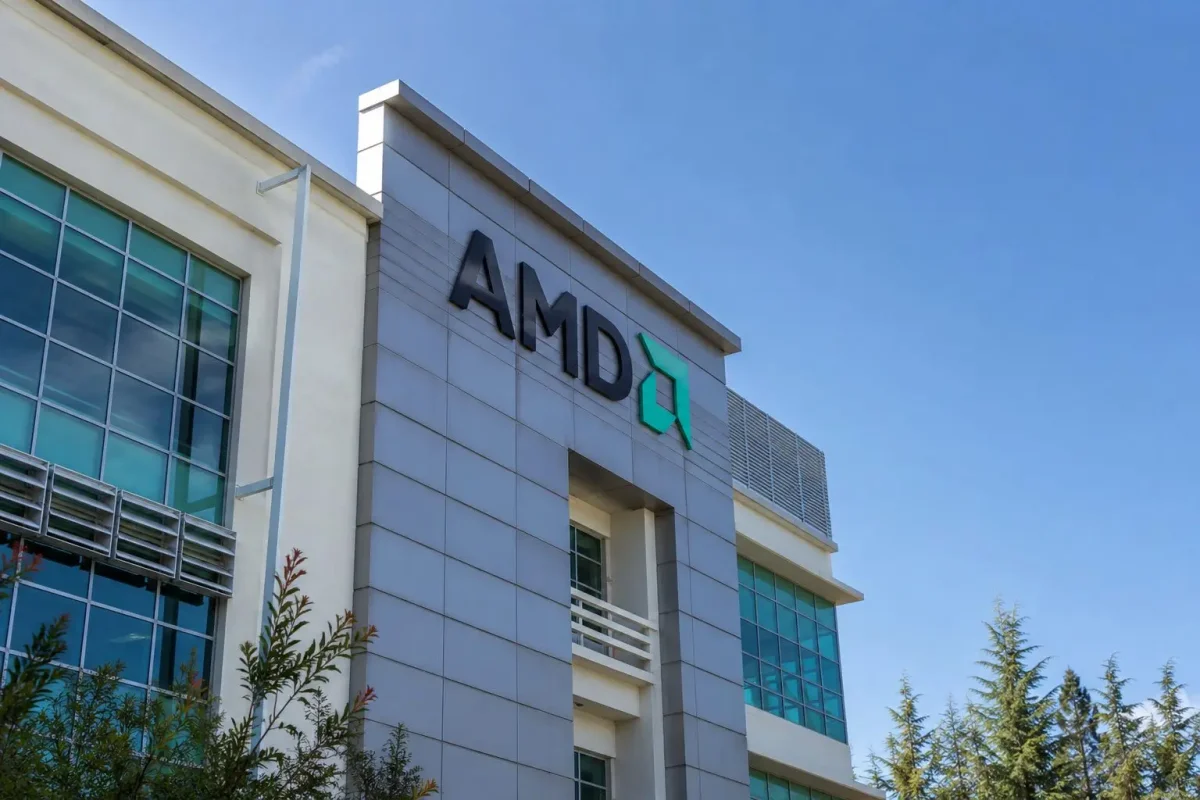
Advanced Micro Devices (NASDAQ:AMD) saw its shares retreat sharply in U.S. premarket trading on Wednesday, August 5, 2026, as investors digested a mixed earnings report that highlighted robust AI demand but also revealed persistent headwinds in cash generation and margin expansion. The stock was indicated down 7.25% at $481 in delayed premarket action, following a 7% gain in the regular session on Tuesday, when it closed at $518.58. Reuters noted an even steeper decline of nearly 9% in after-hours trading, underscoring the market's disappointment despite a top-and-bottom-line beat.
The semiconductor giant reported second-quarter revenue of $11.54 billion, a 50% surge year-over-year, comfortably ahead of the Wall Street consensus of $11.28 billion. Data-center revenue, a key growth driver, hit a record $6.72 billion, surpassing estimates of $6.48 billion. Adjusted earnings per share came in at $1.66, beating the expected $1.62. For the third quarter, AMD guided to revenue of approximately $13.0 billion at the midpoint, exceeding the $12.52 billion consensus, while maintaining an adjusted gross margin of around 56%.
Despite these strong numbers, the market's reaction was decidedly negative, a classic case of "sell the news" for a stock that had run up 20.7% in the five sessions leading up to the report and was up 142.2% year-to-date as of Tuesday. David Wagner, portfolio manager at Aptus Capital Advisors, characterized the situation as a sell-the-news event for an AI chip stock "priced for perfection," noting that investors were likely let down by the projected flat margin guidance.
The underlying financials revealed a more nuanced picture. While data-center revenue grew by $943 million sequentially, operating profit in that segment climbed by $504 million, implying an incremental operating margin of 53.4%. The data-center operating margin improved to 31.3% from 27.7% in the prior quarter. However, this operational leverage did not translate into commensurate free cash flow growth. Operating cash flow declined 19.9% sequentially to $2.366 billion, and free cash flow fell 39.3% to $1.558 billion. Capital expenditures more than doubled sequentially to $808 million, and were up 187% year-over-year, far exceeding the Street's forecast of $314 million.
The company's segment breakdown underscores its reliance on the data-center business. Data-center revenue accounted for 58.2% of total revenue and delivered 68.5% of segment operating profit. Client and gaming segments contributed 19.0% of profit, while embedded added 12.6%. These figures exclude $1.081 billion in "all other" expenses, which weighed on overall profitability.
Chief Executive Lisa Su expressed optimism about continued growth, stating that server CPU segment is poised to "grow substantially" and projecting double-digit sequential growth in data-center revenue in the third quarter. She also indicated that fourth-quarter growth would be stronger as shipments of the new Helios platform ramp up. Su reiterated her expectation that data-center sales will more than double in 2027, as AMD shifts its focus from single chips to rack-scale systems, intensifying competition with Nvidia (NASDAQ:NVDA).
AMD continues to gain server-processor market share from Intel (NASDAQ:INTC), but investors now face elevated expectations. The key question is whether the company's expansion can eventually translate into improved consolidated margins and stronger cash flow. The risks are evident: delays in Helios ramp, export restrictions, or prolonged capital intensity could hamper cash conversion. Given AMD's 142% year-to-date surge, any execution shortfall is likely to be met with outsized market punishment.
The next clear indicator for AMD will be whether its double-digit data-center growth can begin to meaningfully boost free cash flow and overall company margins. For now, the market's reaction suggests that while AI demand remains robust, the financial payoff is still a work in progress.