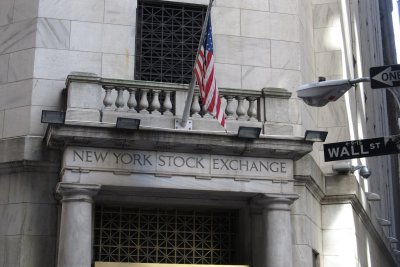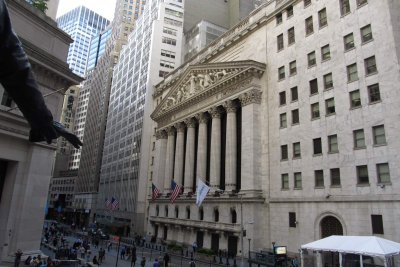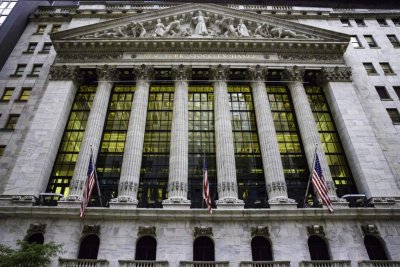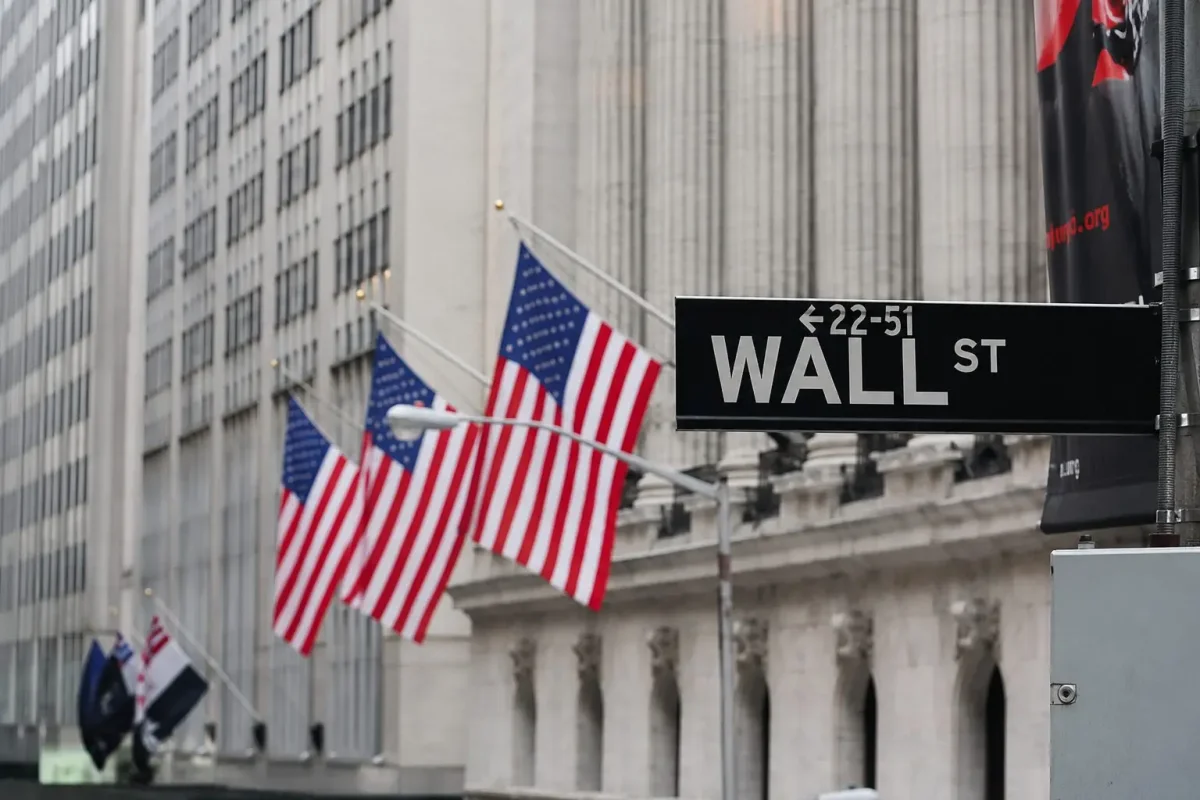
Wall Street enters the new trading week with an unusually low level of anxiety, as measured by the Cboe Volatility Index (VIX), which closed Friday at 15.03. This reading is just 12% above its 52-week low, a calm that seems at odds with the packed calendar ahead. Tuesday morning alone will see the release of the June Consumer Price Index (CPI), quarterly results from five of the largest U.S. banks, and testimony from Federal Reserve Chair Kevin Warsh before the House of Representatives, all compressed into a 90-minute window.
The S&P 500 ended Friday at 7,575.39, a mere 0.45% below its all-time high set on June 2. The index's forward price-to-earnings (P/E) ratio has eased to approximately 20, down from 21 in late May, a decline driven entirely by rising earnings estimates rather than a price correction. Analysts tracked by LSEG expect second-quarter S&P 500 earnings to climb roughly 24% year-over-year, with the technology sector providing the bulk of that growth. Terry Sandven, chief equity strategist at U.S. Bank Wealth Management, characterized the upcoming earnings season as “a high-bar quarter with a narrow margin of error.”
Market Breadth and Sector Rotation
Friday’s trading session offered a mixed signal. While advancing stocks on the S&P 500 outnumbered decliners by a 2.1-to-1 ratio, total volume was notably light, with only 14.5 billion shares changing hands—about 35% below the 20-day average. This divergence suggests conviction remains tepid. The weekly performance gap between the Nasdaq Composite and the Dow Jones Industrial Average widened to 2.2 percentage points, with the Nasdaq gaining 1.7% versus the Dow’s 0.5% decline. This persistent tilt toward growth names, particularly technology, underscores a market that continues to pay a premium for earnings growth rather than embracing a broad cyclical rally.
The market’s narrow leadership leaves it vulnerable. A clean set of bank earnings, combined with stable Treasury yields, could provide the catalyst needed to broaden the rally beyond technology. Conversely, any signs of credit deterioration or a rise in yields would reinforce the current dependence on the tech sector, which already shoulders a disproportionate share of earnings expectations.
Bank Earnings in Focus
JPMorgan Chase (NYSE:JPM), Citigroup (NYSE:C), and Goldman Sachs (NYSE:GS) are among the five major banks reporting before Tuesday’s opening bell. Investors will scrutinize net interest income (NII)—the difference between what banks earn on loans and pay on deposits—as well as provisions for potential loan losses. The key question is whether elevated interest rates are boosting revenue faster than they are straining borrowers. Michael Reynolds, vice president of investment strategy at Glenmede, noted that “a lot of factors are coming to a head all at once.” Anthony Saglimbene, chief market strategist at Ameriprise Financial, warned that a hotter-than-expected CPI reading could “push odds of a rate increase higher by year end.”
The Inflation and Fed Calendar
The economic calendar leaves little room for a gradual market reset. The June CPI report, due at 8:30 a.m. ET Tuesday, is expected to show headline inflation slowing to an annual rate of 3.8%, down from 4.2% in May, according to a Wall Street Journal survey. Core CPI, which excludes volatile food and energy prices, is forecast to ease to 2.8% from 2.9%. Despite this expected moderation, the 10-year Treasury yield closed Friday at 4.568%, up 9.1 basis points for the week and at its highest level since May 22. This leaves equities exposed to an upside inflation surprise. Later that morning, at 10:00 a.m., Fed Chair Warsh will testify before the House, followed by a Senate appearance on Wednesday. The week also includes June producer price index (PPI) data, retail sales, housing starts, and industrial production figures.
Geopolitical Risk
Beyond the domestic data, a geopolitical flashpoint emerged over the weekend. Iran announced it had closed the Strait of Hormuz, a critical chokepoint through which roughly one-fifth of the world’s oil and liquefied natural gas transits before the conflict. U.S. Central Command countered that the waterway remains open and traffic is flowing after an exchange of attacks between U.S. and Iranian forces. A sustained disruption could send energy prices and Treasury yields higher, weaken consumer demand, and compress the earnings multiple investors are willing to pay.
What to Watch on Tuesday
The most telling signal on Tuesday will be the market’s collective reaction. If bank stocks rise while Treasury yields hold steady or decline, it would support a broadening of the earnings case. A technology-led advance with banks lagging would confirm the rally’s narrow structure. However, a simultaneous sell-off in both banks and technology, accompanied by rising yields and a spike in the VIX, would reveal that the S&P 500’s recent valuation cushion was built largely on optimistic forecasts rather than tangible economic momentum.