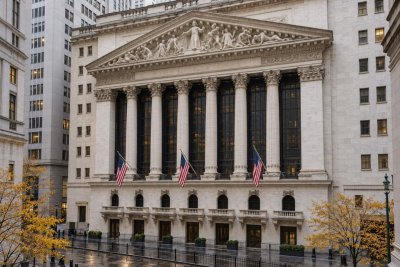
The Dow Jones Industrial Average suffered a sharp decline on Wednesday, closing at 50,019.15, down 1.68% from Tuesday's finish of 50,872.11. The selloff erased all gains from the previous session and underscored growing investor anxiety over inflation and monetary policy.
Inflation Data Surprises to the Upside
The Bureau of Labor Statistics reported that the Consumer Price Index rose 4.2% year-over-year in May, accelerating from 3.8% in April. This was primarily driven by a 23.5% surge in energy prices, with gasoline costs jumping 40.5% over the past year. Core CPI, which excludes volatile food and energy components, increased 2.9% annually and 0.2% month-over-month, a deceleration from April's 0.4% monthly gain. While the core reading offered some relief, the headline figure reinforced fears that inflation is not cooling as quickly as hoped.
Oil Spike Adds to Inflation Concerns
Brent crude oil prices climbed as geopolitical tensions between the United States and Iran escalated. President Donald Trump threatened new action against Iran, while U.S. crude inventories fell by 7.2 million barrels in the week ending June 5, a sharper decline than analysts had forecast, according to Reuters. Rising oil prices act as a tax on businesses and households, squeezing margins in transportation, manufacturing, and consumer spending. Investors interpreted the combination of hot CPI and higher oil as a signal that inflationary pressures could persist, potentially forcing the Federal Reserve to adopt a more hawkish stance.
Tech and AI Stocks Under Pressure
The technology sector bore the brunt of the selling, with chip stocks continuing their recent slide. Nvidia (NVDA) and Broadcom (AVGO) were among the major drags on the S&P 500. Super Micro Computer (SMCI) dropped after announcing plans to raise $7 billion through equity and equity-linked offerings. AI-driven stocks, which have been a key driver of market gains this year, faced valuation doubts, leading to profit-taking that spilled over into other risk assets. The Dow, with its lower tech weighting compared to the Nasdaq, was less directly exposed but still suffered from the broader risk-off sentiment.
Fed Meeting in Focus
The Federal Reserve's next policy decision is scheduled for June 16-17, and Wednesday's CPI report is one of the last major inflation data points before that meeting. According to Reuters, markets are now pricing in at least one 25-basis-point rate hike by year-end. Tom Hainlin, investment strategist at U.S. Bank Wealth Management, noted that investors are "pricing in maybe a higher interest rate" after the recent data and are also concerned about geopolitical risks. The upcoming Summary of Economic Projections will provide updated forecasts for growth, inflation, and interest rates, adding to the market's focus.
Mixed Signals Provide Some Counterpoint
Despite the headline inflation scare, there were some mitigating factors. Core CPI slowed to a monthly gain of 0.2% in May from 0.4% in April, and core goods prices fell 0.1% during the month. This suggests that inflation may not be spreading broadly beyond energy. If oil prices stabilize, the inflation scare could prove temporary. However, if the U.S.-Iran standoff keeps crude elevated, the Fed could become less accommodative, and highly valued AI stocks could face further selling pressure.
The Dow now heads into next week's Fed meeting with inflation, energy costs, and interest rates firmly back in the spotlight. The blue-chip index's price-weighted structure means that swings in a few high-priced stocks can have an outsized impact on the overall index, amplifying the market's reaction to macro developments.