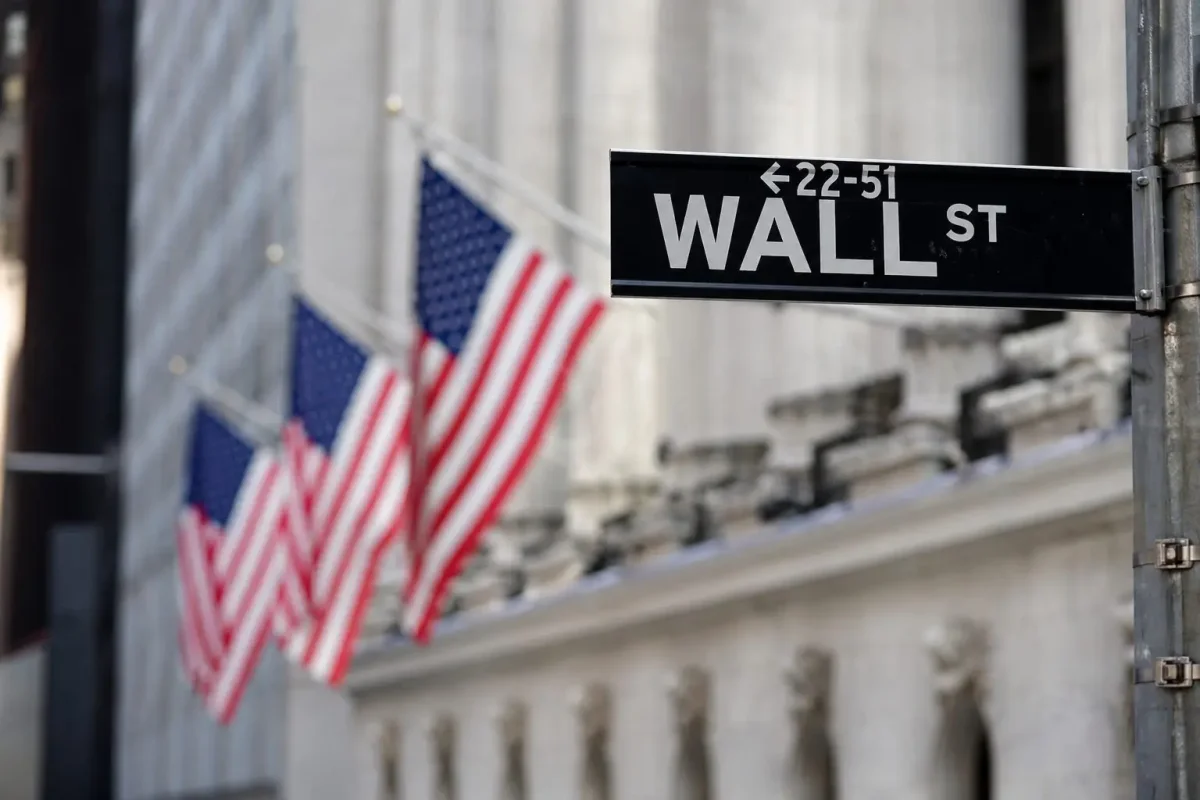
Wall Street futures rallied sharply on Monday as oil prices tumbled more than 4% following news of a preliminary agreement between the United States and Iran to end the conflict and reopen the strategically vital Strait of Hormuz. The Dow Jones Industrial Average futures surged 480 points, or 0.94%, while S&P 500 futures climbed 1.29% and Nasdaq 100 futures jumped 2.2% in early trading, according to Reuters data.
Oil Plunge and Geopolitical Relief
The tentative deal, which aims to restore normal shipping through the Strait of Hormuz—a critical chokepoint for global oil shipments—sent crude prices sharply lower. Brent crude hovered near $83 per barrel, while U.S. West Texas Intermediate crude traded around $80, both dropping over 4% as details emerged, per MarketWatch and Trading Economics. Lower oil prices are seen as reducing inflationary pressures, as cheaper fuel and freight costs can stabilize consumer spending and ease pressure on the Federal Reserve.
Travel and Tech Stocks Surge
Airline and cruise operators benefited from the oil price decline, with United Airlines (UAL) gaining 4.4%, Delta Air Lines (DAL) up 4%, American Airlines (AAL) rising 3.5%, Norwegian Cruise Line Holdings (NCLH) adding 4.3%, and Carnival Corporation (CCL) climbing 3.6% in premarket trading, Reuters reported. Technology stocks also provided a significant boost, with Micron Technology (MU) surging 8.2% after analysts raised price targets. Nvidia (NVDA) added 2.3%, Intel (INTC) rose 3.1%, and Marvell Technology (MRVL) gained 5.4%. The strong performance of these heavily weighted tech and semiconductor stocks lifted the broader indexes. SpaceX shares jumped 5.6% following its IPO valuation above $2 trillion, while Paramount Skydance (PARA) rose 4.7% after Reuters reported Department of Justice approval for its acquisition of Warner Bros.
Market Sentiment and Fed Watch
The CBOE Volatility Index (VIX) fell to 16.66, its lowest level in over a week, signaling reduced market anxiety. Analysts at HSBC Global Investment Research noted that if the deal proves credible and lasting, it should be viewed positively for risk assets, while any setbacks might have limited negative impact. However, caution remains as the agreement is not yet finalized. The framework still leaves unresolved issues regarding Iran's nuclear program and the Lebanon-Israel situation, with a signing ceremony scheduled for Friday in Switzerland. Nick Rees, head of macro research at Monex Europe, warned that without a nuclear agreement, the deal's durability is uncertain, leaving room for disappointment.
Fed Decision and Rate Outlook
The next major catalyst for markets is the Federal Reserve's monetary policy decision on Wednesday. Most economists expect the central bank to hold interest rates steady, but traders still anticipate at least one more 25-basis-point rate hike by year-end, according to Reuters. A sustained decline in oil prices could support stocks by easing inflation concerns, but any disruption in Iran negotiations or a more hawkish Fed stance could reverse the rally. Wall Street bulls argue that a lasting US-Iran deal reduces the risk of an oil shock and makes it less likely the Fed will keep rates elevated due to inflation. Bears, however, caution that the rally is built on hopes for a deal that is not yet sealed, and stocks are not cheap at current levels.
As traders navigate headline risk, the market's direction hinges on the durability of the Iran deal and the Fed's forward guidance. The coming days will be critical in determining whether the optimism can be sustained or if a more cautious tone will prevail.