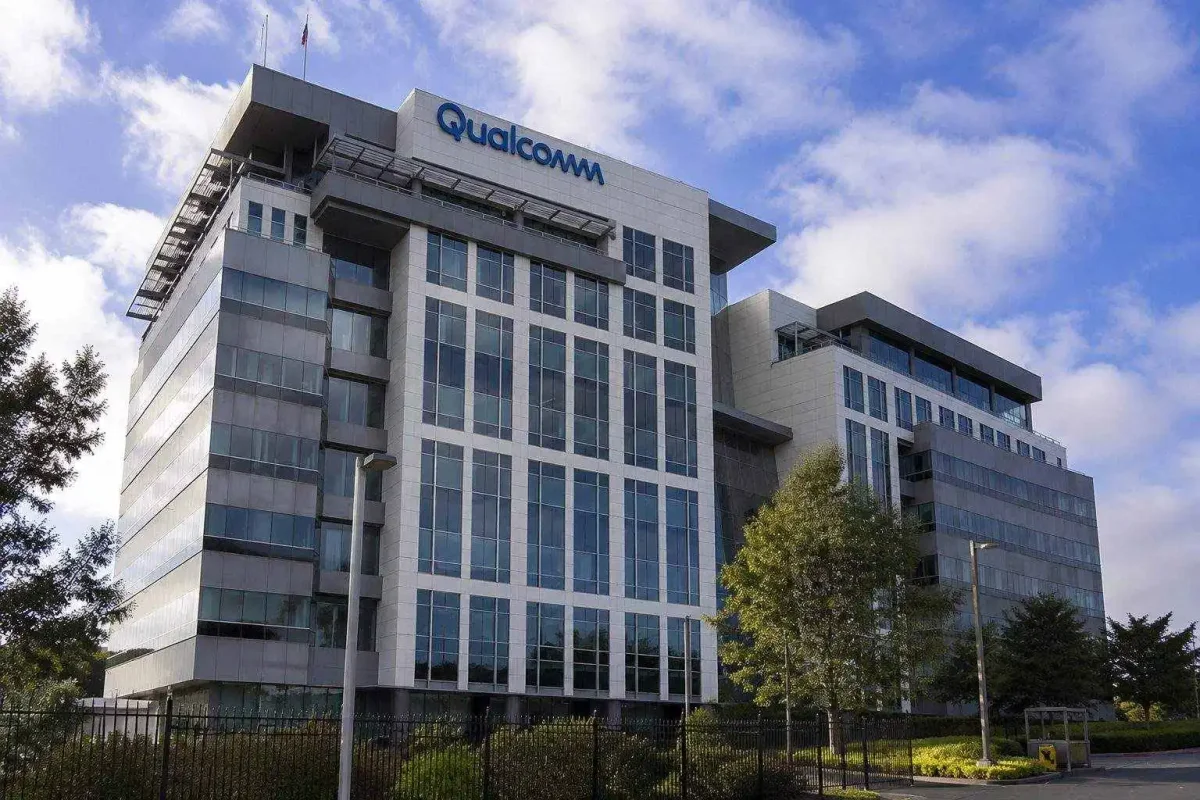
Qualcomm (NASDAQ:QCOM) shares indicated a 2.8% decline in premarket trading Tuesday, settling at $151.37 as of 09:00 EDT, after briefly dropping as much as 5% earlier. The move comes as the chipmaker's fiscal fourth-quarter profit outlook disappointed investors, overshadowing a revenue forecast that slightly exceeded analyst expectations.
Guidance Highlights Margin Squeeze
The midpoint of Qualcomm's fiscal fourth-quarter revenue guidance came in 0.8% above the consensus estimate, projecting a range of $9.7 billion to $10.5 billion against the $10.02 billion analyst forecast. However, adjusted earnings per share were forecast between $2.05 and $2.25, with the $2.15 midpoint falling 8.9% below the $2.36 analyst projection. This divergence between top-line and bottom-line expectations underscores the margin pressures the company is facing.
Cost Pressures and Pricing Response
Qualcomm's QCT chip division guided for an earnings-before-tax margin of 23% to 25%, with the 24% midpoint representing a two-percentage-point decline from the fiscal third quarter and six points lower year-over-year. The company cited rising expenses in wafers, assembly, testing, packaging, and memory. In response, Qualcomm plans to implement price hikes effective September 1, with the positive impact expected to materialize progressively as contracts are updated. CEO Cristiano Amon noted, “We’re just passing through big cost increases that we have.”
Business Mix Shift: Automotive and IoT Gain Ground
Fiscal third-quarter revenue fell 4% year-over-year to $9.95 billion, while adjusted earnings dropped 20% to $2.21 per share. The business mix shifted notably, with automotive and internet-of-things (IoT) revenues growing as handset sales declined. Automotive revenue surged 61% to $1.59 billion, and IoT revenue rose 9% to $1.83 billion, together accounting for 40.2% of QCT chip revenue, up from 29.6% a year earlier. This combined $753 million increase offset 61% of the $1.24 billion drop in handset revenue. Despite this shift, QCT’s earnings before tax declined 18%, and its margin narrowed to 26% from 30%.
Apple Modem Share Disappoints
Qualcomm now expects its modem share in the upcoming iPhone to fall significantly short of its earlier 20% projection, with the accelerated decline attributed to supply availability, according to Amon. This development adds to near-term uncertainty, though the company forecasts approximately $5.2 billion in handset revenue for the fourth quarter, surpassing the $5.03 billion average analyst estimate. Management also anticipates a return to double-digit sequential growth for China Android revenue.
Diversification Strategy and Long-Term Targets
Management projects non-handset revenues will grow by more than 60% in fiscal 2027, following an anticipated 24% gain in fiscal 2026, with higher revenue seen offsetting all Apple product sales from fiscal 2026. The company targets data center revenue of $5 billion by fiscal 2027 and over $15 billion by fiscal 2029, with combined non-handset revenue reaching $40 billion by 2029. Bob O’Donnell, chief analyst at TECHnalysis Research, noted, “The good news longer term is the company is quickly pivoting to non-handset revenues.” However, some analysts caution that initial data center projects are typically less profitable.
Valuation and Analyst Outlook
Qualcomm currently trades at 14.31 times its projected 12-month earnings, a discount to Nvidia’s 17.49 times and Intel’s 43.85 times. Following the report, at least six analysts lowered their price targets. The average price target stands at $208.68, implying approximately 38% upside from premarket levels. Near-term earnings revisions are likely to play a more significant role in price action than long-term growth expectations.
Key risks include input costs rising faster than prices, further Apple share declines, early-stage data center initiatives potentially pressuring margins, and fluctuating demand in China. Investors are advised to monitor QCT margins closely; recovery above the 24% midpoint would confirm the effectiveness of pricing responses, while a miss would indicate that diversification is driving sales growth ahead of profit gains.