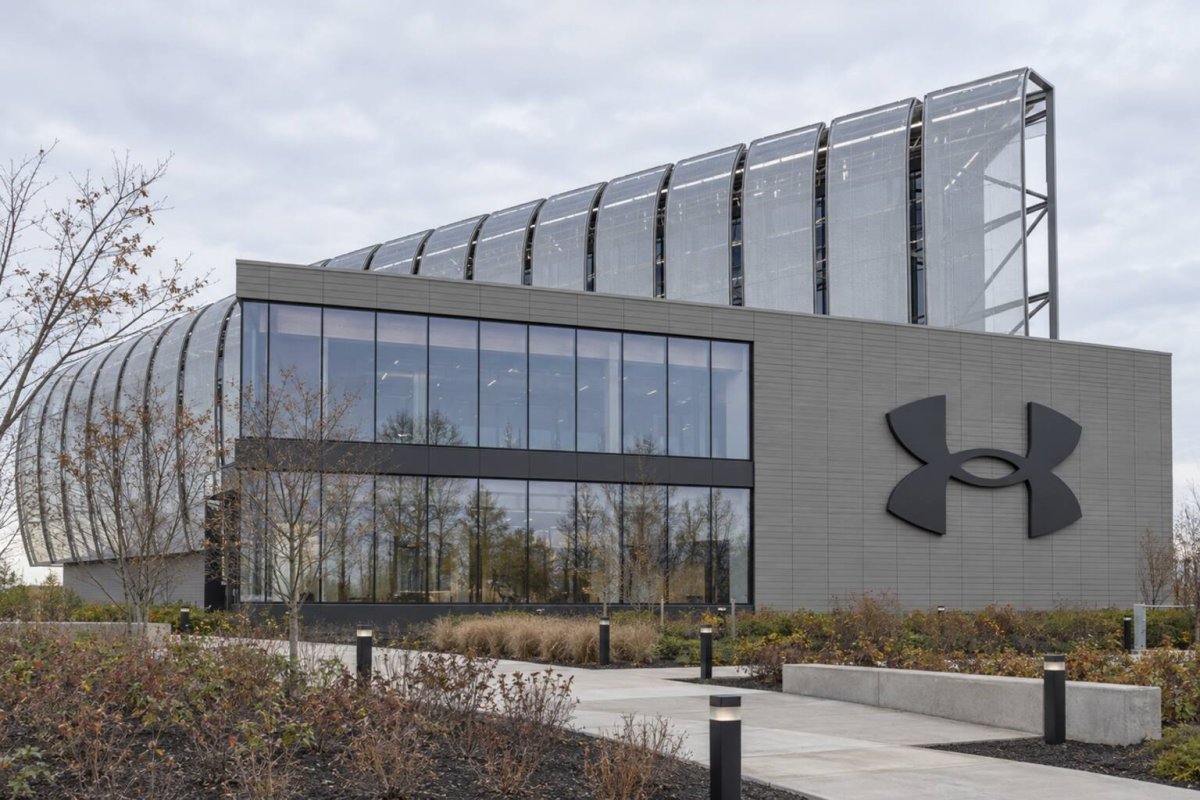
Under Armour (UAA) has signed Cincinnati Bengals wide receiver Tee Higgins to an endorsement deal, the company announced on September 10. The move comes as the sportswear giant faces a challenging period in its home market, with North America revenue declining 9% to $610 million in the quarter ended June 30. Higgins will wear Under Armour gear on and off the field and will appear in future extensions of the company's "WE LOVE FOOTBALL" marketing campaign. Financial terms and the length of the agreement were not disclosed.
The signing adds another recognizable NFL player to Under Armour's roster, which already includes Justin Jefferson, DeVonta Smith, Jonathan Taylor, Zay Flowers, and Cam Ward. Higgins, who is entering his seventh NFL season, previously wore Nike gear but his contract with the rival brand expired. He is set to debut Under Armour cleats in Cincinnati's season opener, and will also promote footwear, apparel, and accessories, as well as participate in community initiatives. Notably, Higgins has a prior tie to the company through the 2017 UA Next All-America Game, giving the partnership a genuine brand history rather than a manufactured endorsement narrative.
North America Sales Slump
The deal comes at a critical juncture for Under Armour, which is in the midst of a turnaround. North America accounts for roughly 56% of the company's first-quarter revenue, making the region's performance crucial to shareholders. The 9% drop in North America sales, coupled with an 8% decline in footwear revenue to $245 million, underscores the challenges. A single sponsorship is unlikely to move the needle on a $610 million quarterly business unless it supports broader improvements in product demand and distribution.
The company's August 7 earnings release painted a mixed picture. Total revenue declined 3% to $1.10 billion, while direct-to-consumer revenue fell 6%, including a 12% contraction in ecommerce. Management revised its fiscal 2027 revenue outlook from a slight decline to a mid-single-digit decline, and now expects North America revenue to fall at a mid-single-digit rate. However, there were some bright spots: gross margin rose 590 basis points to 54.1%, operating income improved to $47 million, and inventory was 3% lower than a year earlier.
Investors, however, remain cautious. Roughly 150 basis points of the expected full-year margin improvement comes from refunds of prior tariff costs, which does not reflect stronger consumer demand. The company's selling, general, and administrative expenses increased 2% to $543 million, partly due to targeted brand investment. Its restructuring program has accumulated $266 million in costs and is expected to reach about $305 million before being substantially complete by December 31.
Market Reaction
Under Armour's Class A shares (UAA) closed at $5.11 on Friday, September 11, up 2.8% for the session, according to FinancialContent's price history. The company also has Class C shares (UA). The Friday move cannot be attributed solely to the Higgins news, and the company has not provided data isolating the partnership's effect.
What This Means for the Turnaround
The real test for Under Armour will be whether the Higgins deal can help reverse the sales decline. The first useful evidence will come not from social-media reach, but from a smaller North America revenue decline, firmer footwear sales, and less discounting over the next several quarters. Management has said that protecting full-price selling is part of its plan, so those operating measures offer a cleaner test than campaign impressions.
The favorable case is that Higgins adds depth to a coherent football program at a modest undisclosed cost, improving Under Armour's credibility with younger athletes without requiring a large new product bet. The harder case is that another name joins an already substantial roster while ecommerce and footwear remain weak. Until sales respond, the partnership is evidence of marketing activity, not proof that the turnaround has gained traction.