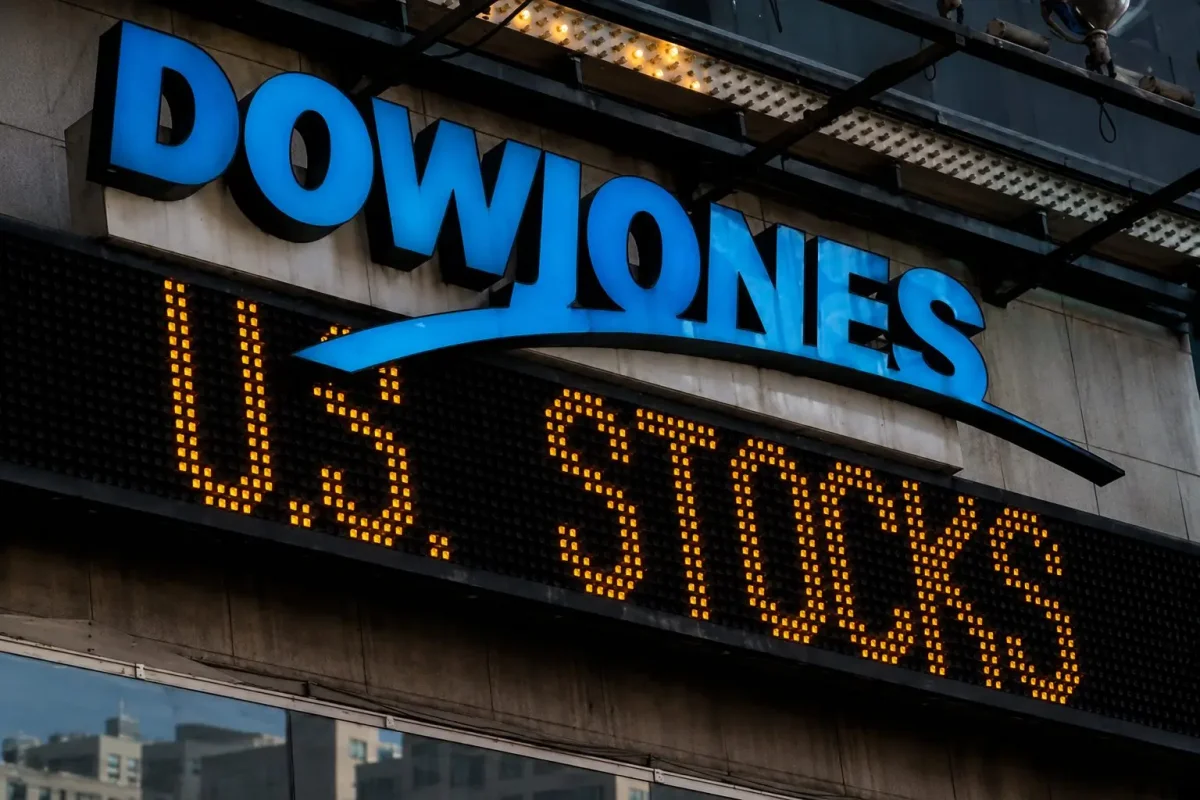
Wall Street kicked off the week with a historic milestone, as the Dow Jones Industrial Average surged to an all-time intraday high of 51,851.25 on Monday, representing a gain of roughly 649 points or 1.27%. The rally was fueled by a sharp decline in oil prices following news of a preliminary agreement between the United States and Iran, which eased concerns about supply disruptions in the strategic Strait of Hormuz.
The broader market also participated in the advance, with the S&P 500 and the tech-heavy Nasdaq Composite both posting solid gains. The CBOE Volatility Index, known as Wall Street's fear gauge, dropped to 16.31, its lowest level in over a week, signaling a return of risk appetite among investors. Robert Pavlik, senior portfolio manager at Dakota Wealth, noted that the environment is becoming more favorable for equities, citing lower oil prices as a key factor that could help moderate inflation and support consumer spending.
Airlines and cruise operators were among the biggest winners on Monday, as cheaper fuel costs promise to boost their profit margins. United Airlines Holdings Inc. (UAL) soared 6.4%, Delta Air Lines Inc. (DAL) climbed 4.1%, and American Airlines Group Inc. (AAL) added 5.2%. The broader travel sector also benefited, with hotel and leisure stocks moving higher. In contrast, energy companies bore the brunt of the sell-off. Exxon Mobil Corporation (XOM) and Chevron Corporation (CVX) each dropped nearly 5%, while the S&P 500 energy index shed 3.9%.
U.S. crude oil futures lost about 5%, hitting their lowest level since March, after reports emerged of a tentative U.S.-Iran agreement that could potentially reopen the Strait of Hormuz to normal shipping traffic. The strait is a critical chokepoint for global oil shipments, and any resolution to the tensions there is seen as a major positive for energy markets. However, analysts caution that a full deal remains elusive, with disagreements over Iran's nuclear program and ongoing conflicts between Israel and Lebanon. The Associated Press reported that the strait will remain blocked until a complete pact is finalized, and skepticism persists about the follow-through.
Technology stocks also played a leading role in Monday's rally. Micron Technology Inc. (MU) jumped 9% after analysts raised their price targets on the memory chip maker, citing strong demand for artificial intelligence-related products. The Philadelphia Semiconductor Index gained 4.8%, reflecting broad strength in chipmakers and AI-focused companies, which continue to be the primary drivers of U.S. equity markets.
Looking ahead, the primary catalyst for markets this week is the Federal Reserve's two-day policy meeting scheduled for June 16–17. The central bank is widely expected to hold its benchmark interest rate steady at 3.50%–3.75%, according to market pricing. Investors will be closely watching the updated economic projections and the subsequent press conference by Fed Chair Kevin Warsh, who will deliver his first policy statement in that role. Any hints of a potential rate hike—or a more hawkish stance—could quickly reverse the recent rally. A 25-basis-point increase would add 0.25 percentage points to rates, a move that many traders believe is unlikely but not impossible.
The market's resilience is being tested by valuations that remain elevated, even after the record run. While momentum and breadth have improved, the softness in oil prices is providing a tailwind. However, the rally faces resistance from bearish traders who warn that a collapse in talks with Iran or a hawkish Fed could send oil prices soaring again and derail the Dow's historic climb. Key levels to watch include the 52,000 mark on the Dow and the 5,500 level on the S&P 500.
In summary, Monday's record high reflects a delicate balance of optimism over lower energy costs and anticipation of continued Fed support. The coming days will be critical in determining whether this rally has staying power or if it is merely a pause before the next bout of volatility.