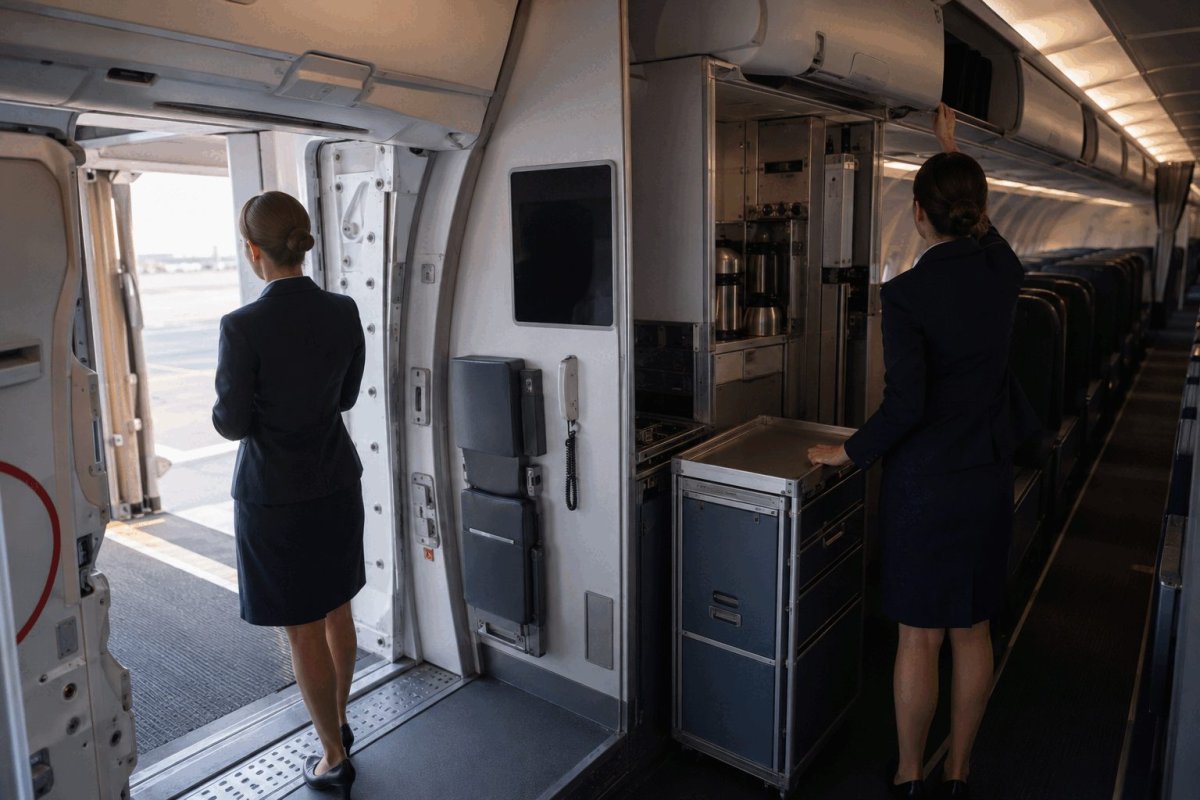
North American equity markets remained closed on Monday, August 25, 2026, but a significant labor development in the airline industry is poised to influence trading when markets reopen on Tuesday. WestJet's cabin crew have overwhelmingly ratified a new three-year collective agreement, a deal that industry analysts say could reset cost structures across the sector.
Key Terms of the WestJet Agreement
The contract, approved by 90.2% of the roughly 4,400 flight attendants, delivers wage increases exceeding 18% over its term. Specifically, crew members will see a 13% raise in October 2026, followed by a 2.75% increase in January 2027 and a further 2.5% bump at the start of 2028. Compounded sequentially, these increases total approximately 18.85%.
Beyond the headline wage gains, the agreement introduces a duty-period premium for ground tasks such as check-in, boarding, and post-landing duties. This marks a departure from traditional pay structures that compensated flight attendants only for airborne hours, expanding the scope of paid time to include pre- and post-flight activities.
Industry Benchmark and Comparisons
WestJet's new contract sets a precedent among North American carriers. Air Canada, the country's largest airline, currently compensates cabin crew for specified ground time at 60% of their hourly wage, rising to 70% in 2028. U.S. carriers including American Airlines, Alaska Air Group, Delta Air Lines, and United Airlines also offer compensation for boarding and other ground duties, but WestJet's approach—particularly the undisclosed premium formula—could pressure rivals to follow suit.
The deal eliminates the immediate threat of disruption. WestJet had suspended scheduled Boeing 737 and 787 services on August 2, but a tentative agreement reached on August 3 allowed flights to resume. CEO Alexis von Hoensbroech described the agreement as “modernizing how cabin crew are compensated,” while the company emphasized its role in ensuring operational stability.
Market Reaction and Investor Implications
Markets showed limited reaction to the news. Onex Corp., which holds a majority stake in WestJet, closed Monday at C$114.15, up 0.67%. A simple average of four major U.S. airline stocks—JetBlue, Southwest, Delta, and United—advanced 0.62%, while the S&P 500 slipped 0.28% to 7,652.86.
Investors will now focus on the financial impact of the new cost structure. The key question is whether WestJet can offset higher labor expenses through improved operational efficiency, higher load factors, or stronger pricing. The airline's unit costs, measured as cost per available seat mile, will be closely watched, as will any fare adjustments.
Risks and Forward Outlook
The premium calculation remains undisclosed, leaving uncertainty about its exact impact on costs. Fuel price fluctuations, demand shifts, and unexpected disruptions could overshadow labor-related effects. Rapid schedule normalization could mitigate earnings pressure, but further staffing strains would intensify it.
As trading resumes Tuesday, attention will turn to Onex and other airline stocks. Key indicators include WestJet's completed scheduling, any fare changes, and updates on how the new paid duty hours are being implemented. The agreement's long-term implications for the industry will depend on how quickly competitors respond and whether labor costs become a broader sector-wide concern.