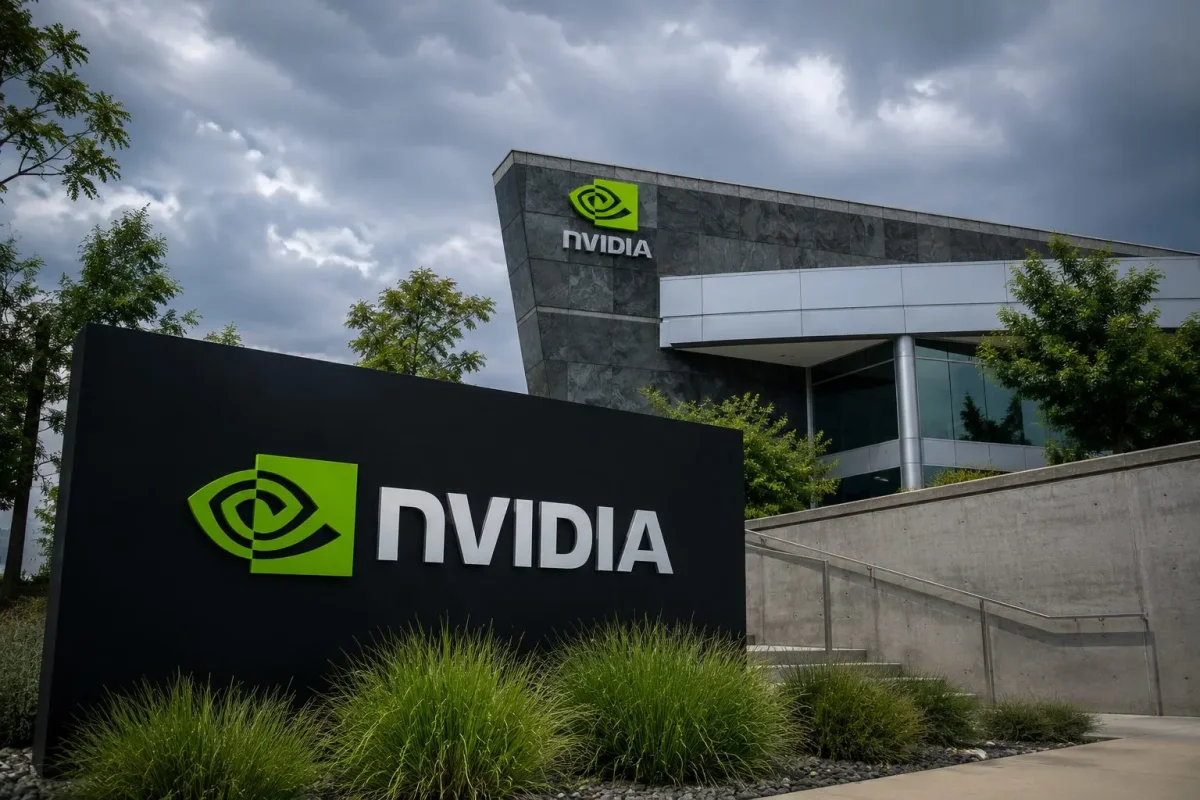
Nvidia Corporation (NASDAQ:NVDA) closed Thursday's trading session at $195.04, up 2.7%, as investor enthusiasm for artificial intelligence infrastructure spending continued to buoy the chipmaker. The stock remains 30.3% below Morningstar's fair value estimate of $280, which the research firm left unchanged.
The broader market narrative centered on the divergent fortunes of Nvidia's largest customers. Microsoft Corporation (NASDAQ:MSFT) saw its shares surge 15.6% after reporting a 43% jump in Azure revenue, while Amazon.com Inc. (NASDAQ:AMZN) advanced 9.7% in after-hours trading following a 37% acceleration in AWS sales. Meta Platforms Inc. (NASDAQ:META) fell 8.0% after its quarterly free cash flow plummeted 91% to $784 million.
Hyperscaler capital expenditure boom
Collectively, the four leading hyperscalers—Microsoft, Alphabet, Amazon, and Meta—are projecting approximately $732.5 billion in capital expenditures for 2026, based on midpoint guidance. This figure, while directional due to varying reporting standards and lease-accounting adjustments, underscores the scale of AI-driven investment.
Microsoft's CFO Amy Hood noted that additional Azure capacity was "quickly monetized," reflecting robust demand. Amazon CEO Andy Jassy described AWS as "booming," and the company raised its 2026 spending target to $220 billion. Alphabet Inc. (NASDAQ:GOOGL) lifted its capital expenditure range to $195 billion-$205 billion after Google Cloud revenue surged 82% to $24.8 billion.
Cash flow and spending trade-offs
The financial impact of this spending varies sharply. Microsoft generated $19.6 billion in free cash flow, with capital outlays representing 64.6% of operating cash flow. Meta's free cash flow dwindled to just $784 million as spending consumed 97.6% of operating cash flow. Alphabet reported negative free cash flow of $5.86 billion, with outlays exceeding operating cash flow by 115%.
Amazon, despite a negative trailing free cash flow of $7.6 billion, saw AWS achieve a 39.4% operating margin and $16.6 billion in operating income, offsetting the cash drain. Investors rewarded companies where new capacity translates directly into revenue, a key differentiator in Thursday's trading.
Nvidia's fundamentals remain strong
Nvidia's own results remain robust. First-quarter Data Center revenue climbed 92% to $75.2 billion, and the company guided second-quarter revenue to $91 billion, plus or minus 2%. This forecast excludes any China data-center compute sales, highlighting geopolitical risks.
"These are true battleground stocks," said Jed Ellerbroek, portfolio manager at Argent Capital Management. "The focus is shifting from expenditure to observable outcomes. Nvidia remains the key supplier, but its clients are dealing with varying financial impacts."
Market outlook and risks
Investors will next scrutinize Advanced Micro Devices Inc. (NASDAQ:AMD), which reports second-quarter earnings on August 4. The company's midpoint revenue guidance of $11.2 billion implies roughly 46% year-over-year growth, and data-center commentary will be closely watched for signs of demand broadening beyond Nvidia.
Risks remain significant. A slowdown in cloud orders, construction delays, or tighter spending could shift the current capacity shortfall to a surplus. Poor cash conversion at hyperscalers might reignite concerns about the sustainability of capital expenditure. For now, Nvidia's recovery reflects confidence that AI spending is translating into tangible growth.