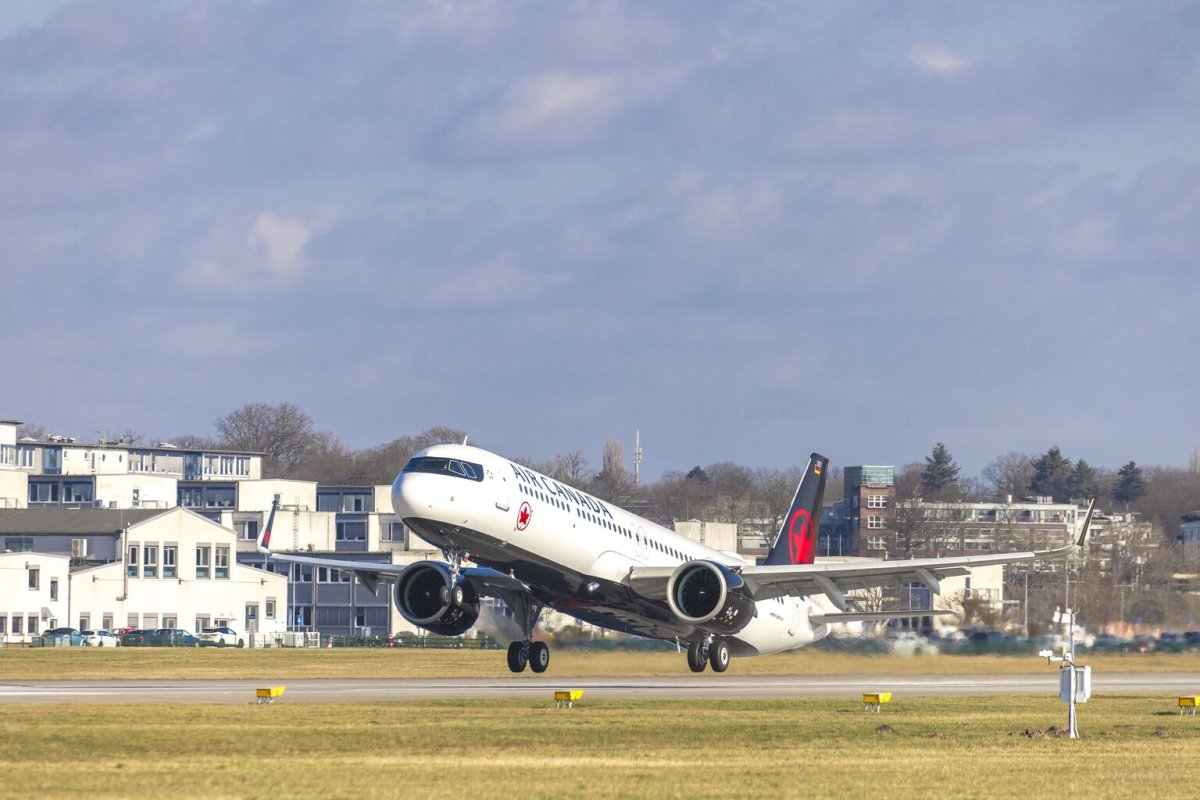
Air Canada's recent deployment of the Airbus A321XLR on its Montreal-Lyon service is more than a routine aircraft change; it's a strategic experiment in fleet economics. The carrier swapped a wide-body jet for the fuel-efficient narrow-body on September 8, a move that could signal a shift in how it approaches transatlantic routes.
A Strategic Shift in Fleet Deployment
The A321XLR, configured with 14 lie-flat Signature Class seats and 168 economy seats, now operates up to five times weekly on the route. This is a significant reduction in capacity compared to the previous wide-body aircraft, but it's a calculated trade-off. The airline aims to maintain frequency and premium fares while avoiding the cost and capacity risks of a larger plane.
This fleet strategy is particularly relevant after Air Canada's second-quarter results, which showed robust passenger revenue growth but a decline in margins. The carrier reported a 10.5% increase in passenger revenue per available seat mile, but adjusted EBITDA margin fell to 11.5% from 16.1% a year earlier, highlighting the pressure on profitability.
The Economics of the A321XLR
Airbus claims the A321XLR can fly up to 4,700 nautical miles and uses 30% less fuel per seat than previous-generation aircraft. While this is a manufacturer claim, the actual unit economics will depend on configuration, load factors, and the fares Air Canada can sustain. The aircraft's ability to operate profitably on thinner routes could be a game-changer for the airline's network planning.
Air Canada has committed to 30 of these aircraft, with 15 purchased and 15 leased. The Montreal-Lyon route serves as an early test of whether the A321XLR can deliver on its promise of lower trip costs and better margins on transatlantic services.
Winter Schedule and Cargo Considerations
Interestingly, the A321XLR is scheduled to be replaced by an Airbus A330 for the winter season starting October 25, offering four weekly flights. This suggests that Air Canada's strategy is not simply 'smaller is better.' The A330 provides greater cargo capacity, which is crucial during peak shipping seasons. This flexibility allows the airline to match aircraft capacity to seasonal demand, optimizing both passenger and cargo revenue.
Market Reaction and Investor Implications
Air Canada's shares closed at C$27.53 in Toronto, down about 1.5% on the day of the announcement. While this move is unlikely to move the stock in the short term, it reflects a broader strategy to improve margins across its network. Investors will be watching for signs that the A321XLR can deliver on its promise, particularly in terms of Atlantic passenger revenue per seat and adjusted unit costs.
The airline's full-year outlook calls for adjusted EBITDA of C$2.9 billion to C$3.2 billion and free cash flow of C$200 million to C$500 million. Achieving these targets will require careful management of costs, and the A321XLR could play a key role in that effort.
Conclusion: A Test of Fleet Flexibility
Montreal-Lyon is not a new destination for Air Canada; it's a proving ground for a new approach to fleet deployment. If the A321XLR can maintain premium demand and improve margins, it could pave the way for similar deployments on other transatlantic routes. This is an operational experiment that could have significant implications for the airline's profitability and network strategy.
