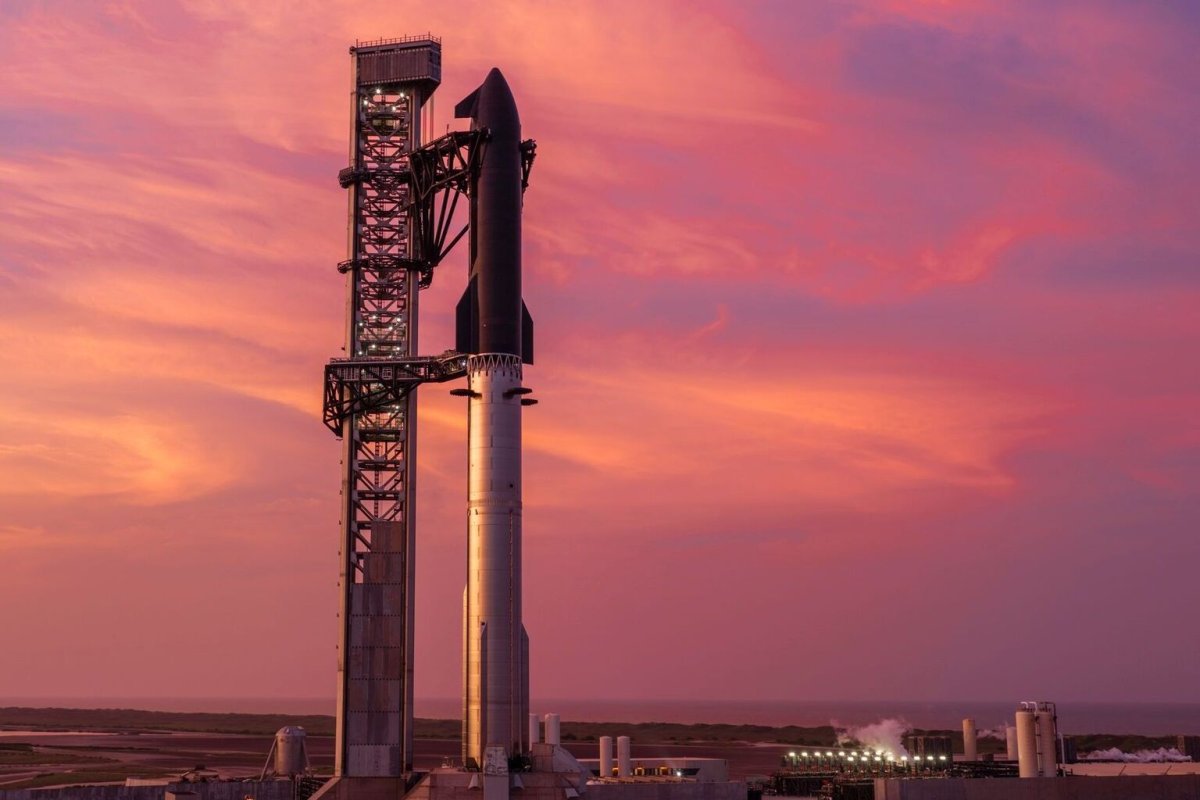
The Federal Aviation Administration (FAA) has posted a primary airspace reservation for SpaceX's Starship Flight 14 on Friday, September 18, from 12:15 to 14:14 UTC, with a backup window on September 19. While this is the clearest scheduling signal yet, it is not an official launch announcement from SpaceX. As of late Saturday, September 12, the company's public mission feed still listed the July Flight 13 as its latest test, with no Flight 14 page created.
For investors in SpaceX (ticker: SPCX), the FAA entry should be viewed as an operational planning checkpoint rather than a guaranteed launch date. Hardware readiness, weather conditions, and final regulatory coordination can all shift a test window. The company has not confirmed the date, and any of these factors could delay the mission.
Market Context and Valuation
SpaceX stock closed Friday at $151.21, up 2.04%, giving the company a market value just under $2 trillion, according to Yahoo Finance data. At this valuation, the significance of Flight 14 goes beyond a single launch-day spectacle. The real question is whether Starship can begin repeating useful orbital work on a consistent timetable.
What the FAA Notice Does and Does Not Confirm
The FAA's Space Operations Advisory lists “SPACEX STARSHIP FLT-14” at Starbase, Texas, for the September 18 primary slot and September 19 backup. These notices help the national airspace system plan around launch activity. They can appear before an operator publishes its webcast page, but they do not replace a company go/no-go decision or prove that every license condition has been satisfied.
Timeline Leading to Flight 14
- May 22: Flight 12 ended with a Super Heavy anomaly during its return, prompting an FAA-required mishap investigation.
- July 13: The FAA closed that investigation, accepted SpaceX's corrective actions, and said Flight 13 could proceed if remaining safety and licensing requirements were met.
- July 24: Flight 13 became the second test of the Starship V3 and Super Heavy V3 vehicles. SpaceX reported the upper stage reached its planned velocity and trajectory, deployed 20 Starlink V3 test satellites, relit a Raptor engine in space, and made a soft Indian Ocean splashdown. The booster completed its high-thrust boostback burn but hard-splashed after only some landing-burn engines relit.
- September 18: The FAA's new primary window begins. September 19 is the listed backup; neither date was company-confirmed at the reporting cutoff.
Why Repetition Matters More Than a One-Off Milestone
SpaceX's June public-offering prospectus describes Starship V3 as designed to carry 100 metric tons to low Earth orbit in a fully reusable configuration. It also said payload delivery was expected to begin in the second half of 2026 and identified Starship as an enabler for next-generation Starlink V3 satellites, direct-to-mobile capacity, and orbital AI compute.
Flight 13 delivered test satellites, so the next economic question is repeatability. Another clean ascent and deployment would support the case that the new vehicle is moving from experimental demonstrations toward productive capacity. A better booster return would advance the cost argument, but SpaceX itself notes that full upper-stage reusability is not required to deploy its low-orbit satellite programs. Investors should not confuse an imperfect recovery with a total mission failure if the payload work succeeds.
The Counterargument: Cadence vs. Valuation
The counterargument is that one more test still cannot validate the cadence embedded in a roughly $2 trillion equity value. SpaceX's prospectus says higher launch frequency requires more sites, vehicle and Raptor production, propellant infrastructure, power, and FAA approvals. That is a system-level manufacturing and regulatory challenge, not a binary technical hurdle that one successful Friday flight resolves.
The next confirmation to watch is a SpaceX mission page stating the objectives, launch window, and webcast timing. After liftoff, the highest-value evidence will be whether Starship reaches its intended trajectory, performs any announced payload mission, and returns enough vehicle data to avoid a long regulatory reset. A delay of days would be ordinary launch risk; a hardware event that interrupts the test cadence would be the more material signal for SPCX.