Air France-KLM (EPA:AF) is bracing for a significant margin contraction when it reports second-quarter 2026 results on July 30, with analysts projecting operating profit to fall by more than half even as revenue climbs. The airline group closed Friday at €11.74, up 4.45% on the day, but still down 5.4% for the week, reflecting persistent headwinds from fuel costs and geopolitical disruptions.
Earnings Preview: Revenue Up, Profit Down
Consensus estimates compiled by analysts point to second-quarter revenue of €9.238 billion, a 9.4% increase from the €8.443 billion reported in the same period last year. However, operating profit is forecast to tumble 51.2% to €359 million, down from €736 million in Q2 2025. The operating margin is expected to narrow sharply to 3.9%, compared to 8.7% a year earlier.
The profit compression stems largely from a $1.1 billion (approximately €941 million) increase in fuel expenses that Air France-KLM had flagged for the quarter, based on the April exchange rate. Analysts estimate that operating profit will drop by €377 million, implying that the company has identified roughly €564 million in compensating factors—nearly 60% of the gross fuel impact—to partially offset the cost surge.
Fuel Costs and Offsetting Measures
The fuel bridge highlights the central challenge for the carrier. In April, the group warned that full-year 2026 fuel expenses could rise by $2.4 billion, prompting a reduction in its capacity growth forecast to 2%-4%, down from the earlier 3%-5% target. Chief Executive Ben Smith acknowledged at the time that the company would not be able to fully offset the additional costs. Investors will scrutinize the July 30 release for evidence that the projected €564 million in offsets materialized, looking at unit revenue trends, fuel hedging positions, cost control measures, and any updates to capacity guidance.
Route Suspensions and Geopolitical Risks
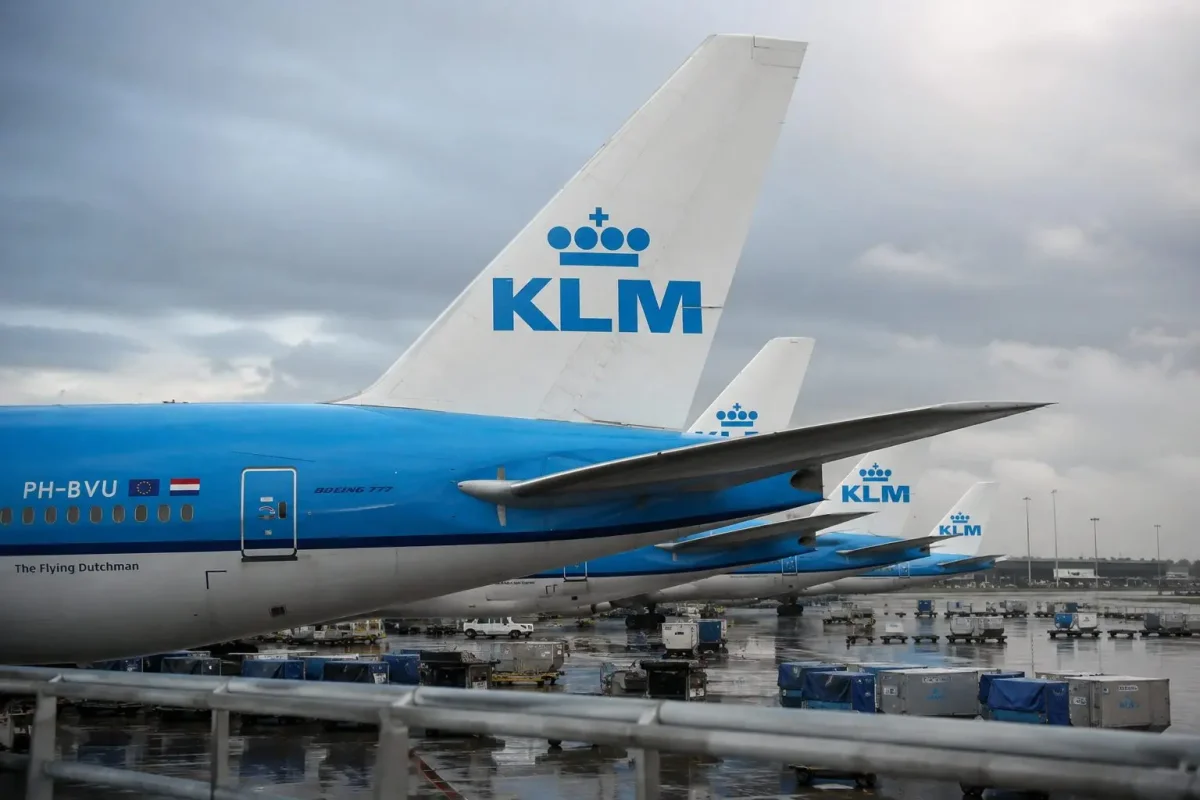
KLM, a subsidiary of Air France-KLM, has extended the suspension of flights to Dubai, Riyadh, and Dammam until September 6, prolonging the disruption to Middle East routes initially paused due to regional instability. The carrier has not disclosed the financial impact of these suspensions, but they add to the operational headwinds facing the group. Air France-KLM shares are listed in Paris, and KLM is not traded independently.
Market Context and Sector Sentiment
Friday's rebound in Air France-KLM shares was tied to a broad rally in airline stocks, driven by a sharp drop in oil prices. Brent crude futures fell 4.4%, briefly dipping below $100 per barrel after exceeding that threshold a day earlier. The U.S. Global Jets exchange-traded fund rose 3.9%, while shares of International Consolidated Airlines Group (LON:IAG) advanced 2.79% and Ryanair Holdings (ISE:RYA) climbed 4.29%. The coordinated gains suggest a sector-wide lift from lower fuel costs rather than a reassessment of KLM's specific outlook.
Fare strength remains a concern across the industry. Ryanair CEO Michael O'Leary recently described peak-summer pricing as “trending weaker rather than stronger,” projecting a mid-single-digit decline in fares for the current quarter. Such commentary underscores the pricing pressure that Air France-KLM may also face, particularly as capacity returns and consumer spending shows signs of moderation.
Outlook and Key Risks
The upcoming earnings report will be a critical test for Air France-KLM. If oil prices continue to ease, margins could improve and provide a boost to the stock. Conversely, renewed oil price spikes, extended route suspensions, or weaker-than-expected fares could force analysts to lower their forecasts. The balance of risks appears evenly weighted, with the outcome hinging on the company's ability to manage fuel costs and maintain pricing discipline in a competitive environment.
Investors will be watching for any changes to capacity guidance, expense trends, and the performance of premium cabins, which were a key driver of last year's strong results. The July 30 release will provide the first comprehensive look at how the airline is navigating this challenging operating landscape.