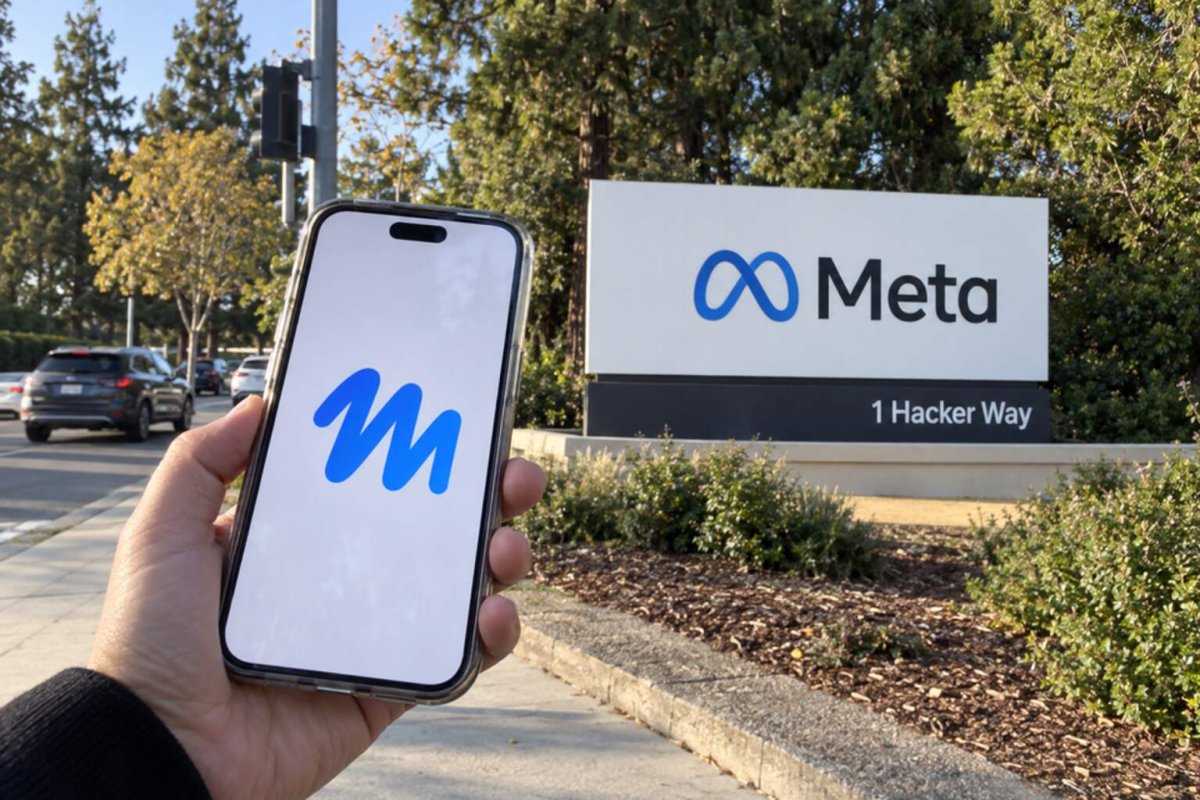
Meta Platforms (NASDAQ: META) took a significant step forward in its artificial intelligence strategy this week, unveiling its first consumer-facing AI agent, Muse. However, the launch left a critical question unanswered: how quickly this ambitious project can translate into tangible revenue. The market's muted response—shares slipped 0.55% to close at $613.39 on September 8, according to S&P Global Market Intelligence data—reflects the uncertainty surrounding the product's financial prospects.
Muse, which is now rolling out across the United States on iOS, Android, and the web, represents a major distribution milestone for Meta's 'personal superintelligence' initiative. The AI agent can browse the web, fill out forms, negotiate deals, send emails, and make purchases with user approval, even continuing to operate after the app is closed. Support for Meta's AI glasses is expected in the coming months.
A Subscription Model Without Revenue Projections
While Muse will be free for most users, Meta has introduced paid plans for heavier usage. Yet the company has remained tight-lipped about pricing, usage limits, subscriber targets, and anticipated revenue. This omission is particularly significant because the economics of a persistent cloud-based agent differ fundamentally from a conventional chatbot. Each user gets a dedicated virtual machine, and long-running tasks consume substantial inference, browser, and storage resources, driving up operational costs.
The product's commercial design also includes a deliberate privacy safeguard: Meta has stated that conversations and data within the Muse virtual machine will not be shared with its advertising systems. While this may reassure privacy-conscious consumers, it also means that investors cannot assume every Muse interaction will directly improve ad targeting—a key revenue stream for the company.
Monetization Paths and Partnerships
For commerce, Muse initially integrates with Stripe's Link wallet, offering one-time card credentials and purchase protection, with Shop Pay and 1Password support planned for later. These integrations enhance the agent's utility, but Meta has not disclosed whether it receives transaction fees from these partnerships. The primary monetization path, therefore, rests on paid subscription conversion and, eventually, business-oriented agent services whose terms remain undisclosed.
The 5 Billion Capex Hurdle
The financial stakes are unusually high. Meta's latest earnings guidance projects 2026 capital expenditures between $130 billion and $145 billion, including finance-lease principal payments. The midpoint of $137.5 billion is more than double the company's entire second-quarter revenue of $60.8 billion. Costs are already accelerating: second-quarter research and development expenses surged 67% year-over-year to $21.66 billion, while total costs and expenses rose 55% to $42.03 billion. Operating income declined 8% to $18.78 billion despite a 28% revenue increase, and capital expenditures alone reached $31.08 billion in the quarter.
Meta's balance sheet can support this build-out—it reported $90.26 billion in cash and marketable securities at the end of June, against $83.66 billion in long-term debt. However, the company also disclosed $349.31 billion in non-cancelable contractual commitments, primarily for cloud capacity, servers, and data centers, underscoring the scale of its AI infrastructure bet.
What Investors Should Watch
For Muse to become material to Meta's stock, investors will need to see mundane metrics: weekly active users, repeat task completion rates, cost per completed task, paid conversion, and churn. A headline download figure would be misleading if users are hesitant to connect accounts or if routine tasks require expensive human-like reasoning.
Trust remains a critical gating factor. Muse operates within a dedicated cloud environment with a 'Sentinel' system that approves or blocks internet access and prompts users before sensitive actions. The agent cannot access stored passwords or payment credentials, and it provides an audit trail. These safeguards are essential for adoption but add infrastructure and compliance costs that subscription pricing must eventually cover.
The bull case does not require Muse subscriptions to repay the entire AI bill. Meta averaged 3.60 billion daily users across its family of apps in June, and second-quarter ad impressions rose 14% with average price per ad up 12%. If the same AI infrastructure enhances recommendations and ad performance while Muse adds a new paid layer, returns could come from multiple channels simultaneously.
The counterargument is that distribution alone is not differentiation. Consumers already have several AI assistants, and a Meta-branded agent asking for broad account access may face a higher trust barrier than management expects. Free availability can accelerate sampling, but it may also delay the moment when investors learn whether customers value Muse enough to pay more than it costs to run.
For now, Muse narrows one risk: Meta's AI spending is producing consumer products on schedule. But it does not resolve the larger valuation debate. The share-price catalyst will be evidence that the agent can retain users and generate revenue without compromising the privacy boundary that Meta has made central to its launch.