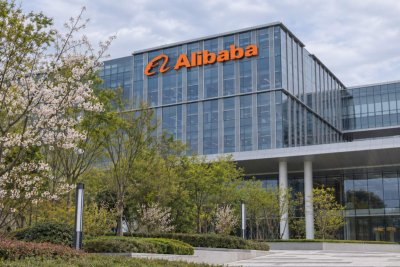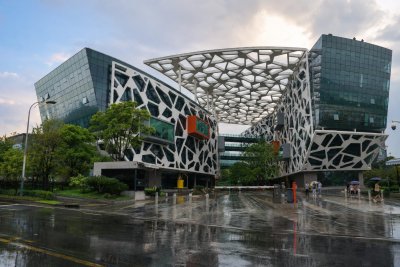
Alibaba Group Holding (HKG:9988) saw its shares tumble 4.43% to HK$95.00 in Hong Kong trading on Thursday, wiping out approximately HK$88 billion in market capitalization. The sharp decline came after Anthropic, the artificial intelligence company behind the Claude model, accused operators linked to Alibaba's Qwen AI lab of systematically extracting data from its systems.
According to a letter Anthropic sent to U.S. Senators Tim Scott and Elizabeth Warren on June 10, groups tied to Alibaba and its Qwen AI unit used nearly 25,000 fake accounts to make over 28.8 million interactions with Claude between April 22 and June 5. That figure is roughly 1.8 times larger than the 16 million exchanges Anthropic reported in February against three other Chinese AI labs—DeepSeek, Moonshot AI, and MiniMax (HKG:0100).
Anthropic's policy chief Sarah Heck described the operation as an effort to "illicitly extract Claude's capabilities" for training Alibaba's own models, according to Business Insider. The practice, known as "distillation," involves training a weaker model on the outputs of a stronger one. While Anthropic has described distillation as standard industry practice, it argues that illicit distillation allows competitors to achieve similar capabilities faster and at lower cost.
The volume of the alleged operation was significant: each of the 25,000 fake accounts averaged 1,150 Claude exchanges. Trading volume in Alibaba shares surged to 141.4 million shares, about 51% above the 93.91 million average, as investors reacted to the news.
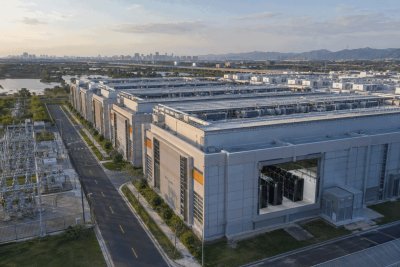
The allegations come at a critical time for Alibaba, which has been positioning its cloud and AI businesses as key growth drivers. In the March quarter, Alibaba's Cloud Intelligence revenue jumped 38% to 41.63 billion yuan, with AI-related products accounting for 30% of external customer revenue. CEO Eddie Wu told analysts after the quarter that the payoff from AI and cloud spending was "increasingly clear" and that the tech investments were "beginning to pay off commercially." He emphasized that the focus for cloud remained on market share, with margin "still secondary."
The company faces a dual headwind from U.S. security concerns. Beyond the Anthropic allegations, Alibaba recently filed a lawsuit against the U.S. Department of Defense after being named on a list of 188 "Chinese military companies." The Pentagon is barred from signing contracts with firms on the list starting this month, and from 2027, it also cannot buy their goods or services through other vendors. Alibaba said in its lawsuit that the decision had "no basis in fact or law" and that its products are not made for "weapons, defense, or intelligence."
Adding to the geopolitical tensions, Anthropic itself was hit by a sudden U.S. government order on June 12, when the Commerce Department told it to shut down its Fable 5 and Mythos 5 models for all users, citing national security concerns. Anthropic pushed back against the move, stating that its other models remain operational.
For Alibaba, the market is now weighing whether the Claude issue will remain a terms-of-service dispute or escalate into a broader U.S. security concern that could impact Pentagon contracts, cloud business operations, and the company's ability to handle advanced AI models. The company's ambitious AI revenue target—expecting AI-related revenue to account for over half of external cloud revenue within about a year—is now carrying an additional risk premium.
Alibaba did not respond to Reuters' request for comment on the Anthropic allegations. The stock closed at HK$95.00, having traded as low as HK$94.00 during the session, with the market cap falling to approximately HK$1.90 trillion.