Alphabet Inc. (GOOGL) saw its stock price plunge 5.6% to $347.53 on Monday, extending a pullback from its May highs, as investors grappled with a confluence of headwinds including a massive new share sale program, a fresh wave of senior talent departures to rival AI labs, and the escalating costs of the company's aggressive infrastructure buildout.
The sell-off came despite Citizens analyst Andrew Boone reiterating a Market Outperform rating and a $515 price target, and even as the company reported strong first-quarter earnings. Revenue reached $109.9 billion, up 22% year-over-year, while Google Cloud revenue surged 63% to $20.0 billion. However, the market's focus has shifted to the trade-offs required to sustain that growth.
Massive Equity Raise and ATM Program
A key catalyst for the downturn is Alphabet's plan to launch a $40 billion at-the-market (ATM) stock offering in the third quarter. This program allows the company to gradually sell new shares into the open market, raising concerns about dilution. The overall equity raise, disclosed in a June filing, has grown to $84.75 billion. While Alphabet states the proceeds are primarily intended to manage tax liabilities related to employee equity grants, the sheer size of the offering creates overhang, as investors anticipate new supply hitting the market even as the company's operating performance remains solid.
AI Talent Exodus
Adding to the pressure, Alphabet is losing key AI leaders to well-funded competitors. Noam Shazeer, co-lead of the Gemini project, is leaving for OpenAI. Nobel laureate John Jumper, renowned for his work on AlphaFold at Google DeepMind, is moving to Anthropic. These departures underscore the fierce competition for top-tier AI researchers. D.A. Davidson analyst Gil Luria noted that frontier AI labs are willing to do "whatever it takes" to acquire scarce talent, attracted by less bureaucracy and more focused missions. This exodus raises questions about Alphabet's ability to maintain its competitive edge in AI development.
Capital Spending Surge
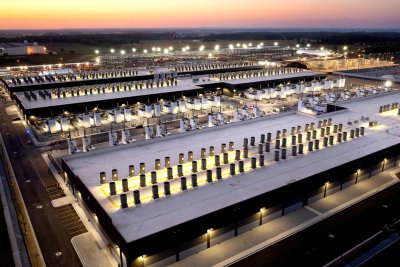
Perhaps the most structural shift is Alphabet's transition from a capital-light business model to a capital-intensive one. The company is investing heavily in chips, data centers, power infrastructure, and networking equipment. Alphabet guided for capital expenditures of $180 billion to $190 billion this year, with further increases expected in 2027. CFO Anat Ashkenazi described the demand for AI compute resources as "unprecedented." This spending has already impacted free cash flow, which dropped to $10.1 billion in the first quarter, starkly illustrating the trade-off between growth investment and cash generation.
Contributor Florian Muller at Seeking Alpha downgraded the stock to Hold, citing this transition and a stretched valuation, though he acknowledged support from revenue, margins, and YouTube monetization.
Cloud Backlog and Bull Case
Despite the headwinds, bulls point to the company's strong fundamentals. Google Cloud's backlog nearly doubled sequentially to $462 billion at the end of Q1, with the company expecting more than half to convert to revenue over the next two years. Citizens' Boone remains bullish, arguing that Google is "the best positioned company to take advantage of AI given its vertical integration from search to custom hardware," including its Tensor Processing Units (TPUs).
Risks and Outlook
The bear case, however, is clear: the cloud backlog could take longer to materialize, AI compute costs may decline, or Gemini could lose ground to rivals after key talent departures. Any of these scenarios could lead to higher depreciation, further share dilution, and weaker free cash flow. The next few months could be volatile as the market digests the ATM program and watches for further signs of competitive pressure in the AI race.