Morgan Stanley's ambitious $500 price target for Amazon.com Inc. (NASDAQ: AMZN) is not about the streaming success of its latest Prime Video hit, but rather a massive expansion of its cloud computing division, AWS. The investment bank's bull case implies a potential 91.3% upside from Monday's closing price of $261.31, yet the path to that valuation is steep.
According to Morgan Stanley analyst Brian Nowak, AWS would need to grow its annual revenue approximately 5.9 times to reach a staggering $1 trillion. Currently, AWS generates around $169 billion on an annualized run rate, meaning the unit would need to sustain a compound annual growth rate of roughly 20% for a decade. This is a formidable challenge, even for a segment that posted 37% year-over-year growth in the second quarter.
AWS: The Core of the Bull Case
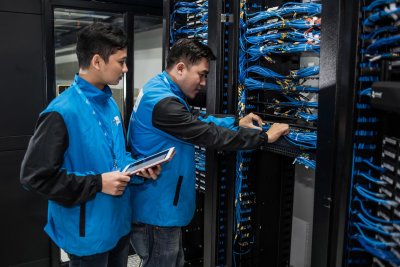
AWS remains the profit engine of Amazon, contributing 60.5% of operating income while representing just 21.1% of total sales. In the latest quarter, AWS reported an operating margin of 39.4%, underscoring its efficiency. CEO Andy Jassy highlighted the unit's strength, noting it grew 36.7% year-over-year in Q2. However, the road to $1 trillion in annual revenue requires sustained expansion in capacity, power resources, and AI demand—factors that are far from guaranteed.
Morgan Stanley outlines three scenarios for AWS to hit the trillion-dollar mark: an optimistic 24.9% annual growth over eight years, a base case of 21.9% over nine years, and a pessimistic 19.5% over ten years. Each path demands a level of execution that has few precedents in corporate history.
Prime Video: A Supporting Role
While the debut of the series "Ride or Die" on Prime Video has garnered critical acclaim—with a 97% critics score and an 83% audience score—its financial impact is less clear. Amazon does not disclose separate revenue or profitability figures for Prime Video, making it difficult for investors to tie a hit show to earnings. The service reaches 315 million monthly viewers in its ad-supported tier, which could boost advertising revenue, but the effect is secondary to AWS's growth trajectory.
Financial Pressures Mount
Amazon's financial commitments are intensifying. The company raised its 2026 capital spending forecast to $220 billion, and trailing free cash flow swung from an $18.2 billion inflow to a $7.6 billion outflow—a $25.8 billion deterioration. These investments are largely directed at AI infrastructure and data centers, essential for AWS's expansion but a near-term drag on cash generation.
In the second quarter, advertising services revenue rose 26% to $19.81 billion, while subscription services grew 12% to $13.73 billion. Total Amazon sales increased 20% to $200.61 billion. Despite these solid numbers, the $500 target remains a long-term projection rather than a near-term consensus.
Market Sentiment and Risks
Wall Street's current view is more conservative. Of 39 analysts covering the stock, 38 rate it a buy, with an average price target of $332.95—27.4% above Monday's close. The 12-month high target is $400, well below Morgan Stanley's $500 figure, which reflects a multi-year outlook through 2027.
Risks to the bull case include potential delays in data-center construction, regulatory hurdles, and the possibility that AI demand may not materialize as expected. While Prime Video's success could bolster engagement and subscriber retention, it is unlikely to offset the massive capital expenditures required for AWS's growth.
As Amazon shares traded down 0.4% to $260.31 ahead of Tuesday's session, investors are weighing the company's long-term potential against its current cash flow challenges. The $500 target is a bold statement on AWS's future, but it hinges on factors that remain uncertain.