Japan's New Energy and Industrial Technology Development Organization (NEDO) has approved a three-year demonstration project that will combine quantum computing with laboratory validation to design potential cancer immunotherapy targets. The initiative, announced on October 2, will leverage the AIST's ABCI-Q hybrid quantum-classical infrastructure to optimize flanking amino-acid sequences around neoantigens and then assess immune responses in the lab. This marks a significant step in applying quantum technology to a field that has been largely dominated by computational simulations.
Project Partners and Timeline
The project brings together a consortium of industrial and academic partners, including NEC, Taiho Pharmaceutical, the Japanese Foundation for Cancer Research, AIST, and Waseda University. The work is scheduled to run from September 2026 through March 2029. Unlike approaches that ask a quantum computer to invent a therapy from scratch, this project assigns it a specific, bounded search problem within a larger AI-and-lab pipeline.
How the Pipeline Works
Neoantigens are short protein fragments resulting from mutations in cancer cells. Because healthy tissue does not carry these mutated sequences, the immune system may recognize them as foreign, making them attractive targets for immunotherapy. However, not every candidate is visible, stable, or capable of provoking a useful immune response.
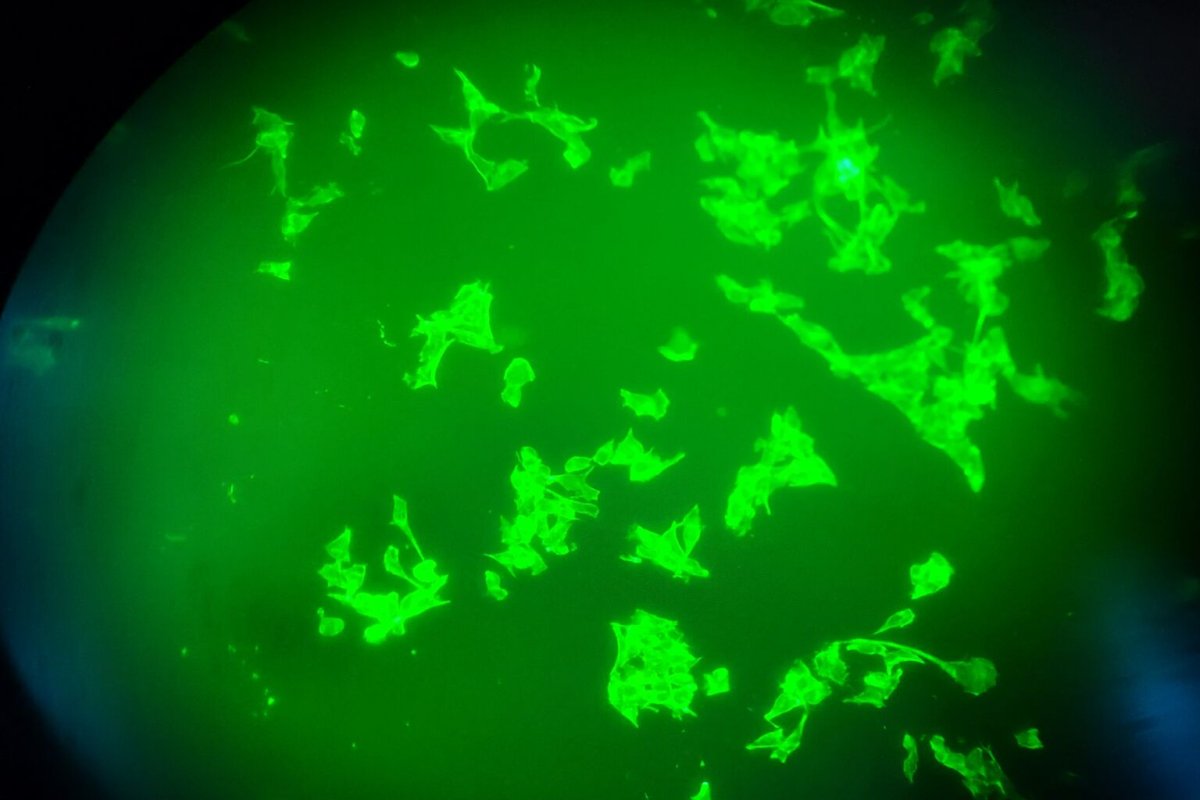
The project begins with a neoantigen's central sequence and varies the flanking amino acids, considering several biological factors. AI models will score the resulting candidates, and a quantum optimization step will search a larger combination space to return a diverse shortlist for experimental testing. The laboratory step is crucial: cells must process the proposed sequence, display the fragment through MHC class II molecules, and activate CD4-positive T cells, which are coordinators of broader antitumor responses. A high computational score alone cannot establish biological efficacy.
Results from immune assays will feed back into the prediction system, creating an iterative loop of propose, test, learn, and propose again. This design is more useful than a one-off benchmark because even failed candidates provide valuable information. However, the announcement does not specify assay protocols, dataset sizes, or success thresholds.
Why Target Selection Is Challenging
Personalized neoantigen treatments already rely on intensive sequencing and ranking. In two small studies covered by the U.S. National Cancer Institute, researchers selected up to 20 targets per participant, and some immune responses persisted for years. The NCI also emphasized that larger trials are needed to determine safety and efficacy.
A tumor may yield many mutation-derived candidates, but only a fraction will pass biological filtering. Each patient also carries a particular set of antigen-presenting molecules. A useful design system must therefore rank combinations without confusing model confidence with actual immune activity.
What Has Been Committed—and What Has Not
The announced metrics are limited: the project period is September 2026 to March 2029; the AI role is to predict and score immune responses; the quantum role is to optimize flanking amino-acid sequences; and the lab endpoint is immunological response in experiments. The AI/HPC capacity includes 2,020 NVIDIA H100 GPUs and 138 FP64 petaflops, with about 41 petabytes of usable storage. Not disclosed are the specific algorithm, quantum processor, baseline, or speedup metrics.
ABCI-Q: A Hybrid System, Not a Magic Box
ABCI-Q provides far more classical hardware than its name suggests. AIST lists 505 compute nodes with four NVIDIA H100 accelerators each, totaling 2,020 GPUs. It reports 138 petaflops of double-precision performance and 2.1 exaflops at half precision, with about 41 petabytes of usable storage. This classical capacity matters because the workflow mixes AI, high-performance computing, and quantum processing. Model training, data preparation, and most validation can stay on conventional accelerators, while a bounded optimization is mapped to quantum hardware.
The likely architecture is a tight hybrid loop, though this is an inference from the public description. Classical systems would prepare candidate scores and constraints, a quantum routine would explore a defined sequence-selection problem, and classical code would decode and rank outputs. Wet-lab measurements would then determine biological usefulness. This approach aligns with the near-term direction described by Nature Biotechnology: current processors remain noisy and lack full error correction, so they cannot handle complex biological workloads alone. Hybrid systems allow researchers to isolate small tasks that might suit quantum hardware, but they still require fair comparisons against strong classical optimizers.
Evidence Needed Before Claiming Quantum Advantage
The project's strongest feature is its planned experimental feedback. Its largest omission is a measurement plan. The partners have not identified the quantum processor, optimization algorithm, sequence-space size, or classical baseline. They also have not stated how many candidates will reach an immune assay.
A convincing result would compare equal compute budgets and identical biological objectives. Useful measures include candidate diversity, assay hit rate, runtime, energy use, and reproducibility across repeated runs. The test should also include held-out data. Without these controls, better laboratory results could come from more data or improved AI rather than the quantum step. External validity also matters; the U.S. Food and Drug Administration's discussion of AI in drug development calls for clear model criteria and independent external testing.