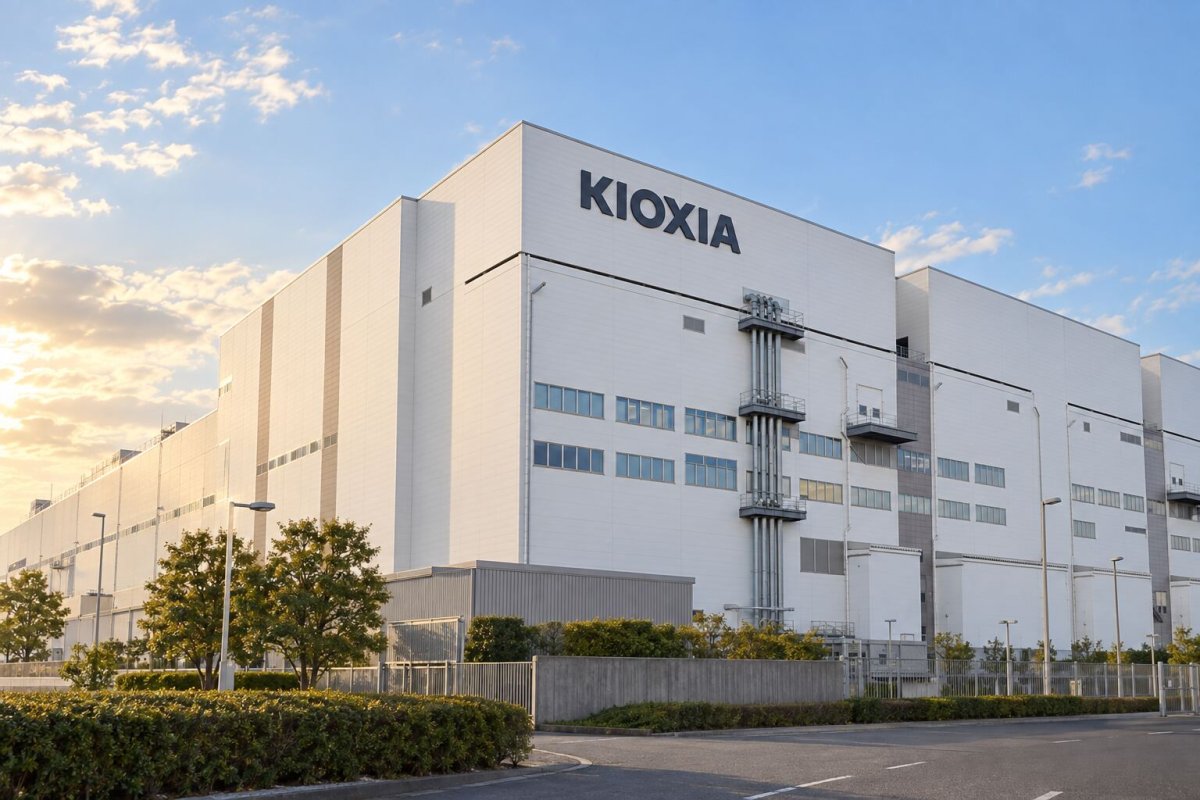
Kioxia Holdings has confirmed it is preparing to list American depositary shares (ADS) on a U.S. exchange, but the Japanese memory chip maker has stopped short of endorsing several key details reported by Bloomberg, including a deal size of at least $10 billion, the underwriters involved, and a targeted 2027 timeframe.
In a statement released on September 15, Kioxia acknowledged that it is working toward a U.S. listing to broaden its investor base and enhance corporate value. However, the company emphasized that the schedule, market, and listing method have not yet been decided, and it cautioned that the process could still be abandoned. The statement explicitly noted that media reports were not company announcements.
Bloomberg had reported that Kioxia was in talks with Bank of America, Goldman Sachs, and JPMorgan for a potential 2027 U.S. listing that could raise at least $10 billion. Reuters has not been able to independently verify these figures, and Kioxia's statement does not confirm them. For investors, this distinction is material: a U.S. trading venue is a confirmed corporate project, but the amount of new capital, dilution, and timing remain unknown.
What Kioxia Has Confirmed
The current process is not new. On May 15, Kioxia first disclosed its intention to prepare an ADS listing, subject to regulatory approval. At that time, it also said it had not selected an exchange, schedule, or method. The September statement repeats those limitations and underscores that the company has not made final decisions.
Because the “method” is unresolved, investors cannot yet determine whether a future transaction would involve primary shares (which would raise capital for Kioxia), secondary shares sold by existing shareholders, or simply depositary receipts backed by already-issued shares. Each structure carries different implications for dilution and cash proceeds.
Scale of the Reported Billion
If the $10 billion figure were to represent new capital, it would have a significant impact on Kioxia's balance sheet. As of June 30, Kioxia had 548.0 million issued shares. At Wednesday's Tokyo close of ¥50,780, the implied equity value is approximately ¥27.8 trillion. Converting $10 billion at Kioxia's average dollar rate of ¥160 for the June quarter yields ¥1.6 trillion, or roughly 5.8% of that market value. This is a scale comparison, not a forecast of shares issued or proceeds.
Kioxia reported ¥791.0 billion in cash at June 30, so $10 billion would be about twice its quarter-end cash. Yet the company's latest financials do not suggest an urgent need for capital. In the first quarter, Kioxia generated ¥866.3 billion in operating cash flow against ¥117.3 billion used in investing activities, while bonds and borrowings decreased by ¥413.0 billion during the quarter.
Strategic Rationale Beyond Capital
A U.S. listing could offer strategic benefits even without a $10 billion cash injection. It would provide wider access for dollar-based investors, improve liquidity during U.S. trading hours, and potentially pave the way for inclusion in major U.S. indices. However, index inclusion is not automatic; it would depend on the final security structure, float, liquidity, and index provider rules.
Memory Pricing Remains the Key Risk
The primary investment thesis for Kioxia still hinges on memory chip pricing. In the June quarter, SSD and storage revenue reached ¥1.175 trillion, about two-thirds of total revenue, as average selling prices surged on AI data-center demand. This exposure can amplify profits during shortages but also reverse sharply when supply normalizes. A new trading venue does not eliminate that cyclicality.
Investors should watch for a formal registration filing that would name the exchange, ADS ratio, primary-versus-secondary mix, underwriters, deal size, and launch window. Until then, the accurate picture is narrower than the headline: Kioxia's U.S. ADS preparation is confirmed, but Bloomberg's $10 billion figure remains unverified.