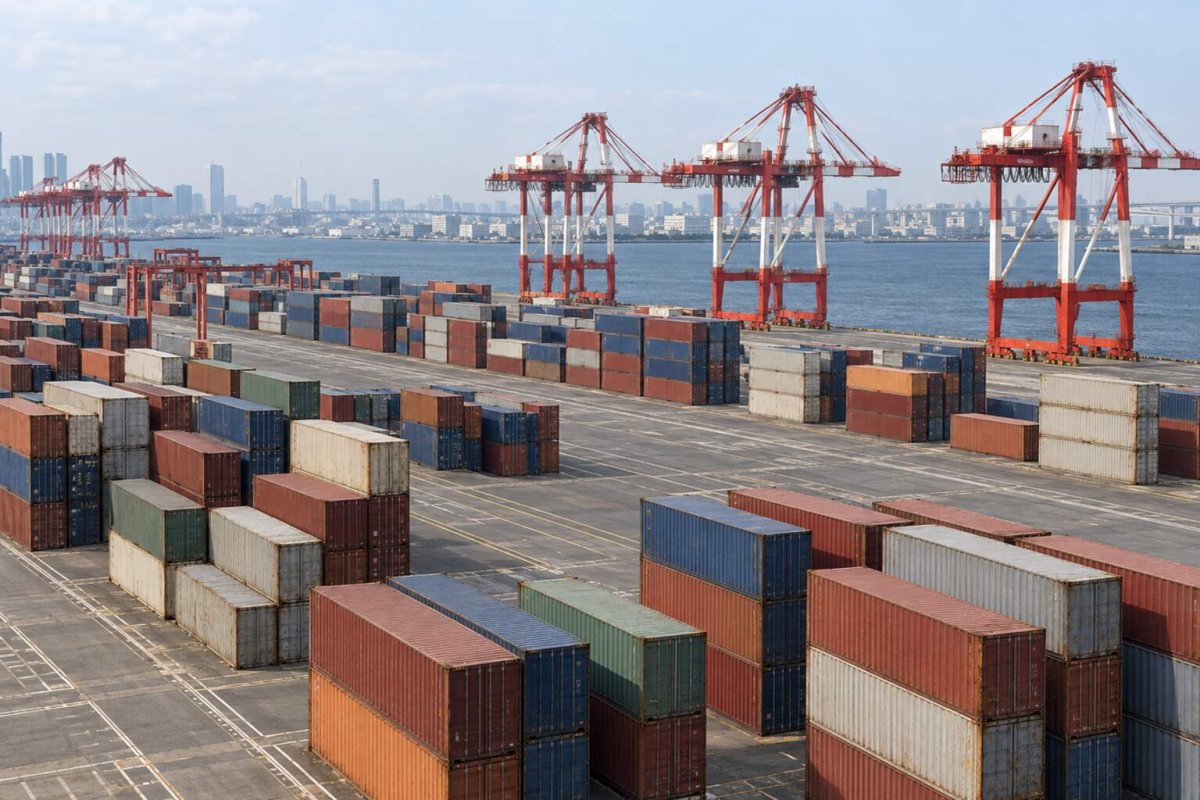
Japan's merchandise trade deficit widened to ¥1.106 trillion in August, nearly four times the gap recorded a year earlier, as a sharp rise in the import bill outpaced even unusually strong export growth. The Ministry of Finance's preliminary, not seasonally adjusted data showed exports rose 19.3% year-on-year to ¥10.048 trillion, while imports jumped 28.0% to ¥11.154 trillion, leaving a deficit that expanded by 275.9% from ¥294.1 billion in August of the previous year.
The composition of the trade flows was striking for investors. Petroleum import value surged 58.7% even though volume increased only 3.6%, underscoring a price-driven shock rather than a surge in physical demand. Semiconductor exports, meanwhile, climbed 52.3%, reflecting robust global demand for Japanese chips. The divergent trends highlight the dual pressures facing the world's third-largest economy: an energy cost spike and a technology export boom.
Energy Costs Dominate the Import Bill
Japan paid ¥1.191 trillion for petroleum in August, equivalent to 10.7% of all goods imports. The ministry's figures imply an increase of roughly ¥440 billion from a year earlier, which by TS2's calculation accounted for about 18% of the total ¥2.440 trillion rise in imports. The broader mineral-fuel category—which includes petroleum, liquefied natural gas (LNG), and coal—cost ¥2.464 trillion, up 38.4% and representing 22.1% of imports. Its estimated ¥684 billion year-over-year increase explained about 28% of the overall import growth.
This was primarily a price shock, not a comparable surge in physical demand. Petroleum volume increased just 3.6%, LNG volume fell 6.8% even as its value rose 29.7%, and coal volume dropped 8.2% while its value climbed 22.8%. The Associated Press attributed the higher bill to the Middle East conflict and disruption to routes that previously carried much of Japan's oil through the Strait of Hormuz.
Electronics Imports Also Surge
There was a second import pressure point. Electrical-machinery imports rose 40.8% to ¥1.893 trillion, including an 82.1% increase in semiconductors. This matters because the headline deficit cannot be reduced to energy alone; Japan was also buying far more electronics at the same time its own chip exports were booming.
Export Strength Is Real but Uneven
Electrical-machinery exports rose 31.5% to ¥1.997 trillion. Semiconductors and related products contributed ¥894.1 billion, up 52.3%, while integrated-circuit exports rose 56.9%. Motor-vehicle exports increased 16.5% to ¥1.383 trillion. These figures give Japan's exporters a substantial demand cushion even as the weaker yen raises the domestic cost of imported fuel and components.
The country detail tempers that favorable reading. Exports to the United States increased 24.9%, but imports from the U.S. jumped 55.2%, shrinking Japan's bilateral surplus by 77.6% to ¥70.4 billion. Trade with China produced a ¥551.6 billion deficit as exports rose 20.6% and imports gained 22.5%.
Market Reactions and Implications
Japanese shares absorbed the data without a broad retreat. The Nikkei 225 index traded at 63,647.97 at 1:54 p.m. Tokyo time on Wednesday, about 0.26% above Tuesday's close. The dollar traded at ¥155.297 at 2:11 p.m., making the yen about 0.59% weaker than the previous session's closing level. Those moves also reflected positioning before the Federal Reserve and Bank of Japan decisions; the trade release alone does not explain them.
For equity investors, the release draws a sharper line between companies that earn foreign currency and businesses that buy energy in dollars for domestic sale. A weak yen can support the translated profits of exporters, but it also magnifies an oil-price shock for utilities, transport operators, retailers, and other import-heavy companies. Refiners can benefit from inventory effects during a rising market, although the effect depends on hedges, regulated pricing, and how quickly higher costs reach customers.
Policy Test Ahead
The strongest objection to a bearish reading is that these are nominal monthly trade values during an exceptional commodity move. They are not a clean measure of real export demand, household spending, or corporate margins. A retreat in crude prices could narrow the deficit quickly; a stronger yen would lower import costs but reduce the translation benefit for exporters. Slower global chip demand would reverse the most supportive part of the export mix.
The next policy test arrives almost immediately. The Bank of Japan meets on September 17 and 18. August trade gives policymakers two opposing facts: export activity is expanding rapidly, while expensive imported fuel is adding inflation pressure without a matching rise in petroleum volume. For markets, the decision will turn on which side the BOJ treats as the larger risk.