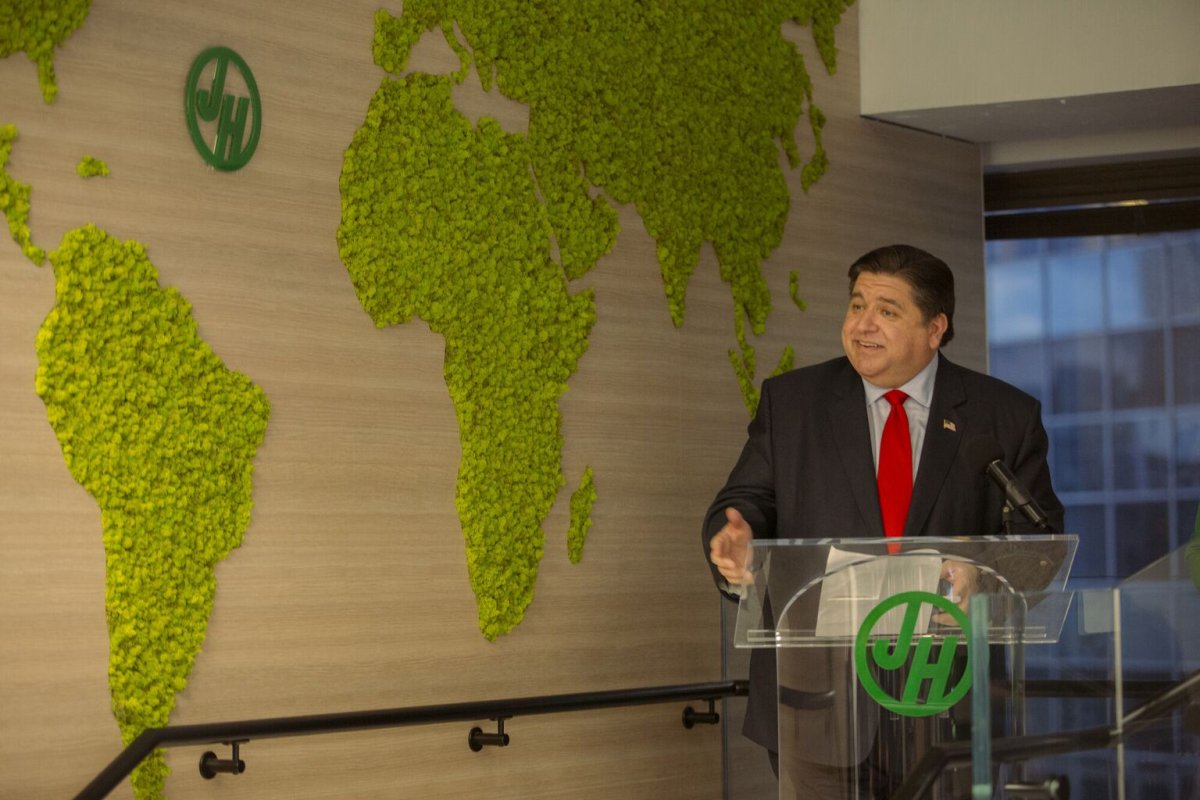
At its inaugural investor day following the AZEK acquisition, James Hardie Industries (ASX: JHX) unveiled an upgraded free cash flow target of approximately US$600 million for fiscal 2027. However, the market's reaction was muted, as the company left its sales and adjusted EBITDA forecasts untouched, prompting a 5.1% decline in its Sydney-listed shares to A$37.37 by mid-afternoon Wednesday, down from Tuesday's close of A$39.36.
The stock's slide, which followed a 4.4% drop in its New York-listed shares on Tuesday after management presented the new targets, underscores investor focus on the unchanged earnings guidance. The company reaffirmed its second-quarter and full-year sales and adjusted EBITDA outlook, while raising its cash flow projection by roughly 20% from the previous floor of US$500 million.
This cash flow upgrade, though real, is not accompanied by a demand upgrade. The improved outlook stems from lower capital intensity and the winding down of acquisition-related costs, which can convert more operating profit into cash without requiring a stronger housing market. The plan targets a free cash flow conversion of about 38% in FY27, up from 30% in FY26, and more than 40% thereafter, with capital expenditure expected to be 6% to 7% of sales, down from 7.8% in FY26.
For a company carrying acquisition debt, these are meaningful improvements. Management now targets net leverage of 2.4 times by the end of FY27 and below 2 times by the second quarter of FY28. Faster cash generation enhances its capacity to reduce debt, but it does not address the fundamental question posed by Wednesday's share decline: how much of this plan relies on durable volume and pricing versus spending discipline and the disappearance of one-time deal costs?
James Hardie also introduced a long-range goal of annual organic growth of 4% to 7% above its markets through the cycle, tied to a US$23 billion opportunity to convert buildings from other materials and at least US$500 million in revenue synergies from the combined James Hardie-AZEK sales platform. The company emphasized that this formula does not assume a housing recovery.
However, these are strategic targets, not booked revenue. Repair-and-remodel demand remains vulnerable to mortgage rates, home turnover, and household confidence, while freight and diesel costs have not eased, as management told investors. Revenue synergies require contractors, dealers, and homeowners to adopt the combined fiber-cement, decking, and railing portfolio. Cost savings can follow an internal timetable, but customer conversion cannot be scheduled.
The bullish interpretation is that the cash flow raise bolsters the credibility of the deleveraging schedule ahead of any housing rebound. First-quarter operating cash flow came in at US$344 million, up from US$206.9 million a year earlier, and inventories have normalized entering the second quarter. Achieving the synergy target early would provide an additional buffer if end-market demand remains subdued.
The harder test remains unchanged: sales and adjusted EBITDA must eventually validate the cash story. The next quarterly report will show whether organic growth in siding and trim persists, whether deck and rail demand absorbs inventory without heavier discounts, and whether cash conversion improves for operational reasons. Until then, Wednesday's 5% fall reads less like a rejection of the new cash target than a demand for evidence behind the longer-range growth algorithm.